Nigeria has taken a decisive step toward overhauling its career guidance and counselling system with the launch of a high-level policy dialogue aimed at developing a National Career Guidance and Counselling (CGC) Policy Framework.
The initiative, convened at the United Nations House in Abuja, brought together key stakeholders from the Federal Ministry of Education, Federal Ministry of Labour and Employment, Federal Ministry of Youth Development, United Nations Educational, Scientific and Cultural Organisation (UNESCO), Deutsche Gesellschaft für Internationale Zusammenarbeit (GIZ), and other development and technical partners.
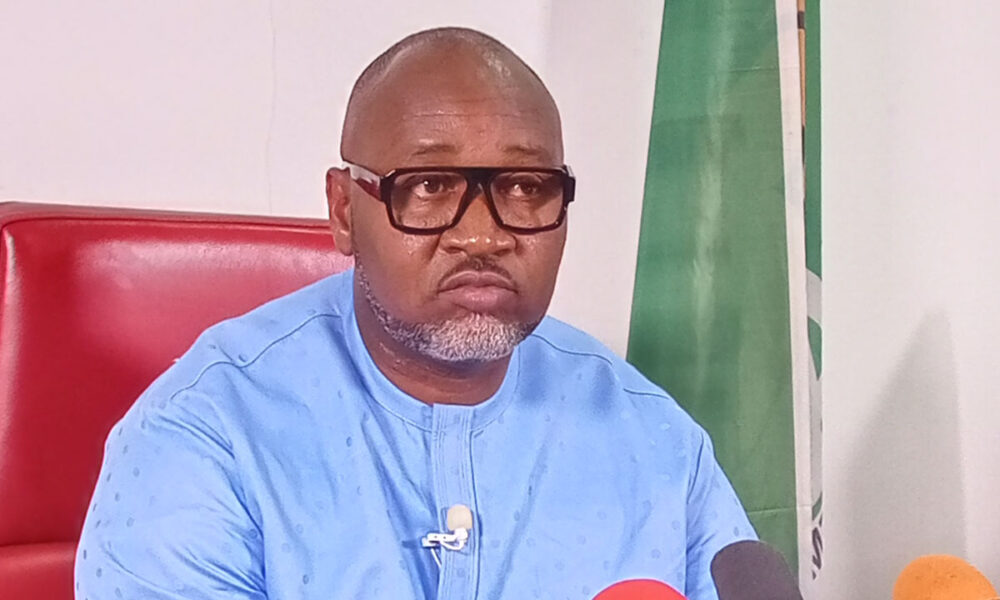
Speaking at the opening session, the Permanent Secretary, Federal Ministry of Education, Mr. Abel Enitan, described the workshop as a milestone in ongoing education reform efforts, emphasizing that career guidance must be repositioned as a strategic pillar rather than a peripheral service in Nigeria’s education system.
He noted that the changing global economy—driven by automation, digital transformation, and industrial shifts—demands that students are equipped not only with academic knowledge but with structured guidance that connects learning to real labour market opportunities.
According to him, the proposed framework will help align individual aspirations with national economic needs, particularly in priority sectors such as agriculture value chains, construction, and digital skills.
“Counselling in our institutions has been treated as a secondary service rather than a strategic necessity,” he said. “In today’s world, students need more than a syllabus; they need a compass.”
He further stressed that institutionalizing a national policy would ensure integration of labour market intelligence into school counselling systems, elevate Technical and Vocational Education and Training (TVET) as a first-choice pathway, and improve employment outcomes as a measurable result of education investments.
Also speaking, the acting Head of Education Sector at UNESCO Abuja, Mr. Oladeji Adeyemi, reaffirmed that career guidance and counselling is the critical bridge between education and employment, warning that even strong education systems cannot achieve their full impact without a coordinated CGC structure.
He explained that the new framework is designed to move Nigeria from fragmented interventions to a fully integrated system that connects education, labour, and youth development sectors.
“Career Guidance and Counselling is not an add-on — it is the bridge that connects learning to livelihoods,” he said.
Adeyemi emphasized the need for stronger institutional collaboration and shared ownership, noting that no single institution can effectively deliver career guidance in isolation. He called for a system where roles are clearly defined and stakeholders are fully accountable for implementation.
He also stressed the importance of alignment among stakeholders, describing the workshop as a platform to harmonize perspectives, validate earlier technical work, and agree on a coherent implementation pathway for the policy.
Over the next two days, participants are expected to engage in technical discussions, review international best practices, and jointly define the structure and pillars of the proposed national framework.
Both speakers underscored the urgency of moving from a system of “career by chance” to one of “career by choice,” where young Nigerians are equipped with structured pathways to education, skills development, and sustainable employment.
Development partners, including UNESCO under its Better Education for Africa’s Rise (BEAR III) initiative and GIZ, reaffirmed their continued support for Nigeria’s education and skills reform agenda.
The workshop is expected to produce a consolidated draft framework that will guide the future of career guidance and counselling in Nigeria’s education and labour systems.