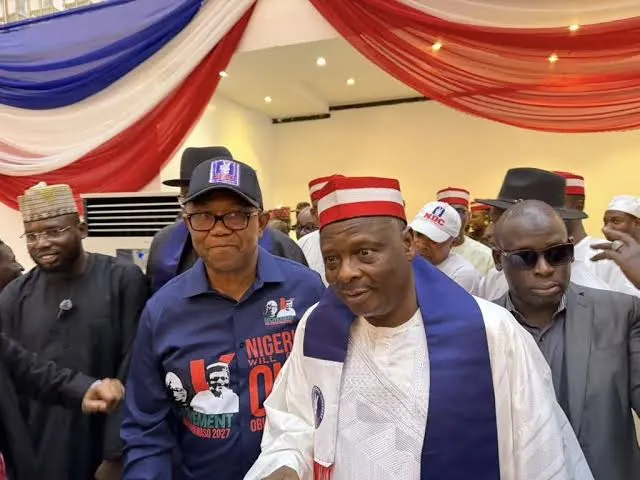
Former Labour Party presidential candidate Peter Obi has raised concerns over Nigeria’s growing debt burden, warning that rising debt servicing obligations could undermine investments in critical sectors and threaten long-term economic stability.
In a statement titled “Debt Servicing, Borrowing, and Nigeria’s Fiscal Priorities,” Obi reacted to recent remarks by President Bola Ahmed Tinubu indicating that Nigeria is projected to spend about $11.6 billion on debt servicing. Obi argued that while borrowing itself is not inherently problematic, the challenge lies in how such funds are utilized.
According to him, countries including Japan, United Kingdom, United States, United Arab Emirates, Singapore and Indonesia maintain large debt portfolios but direct borrowing toward sectors such as education, healthcare, infrastructure, and innovation, creating long-term economic value and repayment capacity.
Obi, however, argued that Nigeria’s borrowing pattern has largely been consumption-driven, with limited developmental outcomes to justify the scale of debt accumulation. He further claimed that a significant portion of the debt currently being serviced was accumulated under the current administration, while borrowing continues through fresh external and domestic commitments.
He cited recent borrowing arrangements allegedly involving institutions including First Abu Dhabi Bank, UK Export Finance through Citibank London, the World Bank, and Deutsche Bank, which he estimated could raise Nigeria’s latest external loan commitments to about $7.8 billion.
Comparing debt servicing obligations with allocations in the proposed 2026 budget, Obi noted that combined funding for health, education, and poverty alleviation stands at approximately ₦5.885 trillion, while projected debt servicing costs could rise to between ₦17 trillion and ₦18 trillion depending on exchange rates.
He warned that the imbalance could create a situation where debt obligations increasingly crowd out investments in human capital and poverty reduction.
“The issue is not borrowing itself,” Obi said, stressing that the real concern is whether borrowed funds translate into productivity, inclusive growth, and improved living standards.
He concluded with his recurring message: “A New Nigeria is Possible.”