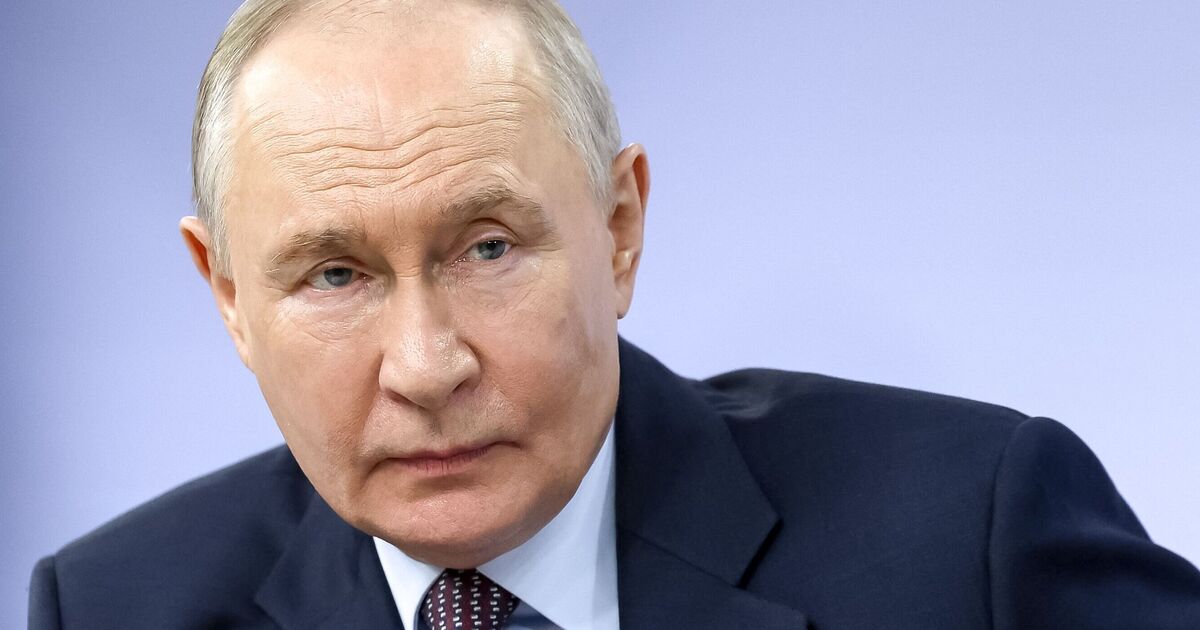
Vladimir Putin is increasingly seen as detached from the mounting crises facing his country, a new report has suggested. And insiders are warning that the 73-year-old Russian President is being shielded from the full scale of military setbacks, economic recession and public discontent after more than 50 months of war in Ukraine.
Research Professor Pavel K Baev of the Peace Research Institute Oslo (PRIO) detailed the growing concerns in an analysis published Tuesday, noting a “dissonant, but increasingly loud choir of Russian voices” from economists, bloggers, officials and commentators urging Putin to confront realities his inner circle downplays.
Russia’s economy has slipped into recession, spreading from a long-weak investment sector to the military-industrial complex. Putin has attributed recent GDP declines in January and February to seasonal factors and ordered a return to growth, but analysts say this risks reliance on manipulated statistics.
Independent Russian economists have described the policy failure in stark terms, while even Central Bank Governor Elvira Nabiullina offered only modest interest-rate relief amid stubborn inflation.
Energy infrastructure continues to suffer from Ukrainian drone strikes, reducing potential windfalls from oil revenues and forcing regional authorities into awkward admissions. The governor of Leningrad Oblast described his territory as essentially “frontline.”
Fires at facilities such as the Tuapse oil refinery have sparked rumours of environmental and health risks that social media have amplified despite Kremlin efforts to suppress information.
Public frustration has boiled over into unexpected protests against tightened internet controls imposed by the FSB. A beauty influencer’s emotional appeal on the banned Instagram platform drew millions of views, highlighting the economic damage to small businesses reliant on digital connectivity in urban centres like Moscow. Putin defended the restrictions as necessary to block “terrorist” communications but appears unaware of the broader costs to digital-dependent commerce.
Recruitment for military service contracts is declining, a key indicator of war fatigue, even as the Kremlin maintains high approval ratings through managed polling.
Semi-official agencies have begun publishing data showing a gradual erosion of Putin’s popularity and diminishing trust in the government. Repression has intensified, but fear alone has not translated public irritation into support for escalation.
Prof Baev observed that many appeals to Putin adopt a pleading tone, directing anger at courtiers — ministers, generals and governors — accused of withholding bad news.
The president continues to surround himself with long-serving loyalists, including FSB Director Aleksandr Bortnikov, Foreign Minister Sergei Lavrov and Rostec CEO Sergei Chemezov. He has reportedly curtailed direct meetings with top military commanders, who are pressed to deliver optimistic reports while Ukrainian drone successes still filter through censorship.
Concerns about Putin’s disconnect from reality are spreading across elite groups. The veteran analyst compared the Kremlin’s stance to the late Soviet era, when only “minor shortcomings” were admitted and leaders issued instructions for improvement that bore little relation to ground-level problems.
Baev warned that Putin may draw temporary comfort from residual public deference rooted in Russia’s autocratic traditions, but risks a sharper backlash once Russians recognise the limits of his willingness or ability to address their grievances.
He wrote: “Procrastination is often a wise political choice except when troubles are brewing and time is running short.”
The analysis, also published by the Jamestown Foundation’s Eurasia Daily Monitor, underscores deepening unease within Russia as the war grinds on with no clear resolution in sight.