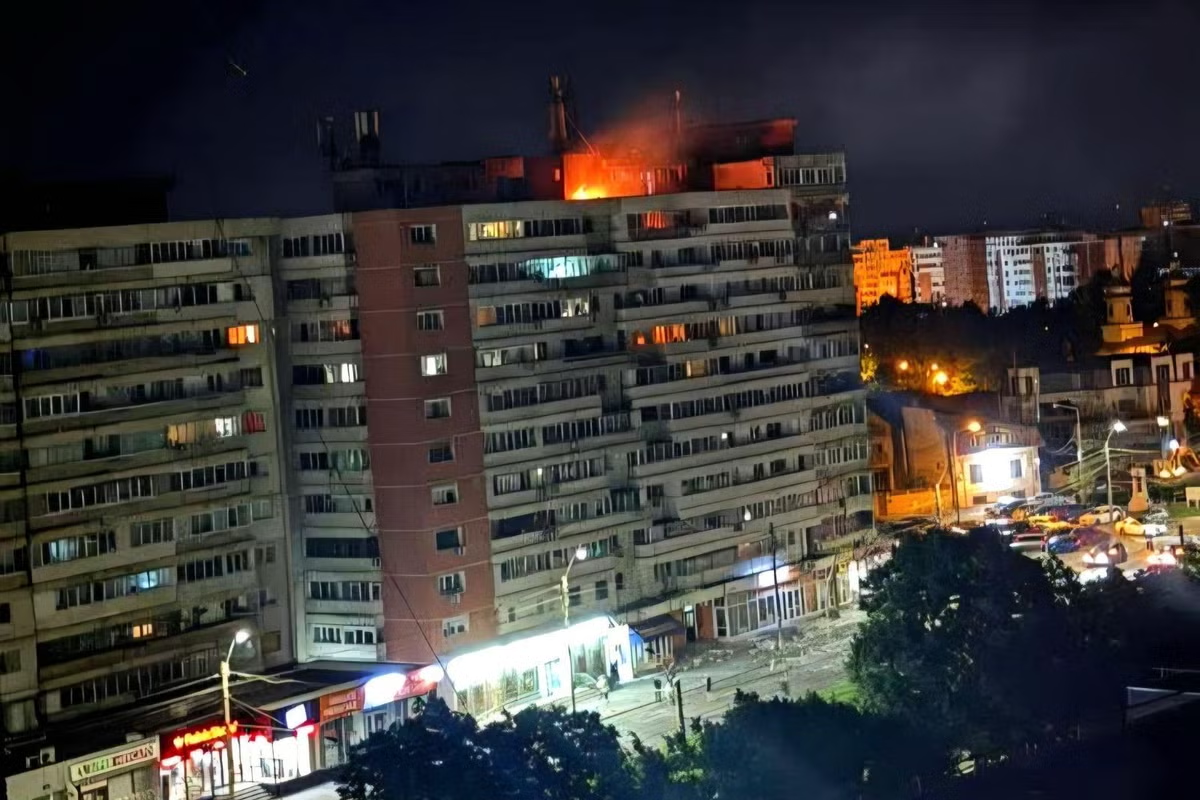
The contagion from Russia’s war against Ukraine spread into Nato territory the moment a concrete-shattering payload of at least 50kg of high explosive detonated in the top floors of a block of flats in Romania.
Two civilians were injured when the drone hit apartments in Galati, in the east of the country. The apartments were rocked by the drone’s detonation 160km (100 miles) from any likely target in Ukraine’s port city of Odessa.
The flames bursting from the guided slow-moving missile tore through the building and ignited consternation and condemnation from Nato’s members.
The injured were treated in hospital and Romania scrambled attack helicopters and fighter jets to defend its airspace.
Nato, an alliance bound by Article Five of its founding charter which says that an attack on one nation is an attack on all, now faces the gritty decision of how to react.
And rattling Nato is a strategic success in its own right for Vladimir Putin.
“Russia’s reckless behaviour is a danger to us all,” Nato secretary general Mark Rutte said in a post on X. “Last night showed yet again that the implications of their illegal war of aggression don’t stop at the border.
“We will continue to strengthen our deterrence and defence at home and continue our support for Ukraine as they defend against Russia’s aggression.”
The drone, which had been on Romanian territory for at least four minutes before it hit, blasted a large hole in the reinforced concrete on the roof of the flats and threw debris into the street below. An impact a couple of floors down would have resulted in far more catastrophic civilian casualties.
Central to Nato’s analysis now will be an assessment as to whether the drone drifted off course, possible as a result of electronic jamming of its navigation systems, or whether the Kremlin deliberately targeted a European Nato nation.
A deliberate attack by Russia at this time is consistent with Moscow’s military strategy, known as “the Garazimov doctrine”, which argues that chaos in the ranks of the enemy is a form of victory.
All the Kremlin released on Friday was a bland note to say Putin had been made aware of the drone strike.
Moscow is on the back foot in its war with Ukraine. It has lost small parts that it captured last year at gigantic human cost and the UK’s GCHQ now estimates that 500,000 Russians have been killed since 2022.
Russia has also overspent its military budget by $28 billion this year, according to the FT, in an economy that is now at least 40 per cent dedicated to the war effort.
In the meantime, Ukraine has steadily increased its long-range drone attacks against Russia – targeting its oil processing infrastructure – causing a rise in fuel prices even though Moscow has enjoyed a revenue boon from increased oil prices following the US-Israel war in Iran.
Ukraine claims to be killing about 35,000 Russian soldiers a month and aims to kill at least 50,000, not only to create a manpower shortage but to financially cripple the Kremlin’s compensation system which gives $165,000 to the families of soldiers killed.
An attack on Nato that is also deniable as an accident, is consistent with Russia’s tactics of achieving strategic effect with a low investment.
Recent exercises in Belarus involving Russian short-range nuclear missile systems were trumpeted by Moscow as part of its effort to put its enemies off balance and distract from front line failure and rumblings of disaffection from within Moscow’s nomenklatura.
Russian drones attacking Ukraine tend to fly low to avoid radar detection. Many use Ukrainian SIM cards and cellular networks, which are not jammed, to fly onto their targets. Incoming drones are tracked by Ukraine long before they enter domestic airspace.
On Thursday night when Galati was attacked, Odessa was under a heavy barrage of Russian drones and ballistic missiles targeting its busy international port. As was Ukraine’s Izmail port – 80km east.
The impact in Romania is more likely to have been deliberate than accidental. Moscow’s forces fire swarms of drones at targets – often 400 a night – with the intent to overwhelm Ukraine’s air defences.
One drone hit Romania – others may have been shot down by air defences in Odessa en route. Romanian officials said what appeared to be a reconnaissance drone also crashed in the north of the country.
And the country says it has endured at least 28 drone incursions into its airspace over the last year.
On Friday, President Nicusor Dan said: “Romania is a Nato member state and will not accept, under any circumstances, that the war of aggression waged by Russia against Ukraine be transferred to its citizens.
“The unprecedented nature of the event demands a firm, coordinated and proportionate response – at national, allied and international level.”
More details here...