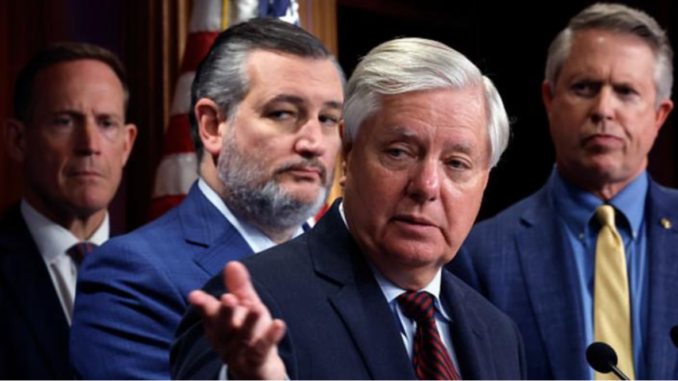
Senior Republican lawmakers in the United States have voiced strong opposition to reports of a proposed 60-day ceasefire agreement with Iran, warning that the deal could strengthen Tehran’s regional influence and weaken the gains achieved through recent military operations.…....
According to Jerusalem Post, US President Donald Trump said that negotiations involving the United States, Iran, and several Middle Eastern countries were “largely negotiated.”
The proposed framework reportedly includes reopening the Strait of Hormuz and continuing discussions on Iran’s nuclear activities during the ceasefire period.
However, prominent Republicans, including Senator Ted Cruz and Senator Lindsey Graham, criticized the emerging agreement, arguing that it could allow Iran to maintain nuclear capabilities and expand its strategic power in the region.
Cruz described the possible deal as a “disastrous mistake” if Iran is allowed to continue enriching uranium or maintain influence over the Strait of Hormuz.
He argued that after months of confrontation, allowing Tehran access to financial resources and military leverage would undermine the purpose of the conflict.
Graham also expressed concern that the agreement could shift the regional balance of power in Iran’s favor.
He warned that if Iran is viewed as capable of threatening global oil routes and Gulf infrastructure without facing decisive consequences, it could embolden Tehran and create long-term security challenges for Israel and US allies.
Former Secretary of State Mike Pompeo also condemned the reported framework, comparing it to the Obama-era Iran nuclear deal.
Pompeo argued that the United States should instead focus on limiting Iran’s financial and military capabilities rather than granting concessions through diplomacy.
Despite the criticism, the Trump administration continues to present the talks as a possible breakthrough aimed at easing tensions and preventing wider regional instability.