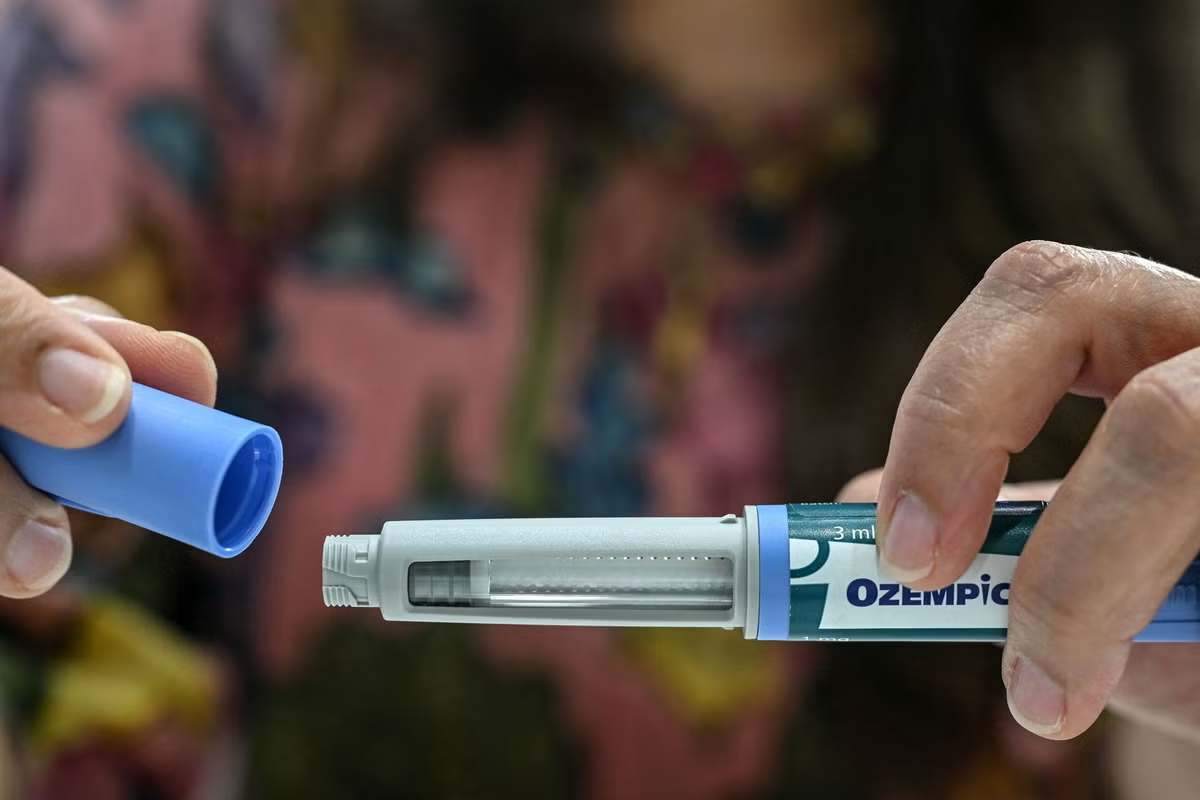
Scientists are exploring how GLP-1 drugs like Ozempic may not only be a metabolism breakthrough, but could also reshape some patients’ brains.
GLP-1s were originally developed to treat diabetes and obesity, but researchers at the University of Colorado Anschutz have found that the drugs increased brain connectivity in some patients and may rewire brains beyond quieting appetites, researchers told the Washington Post.
While scientists stressed there are still many unknowns with GLP-1 drugs and research is limited, some patients taking the medication have reported positive impacts, aside from a decrease in hunger or food cravings.
The drug has reportedly made some patients less likely to drink alcohol or act compulsively, and early studies are being carried out on how the medication could one day be used as a possible treatment for addiction. And GLP-1s have improved attention spans in some cases, the outlet reports.
Previous studies looking at GLP-1 drugs and the brain have suggested that the drugs may slow the loss of volume in the parts of the brain required for planning, memory, emotion and sensory integration.
Scientists are also studying whether GLP-1s may be beneficial as a way to delay or prevent diseases like Alzheimer’s.
While researchers have questioned whether GLP-1s could help with Parkinson’s, a recent clinical trial did not show any overall impact. A large late-phase clinical trial of the drug for Alzheimer’s patients also failed to show that the medication significantly slowed cognitive and functional decline in patients, according to the report.
Still, many scientists are exploring whether GLP-1 drugs can act directly on the brain, and potentially reshape people’s nervous systems by reducing inflammation, improving their metabolisms and easing their stress.
The findings at the University of Colorado Anschutz, shared with the Post, were made as researchers studied young women taking GLP-1 medications to treat a common hormonal condition, PCOS, recently renamed to polyendocrine metabolic ovarian syndrome or PMOS.
Within a few months of GLP-1 use, patients’ brain connections in the salience network, which helps target attention, had multiplied, Allison Shapiro, the lead researcher, told The Post.
“We didn’t expect to see this effect, and we really don’t know what it means,” Shapiro said.
During the trial, Shapiro began scanning participants’ brains. The scans pointed researchers to the possibility that the condition may involve dysfunction in the hypothalamus — the part of the brain that regulates hunger, stress, sleep and hormones — and also contains a high concentration of GLP-1, according to the report.
The scans also indicated increased connectivity between different regions of the brain.
While many people have reported positive impacts of GLP-1s, some users have reported brain fog, while others say they experience less pleasure and are less motivated.
The scientists cautioned that this new research is still in the early stages, and they have yet to determine what these changes mean, and how they might impact the brain long term.
Researchers have also questioned how these drugs might impact children’s developing brains.
“We can’t assume what adults do and how they respond is going to be how adolescents respond,” Shapiro said.
Shapiro hopes to continue studying how the drugs potentially impact children, and whether neural changes they may experience on them will be lasting.
“The real test is how the brain effects are sustained when you take adolescents off the drug,” she said.
Grace Hamilton, a study participant who has been on GLP-1s since her early 20s, said she has noticed several impactful changes to her brain since being on the medication.
While Hamilton, 28, had been on numerous antidepressants when she was a teen, she no longer needs them. She has also stopped being a social drinker, and says she no longer has a desire to drink at all, she told the Post.
“I would probably stand to bet it’s not a coincidence,” she said.
More details here...