Talks between the United States and Iran on extending a fragile ceasefire and reopening the Strait of Hormuz are expected to take several more days, U.S. Secretary of State Marco Rubio said Tuesday.
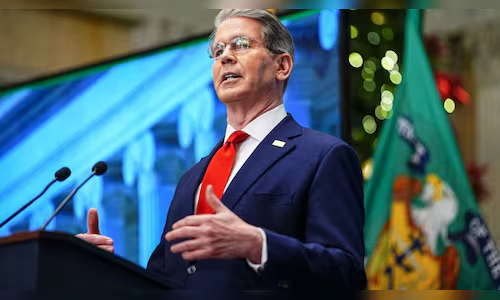
Speaking to reporters, Rubio said discussions were still underway over the wording of an initial agreement, with negotiators continuing to work through unresolved details. “There were some talks going on in Qatar today, so we’ll see if we can make progress,” Rubio said. “I think it’s a lot of talking back and forth going on about specific language in the initial document, so it’ll take a few days.”
The negotiations are aimed at extending the ceasefire between Washington and Tehran and restoring safe passage through the Strait of Hormuz, one of the world’s most important energy corridors. Rubio said the waterway “has to be open, one way or the other,” underscoring the Trump administration’s position that commercial shipping through the strait cannot remain blocked or severely restricted.
The comments came after the U.S. military launched new strikes on Iranian targets in southern Iran, saying the attacks were defensive and targeted missile sites and boats that were allegedly attempting to lay mines near the strait. Iran accused Washington of violating the ceasefire and warned that the strikes could undermine diplomatic progress.
Despite the escalation, talks have continued. The negotiations under discussion reportedly include a preliminary framework that would create a 30-day window to end hostilities and resume shipping through the Strait of Hormuz, while pushing more complicated issues — including Iran’s nuclear program — into a second phase of talks.
The Strait of Hormuz has become a central point in the conflict, with shipping through the narrow waterway sharply disrupted by the fighting. The strait carries roughly a fifth of global oil and liquefied natural gas trade, making any prolonged closure or threat to shipping a major concern for energy markets and the global economy.
Oil prices surged following the latest U.S. strikes, with crude climbing about 3.5 percent to around $100 a barrel as markets reacted to renewed fears of a wider confrontation and continued disruption in the Gulf.
The proposed deal remains politically and diplomatically fragile. Iran has sought economic concessions, including access to frozen assets, while U.S. officials have insisted that Iran must allow the safe reopening of maritime traffic through the strait. The Guardian reported that the talks, mediated in part by Qatar and Pakistan, have remained technically alive despite Tehran’s condemnation of the latest American strikes as a “bad faith” violation of the ceasefire.
President Donald Trump has also signaled that an agreement is not yet complete. The Washington Post reported earlier this week that the United States and Iran were working toward a deal to extend the ceasefire and reopen the strait, but Trump cautioned that the agreement “isn’t even fully negotiated yet.”
For now, Rubio’s remarks suggest that Washington believes a deal remains possible, but not imminent. The next several days are expected to determine whether the ceasefire can be extended, whether shipping through the Strait of Hormuz can resume more safely, and whether the U.S. and Iran can move from an initial security arrangement toward broader negotiations over Tehran’s nuclear program and the future of regional hostilities.
(YWN World Headquarters – NYC)