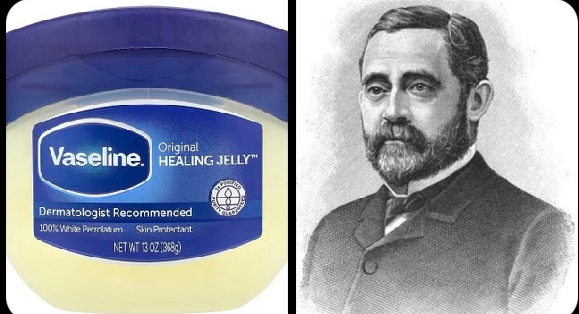
In the 1850s, American chemist Robert Chesebrough traveled to Pennsylvania’s oil fields to investigate a sticky, waxy byproduct that clogged oil rig pumps. Workers called it “rod wax” and complained about it. But Chesebrough noticed something odd: the drillers were smearing the substance on cuts and burns, claiming it helped them heal faster.
He brought samples back to his Brooklyn lab, refined the goo through a boiling and filtering process, and in 1872 patented what he named “Vaseline.” The name came from the German word _wasser_ for water and the Greek _elaion_ for oil. But Chesebrough didn’t stop at selling it. He became his own best advertisement.
Convinced of its healing powers, Chesebrough made a habit of testing Vaseline on himself. He would burn or cut his skin and then slather it with the petroleum jelly to prove it prevented infection and sped up recovery. The stunt that got people talking, though, was his daily routine: he ate a spoonful of Vaseline every single day.
When he fell ill, he took it further. Chesebrough would have himself covered head to toe in Vaseline, believing it helped his body fight off sickness by sealing in moisture and keeping out germs. At a time when germ theory was still gaining ground and most medicines were harsh or ineffective, his ritual sounded bizarre. Yet it worked for him.
Chesebrough lived to 96, dying in 1933. He credited Vaseline for his longevity and robust health, often telling people he would live to 100 if he hadn’t been hit by a car in his 90s. Whether the petroleum jelly actually extended his life is debatable, but the story cemented Vaseline’s reputation as a cure-all.
The product itself became a global success. By the early 1900s, Vaseline was sold in over 140 countries. It was marketed for chapped lips, dry skin, minor cuts, and even as a cosmetic to give skin a healthy sheen. Hospitals used it to prevent bedsores, and soldiers carried it in World War I for trench burns and frostbite.
Modern science clarifies what Chesebrough was really onto. Vaseline is 100% petroleum jelly, an occlusive moisturizer. It doesn’t heal wounds itself, but it creates a barrier that locks in moisture and protects skin, creating the right conditions for the body to heal. Eating it is harmless in small amounts, which is why it’s still used in some food and cosmetic products today….See More