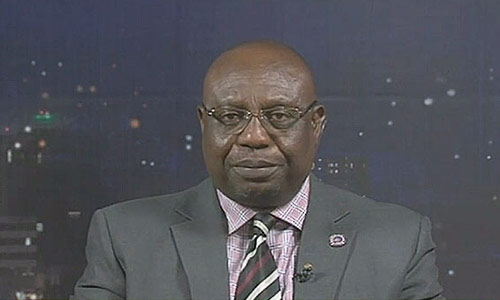
By Festus Okoye
The confusing, opaque, and cavalier conduct of some political parties in Nigeria during party primaries can bring the electoral process and democracy into disrepute.
It seems that some political parties want to run without a membership base. In truth, you cannot have a thriving electoral process, a vibrant democracy, and the supremacy of political parties without party members.
The impression created by the conduct of primaries by some political parties is that political parties in Nigeria are the property of a few governors, members of the National Assembly, and some political godfathers.
That should not be the face of democracy and our electoral process, and certainly not the democracy Nigerians fought for. First, none of the political parties known and described as major political parties clearly and comprehensively outlined their concept of consensus primaries and the participants involved.
Hence, party members remained in the dark about the constituents of consensus primaries. Second, some of the direct primaries held so far offer lessons for the world, demonstrating that Nigerian mathematics and the electoral process are unique and transferable.
However, Nigerian politicians are exporting and promoting electoral misbehaviour globally, giving democracy and the electoral process a bad name. Some lawmakers who supported the inclusion of consensus and direct primaries in the Electoral Act, 2026, are learning political lessons the hard way.
They refused, neglected and failed to learn from history and precedent that you must protect your turf and use your advantage to your own benefit. This is because, when you refuse to imbibe the lessons of history and look at precedent, you are bound to repeat the mistakes and errors made by your predecessors and peers.
Another lesson in our brand of politics is that prioritising your own position is more crucial than merely following the crowd. Some lawmakers panicked when faced with challenges within their parties and either fled or defected to other parties, forgetting that they must contend with those who have long nurtured their parties and have been waiting for their moment of glory.
They also overlooked that most political parties revolve around state governors, and loyalty to the governor is the primary requirement for obtaining a party nomination form before participating in consensus and direct primaries. In other words, the governors and godfathers are the consensus and direct primaries.
No one gets a party nomination form and advances through the primaries without them. The major challenge faced by those who lost out in their party primaries is that their names appear on their party’s membership register submitted to INEC, and under the current state of the law, they may not defect or port to other parties without engaging in an exercise in futility. The tragedy is that what is happening in some of the parties is not new.
Some of the issues played out in 2021, before the signing of the Electoral Act, 2022. Some of the governors are merely recycling the tricks and precedents they used in the primaries leading up to the 2023 general election.
In 2021, President Muhammadu Buhari chose not to sign the Electoral Act (Amendment Bill) 2021. His explanatory letter to the National Assembly offers valuable insights. In it, he stated that, following his letter dated November 18, 2021, forwarded for Presidential
The tragedy is that the political elite who formulate and package these things are not ashamed and do not recognise the shame in what they do and export
assent, the Electoral Act (Amendment) Bill 2021, as passed by the National Assembly, he has received informed advice from relevant Ministries, Departments, and Agencies of the government. He has carefully reviewed the bill in light of the current realities prevalent in the Federal Republic of Nigeria.
In these circumstances, he declined to assent to the Bill. He noted that, based on the review, the Senate President might want to consider that conducting party candidate nominations solely through direct primaries, as outlined in the Electoral Act (Amendment) Bill 2021, raises significant legal, financial, economic, and security concerns that cannot be addressed within the period due to our country’s unique circumstances.
He stated further that the Electoral Act (Amendment) Bill 2021 seeks to amend certain provisions of the extant Electoral Act 2010.
Part of the bill’s objective is to amend Section 87 of the Electoral Act, 2010, to delete the provision for conducting indirect primaries to nominate party candidates, so that party candidates can henceforth emerge only through direct primaries.
He urged the President of the Senate to recognise that implementing direct primaries in all 8,809 wards nationwide will substantially increase the costs of conducting political parties’ primary elections.
It will also increase INEC’s expenses, as monitors must be dispatched to each ward during presidential, gubernatorial, or legislative primaries.
These added costs, on top of the already substantial expenses of general elections, will place a significant financial strain on political parties, INEC, and the economy, especially amid declining revenue.
He further indicated that the proposed amendment could lead to numerous lawsuits on various legal grounds, including the argument that it cannot be applied retroactively, since the Parties’ current constitution, already registered with the Independent National Electoral Commission (INEC), allows for direct, indirect, and consensus primaries.
Finally, he argued that direct primaries are vulnerable to manipulation or malpractice, as most parties lack a reliable, verified membership register or a valid means of identification. This enables wealthy contenders to recruit non-members to vote and sway the results.
Rival parties may also collude and mobilise supporters to vote against strong or popular candidates within their own party during primaries, aiming to strengthen their own candidates. By contrast, when accredited delegates conduct indirect primaries, such irregularities are less likely to occur.
For the then-President, indirect primaries or collegiate elections are part of internationally accepted electoral practices. Moreover, direct primaries are not immune to manipulation and do not necessarily guarantee the expression of the people’s will, especially in circumstances like ours, where it is nearly impossible to sustain a workable implementation framework.
Nigerians are watching how political parties conduct their primaries and asking whether that is the colour of primaries and democracy. Some have expressed genuine concern that the consensus arrangement among the various states and political parties could alienate party members and undermine the credibility of the electoral process.
The parties have never adequately explained the concept of consensus to their members during candidate selection and nomination.
They have not informed members about the individuals involved in the consensus process, including who will be consulted and who will vote. Essentially, questions arise about who the stakeholders are in a consensus arrangement.
A prevalent perception is that the governors of the states are the true arbiters of consensus, and that whoever they endorse, appoint, or select holds consensus status. This phenomenon has been observed in many states across the federation.
The political parties that have conducted direct primaries are aware that they have given Nigerian democracy a bad name. They thought that the kind of lining up and being counted they had done before the advent of social media was still available to them.