As Nigeria’s Hostage Camp Crisis Deepens
By Mike Odeh James and Luka Binniyat
(Kaduna) Eleven women and children freed after 118 days in a Fulani Ethnic Militia (FEM) forest camp in Kaduna have reported torture, starvation, and cannibalism to TruthNigeria.
They stepped from a vehicle on April 30, 2026, gaunt, hollow-eyed, and visibly broken — the latest survivors of what human rights organizations are increasingly calling Nigeria’s concentration camp crisis.
The Kidnapping: Jan. 3, 2026
Credit Mike Odeh James
“On January 3, 2026, more than 20 heavily armed Fulani Ethnic Militia members crept into our Christian farming community of Angwan Gamo in Kajuru County, Kaduna State, and kidnapped 15 of us — mainly women and children,” Rejoice Yunana, 20, a student at the College of Education in Lafia, Nasarawa State, told TruthNigeria.
“Two actually escaped while we were being herded into the bush,” she said.
Among those who returned were Veronica Pius, 45; Philomina Andrawus, 35; Ketura Andrawus, 4; Aveolin Danlami, 8; Frank Danlami, 9; Niso Andrawus, six months; Mary Patrick, 35; Zaphania Irimiya, 18; Moses Felix, 10; Jamima Habila, 31; and Rejoice Yunana, 20, along with Mary Patrick’s young son.
Network of Camps Across States
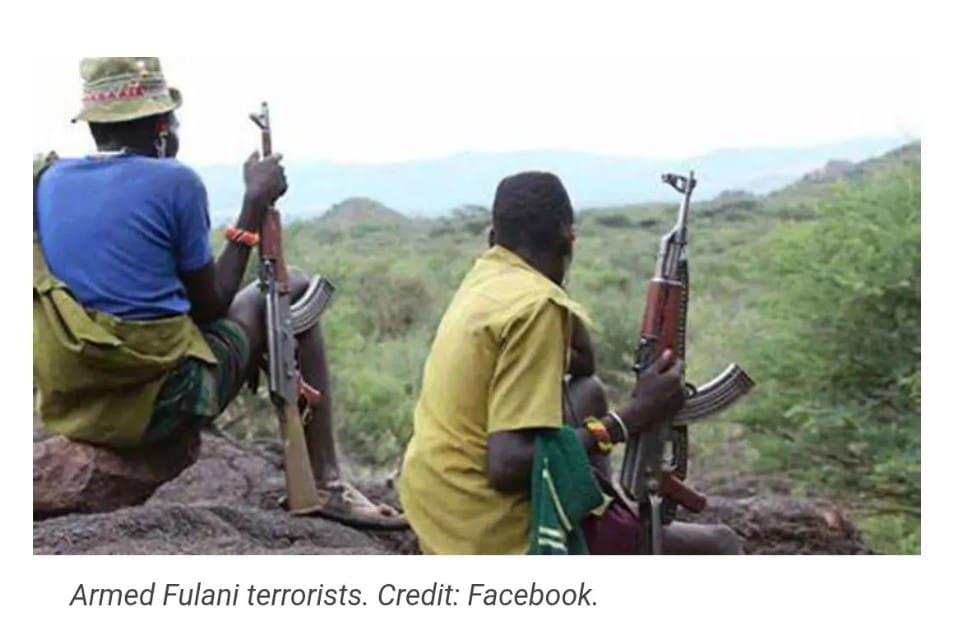
The Rijana Forest camp located in Kachia County, Kaduna State is not an isolated case. TruthNigeria has documented a network of Fulani Terrorist hostage camps operating across the Middle Belt.
Nigerian Army and police are well aware of a large hostage camp system near Rijana. In February 2025, the Office of the National Security Adviser publicly celebrated the rescue of hostages from one such camp.
Western media have followed the mass abduction of students since the infamous capture of the Chibok girls in Borno State in 2014. Yet, the shocking system of hostage camps for kidnapped Christians that surfaced in 2025 was covered by mainstream Nigerian media only in early February 2025, when the National Security Adviser’s office announced them, and after that only TruthNigeria and a smattering of online newspapers exposed them.
Adakole Adamson, director of Adamson Security Consultancy, Takum, Taraba State, told TruthNigeria the silence is not accidental.
“Most Nigerian media would not dare write about the fate of the 1,400 Christians held hostage in Rijana Forest because it would be seen as an attempt to vilify the Fulani ethnic group — of which only a small faction is actually perpetrating these acts of terrorism,” he said.
“Secondly, the Nigerian government itself spent approximately $9 million to counter the Christian genocide narrative. If it can do that, it will do everything to suppress news of the Rijana hostage camps,” Adamson added.
Nazi-like treatment inside Rijana camp
Mary Patrick, 35, told TruthNigeria that upon arrival at the Rijana Forest camp, terrorists immediately began flogging captives with horsewhips and bamboo sticks.
“They used bamboo sticks to smash our legs, then separated the men from the women,” she said. “They chained the men’s hands and legs with motorcycle chains that cut into their ribs.”
In the second month, Fulani Terrorists grew angry that ransom had not been paid. They dragged Esther Habila, 31, into the open and shot her. What followed was among the most extreme atrocities documented in the Middle Belt. After dismembering her body, terrorists forced captive children to eat human flesh.
“They forced about three children to eat,” Philomina Andrawus, 35, a fellow captive, told TruthNigeria. “I managed to signal the others not to comply — but one little boy could not be stopped in time.”
“Today, that child’s stomach is swelling up,” Andrawus said.
How Fulani terrorists crippled me
Veronica Pius, 45, told TruthNigeria she could no longer walk after terrorists slashed and dislocated her legs.
“As we were chained, I felt the urge to urinate and begged them to unchain me,” she said. “They refused. I urinated where I sat. They got angry and broke my legs.”
“Apart from forcing that child into cannibalism, all other cruelties you mentioned are common occurrences in the Middle Belt,” Dr. Bitrus Pogu, president of the Middle Belt Forum, told TruthNigeria from Maiduguri on Wednesday, May 7, 2026.
The Middle Belt — sometimes called the “Christian Belt” of northern Nigeria — covers approximately 300,000 square kilometers with a population estimated between 40 and 45 million, out of Nigeria’s estimated 200 million.
Pogu said Fulani terrorists deploy such atrocities deliberately: “They are ready to do everything against our people if they don’t move away from their ancestral lands.”
Victims Never Heal
Jeremiah Jankawa, a medical practitioner whose clinic — Zamani Clinic (location withheld for security reasons), Kaduna — has treated many Fulani terrorist victims, told TruthNigeria that forcing captives, especially children, to witness or participate in extreme brutality traumatizes victims and inflicts post-traumatic stress syndrome.
“It breaks resistance, creates fear, and signals absolute power,” he said.
“We have treated many patients suffering from post-traumatic stress from kidnappers, and I can tell you they never truly heal completely,” he added.
He drew parallels to Islamic State tactics, noting that violence escalates when ransom is delayed: “When expectations like ransom payments fail, perpetrators may escalate brutality to reinforce their threats.”
Mike Odeh James and Luka Binniyat write for TruthNigeria from Kaduna.