3 min readMay 20, 2026 11:42 PM IST
Steven Rosenbaum, the author of the book “The Future of Truth,” which was released this month took considerable attention as it has more than a half-dozen misattributed or fake quotes and AI generated, in sections of the book that was reviewed by The New York Times.
On Monday the author acknowledged his mistake openly and said “a handful of improperly attributed or synthetic quotes,” adding that he has started his own investigations.
According to a report by The New York Times, the author admitted the inclusion of the incorrect quotes as an accident and also mentioned that there was “no intention of fabricating any viewpoints” while curating the book.
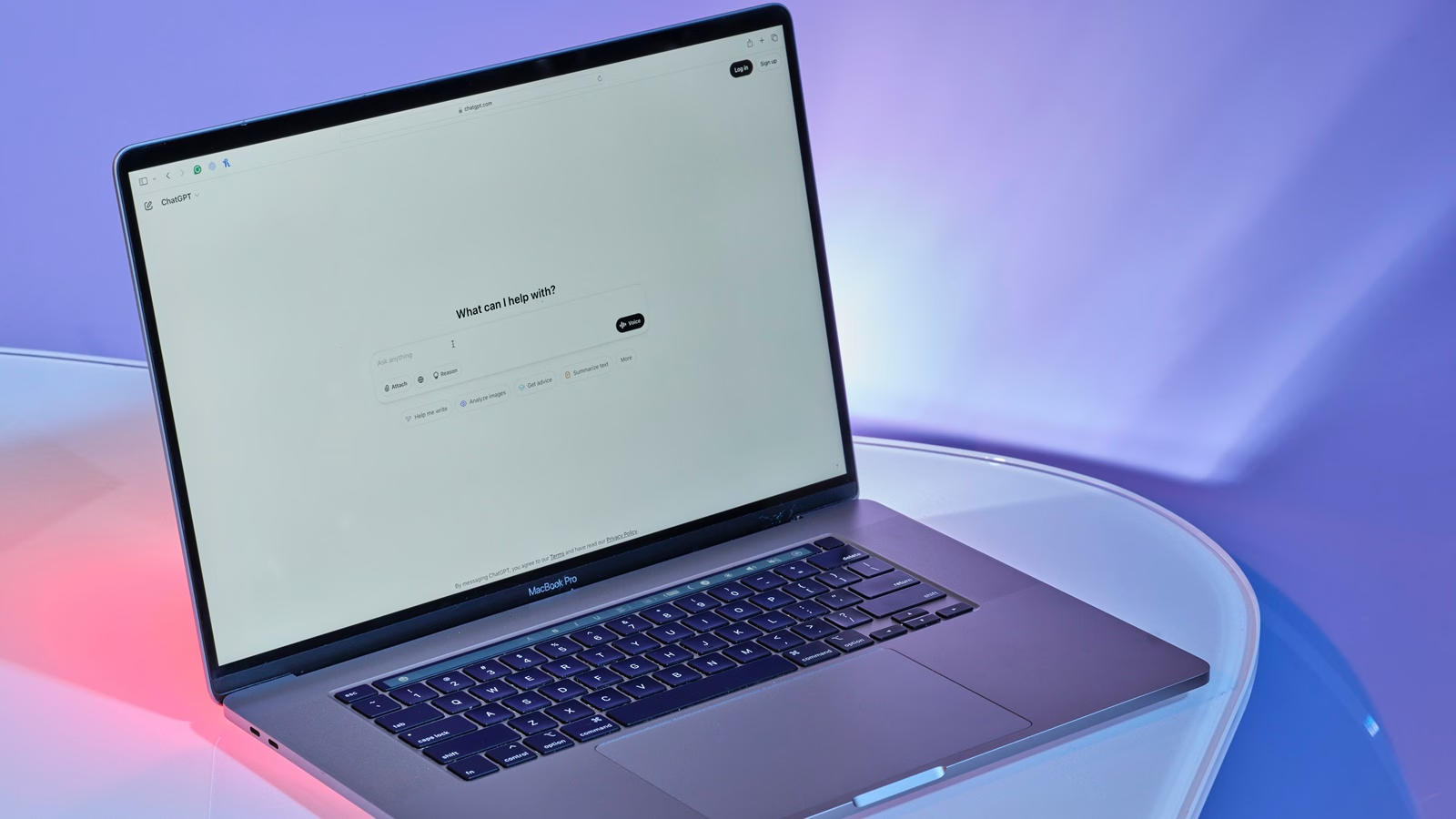
He said in a statement, “As I disclosed in the book’s acknowledgments, I used AI tools ChatGPT and Claude during the research, writing and editing process.” He further added that “That does not excuse these errors, of which I take full responsibility. I am now working with the editors to thoroughly review and quickly correct any affected passages; any future editions will be corrected.”
“The Future of Truth” was published by an imprint of BenBella Books and distributed by Simon and Schuster. BenBella Books, which operates independently of Simon and Schuster, did not respond to a request for comment, while Simon and Schuster declined to comment on the matter, as reported by The New York Times.
The book has managed to grab attention, including an excerpt in Wired Magazine, it also reportedly carried approval and sanction from well-known journalists such as Taylor Lorenz, Michael Wolff, and Nicholas Thompson, CEO of The Atlantic.
A foreword was written by Maria Ressa, an award-winning journalist and Nobel Peace Prize winner widely recognised for her critical coverage of Rodrigo Duterte, the former president of the Philippines.
Story continues below this ad
The rise of AI technologies has embedded fear among the publishers that they may unknowingly release the books in which authors have improperly used AI-generated content.
While many of the quotes in the author Rosenbaum’s book are accurate, the misattributed and invented ones are scattered throughout its pages.
As noted by the New York Times, one such quote is attributed to Kara Swisher, a well-known technology journalist, in a chapter about AI and misinformation, where the book credits her with writing, “The most sophisticated AI language model is like a mirror. It reflects our own morality back at us, polished and articulate, but ultimately empty behind the surface. It’s not bound by Asimov’s laws or any ethical framework — it’s bound by the patterns in its training data and the objectives set by its creators.”
But on asking about the quote, Swisher responded via text message saying she never said that and suggested the quote appeared to have been made up by AI rather than by Rosenbaum himself.
Story continues below this ad
“These AI errors do not, in fact, diminish the larger questions that the book raises about truth, trust and AI and its impact on society, democracy and editorial,” he stated.
(Written by Paramita Datta, who is an intern with The Indian Express)
Stay updated with the latest – Click here to follow us on Instagram
© IE Online Media Services Pvt Ltd