The new rule was announced by US Citizenship and Immigration Services (USCIS) in a policy memo issued on May 21. It says green card approvals from within the US will now be allowed only in “extraordinary circumstances.”
USCIS said the policy is meant to restore the “original intent” of immigration law. The agency said foreigners on temporary visas should normally complete the green card process through US consulates abroad instead of using their stay in America as the first step toward permanent residency.
Indians In Trouble
The move could heavily affect Indians, especially skilled workers on H-1B visas who later apply for employment-based green cards while continuing to work in the US. Indians form one of the largest groups waiting for US permanent residency through employment categories.
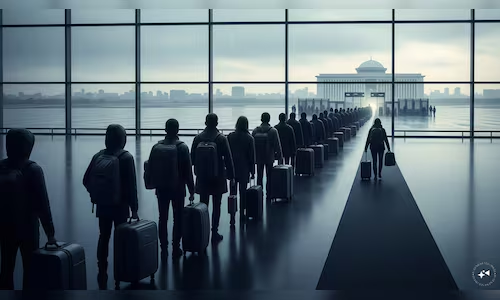
Immigration experts warned that applicants may now have to return to India and wait there for months or even years because of long backlogs at US consulates.
Economist Michael Clemens said high-skilled Indian workers applying for EB-2 and EB-3 visas could face “years” of overseas waiting during consular processing, leading many to abandon the process altogether.
The USCIS later said applicants who provide an economic benefit or serve the national interest may still be allowed to continue the process from within the US. However, the agency did not clarify whether H-1B visa holders would qualify for such exemptions or how those decisions would be made.
Families Could Split
The policy could also affect Indian students, spouses of US citizens and families already settled in America. Many people currently apply for adjustment of status from within the US after getting married, receiving job offers or changing visa categories.
Immigration lawyers and advocacy groups said forcing applicants to leave the country during processing could separate families for long periods. Critics warned that people with jobs, homes and children in the US may face uncertainty about whether they will be able to return quickly.
The rule may create additional problems for applicants from countries facing travel bans or visa restrictions, with some lawyers warning that certain applicants may not be able to return once they leave the US.
Court Fight Coming
USCIS spokesman Zach Kahler defended the move, saying, “Nonimmigrants, like students, temporary workers, or people on tourist visas, come to the US for a short time and for a specific purpose. Our system is designed for them to leave when their visit is over. Their visit should not function as the first step in the Green Card process.”
Immigration lawyers said the policy is likely to face legal challenges. Critics argued that applying for adjustment of status from within the US has been part of immigration law and practice for decades. USCIS said officers will review cases individually before granting exceptions.
The policy marks another expansion of the Trump administration’s tougher approach toward both illegal and legal immigration pathways into the United States.
Here’s what changes in the green card process:
- Most applicants already living in the US will now have to leave the country and apply from their home nations.
- Green card processing will mainly happen through US embassies and consulates abroad.
- Applying from inside the US will be allowed only in “extraordinary circumstances.”
- USCIS says exemptions may be given to applicants serving the “national interest” or providing economic benefit.
- It remains unclear whether H-1B workers, students or family-based applicants will qualify for exemptions.