New Delhi:
When Donald Trump set out his latest vision for a sweeping Middle East realignment, there was one person’s name missing in a plethora of Presidents, Prime Ministers and Kings mentioned in the American leader’s social media post.
In a lengthy statement posted on Truth Social, Trump said negotiations with Iran were “proceeding nicely” and framed the moment as a potential turning point. He warned that failure would mean a return “to the battlefront… bigger and stronger than ever before,” but argued that success could produce a historic agreement anchored in an expanded framework of the Abraham Accords.
He wrote that, during discussions with regional leaders — including Saudi Crown Prince Mohammed bin Salman, UAE President Mohammed bin Zayed, Qatari Emir Tamim bin Hamad Al Thani, Turkish President Recep Tayyip Erdogan, Egyptian President Abdel Fattah el-Sisi, Jordan’s King Abdullah II, and Bahrain’s King Hamad bin Isa Al Khalifa — he had urged that all should “simultaneously” sign on to the accords.
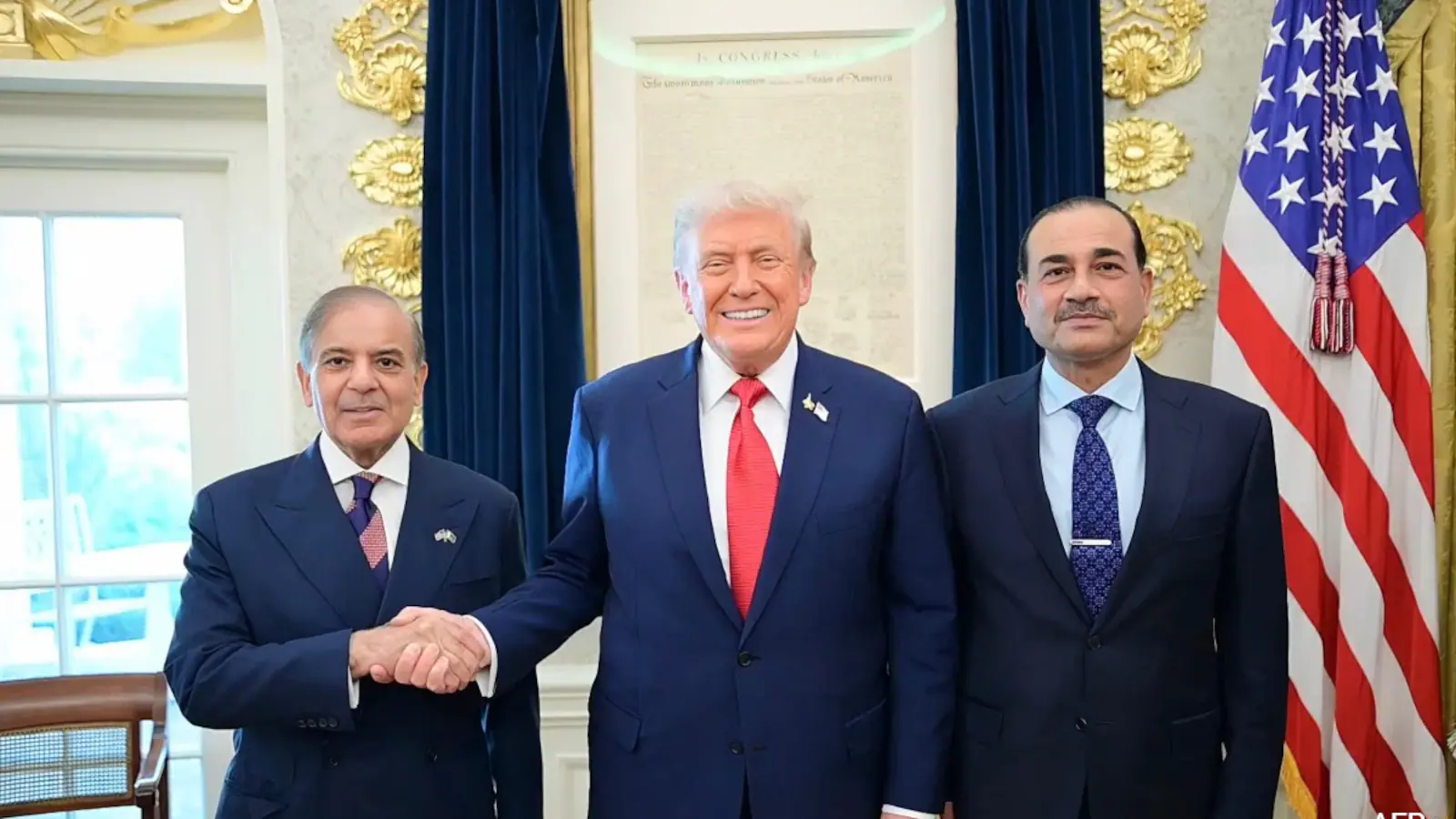
Pakistan was included in that list. But its civilian leadership was not.
Instead, Trump identified the country’s representative as Field Marshal Asim Munir rather than Prime Minister Shehbaz Sharif.
Trump described the accords as a proven success, citing what he called a “Financial, Economic, and Social BOOM” for existing members, which include the United Arab Emirates, Bahrain, Morocco, Sudan and Kazakhstan. He argued that expanding the framework — potentially even to include Iran — would create “true Power, Strength, and Peace… for the first time in 5,000 years”.
He suggested that Saudi Arabia and Qatar should sign immediately, with others following. Those unwilling, he said, “should not be part of this Deal in that it shows bad intention”.
But amid that sweeping geopolitical pitch, the reference to Pakistan stood apart. While other leaders were identified by their constitutional offices, Pakistan was represented by its military chief. There was no mention of Sharif.
During the recent diplomatic activity in Islamabad in the US-Iran engagement hosted in the Pakistani capital, it was Field Marshal Munir who took centre stage, receiving delegations, interacting directly with US Vice President JD Vance, and remaining visibly engaged throughout the process.
Pakistan’s civil-military imbalance is not new. Since independence, the armed forces have exercised decisive influence over foreign policy and national security, often overshadowing elected governments.
The episode that continues to define that dynamic unfolded in 1999. Then Prime Ministers Atal Bihari Vajpayee and Nawaz Sharif had sought to stabilise relations through the Lahore Declaration, committing to dialogue and restraint after both countries declared nuclear capabilities.
While PM Vajpayee travelled to Lahore in a symbolic bus journey, Pakistani troops under General Pervez Musharraf had already occupied strategic positions in Kargil along the Line of Control.
India regained control of the heights by July 1999. By October, Musharraf had overthrown Sharif in a coup, arresting him and imposing military rule.
Pakistan has historically refused to recognise Israel, maintaining that normalisation can only follow the establishment of an independent Palestinian state. Any move towards joining the Abraham Accords would face significant domestic resistance, both politically and within the public sphere.
At the same time, Pakistan’s leadership — civilian and military alike –has sought to repair ties with Washington after years of strain following the US withdrawal from Afghanistan.