.. PSN orders pharmacies to activate emergency surveillance
Onyebuchi Ezigbo in Abuja
The United Nations has moved emergency personnel, funding, and supplies into eastern Democratic Republic of the Congo (DRC) to counter the fast-growing Ebola outbreak spreading through conflict-ravaged provinces.
This comes as Uganda has confirmed three new cases, bringing the total to five since the virus was discovered in the East African country on May 15.
Meanwhile, the Pharmaceutical Society of Nigeria (PSN) yesterday placed pharmacists and community pharmacies across the country on high alert following a fresh Ebola virus disease (EVD) outbreak reported in parts of Central and East Africa.
The World Health Organisation (WHO) on Friday raised the national risk assessment for DRC to “very high”, although the global risk remains “low”.
So far, 82 cases and seven deaths have been confirmed in DRC, but the WHO said the real scale of the outbreak was likely far larger.
The global health body said there were nearly 750 suspected cases and 177 suspected deaths reported.
UN’s Emergency Relief Coordinator, Tom Fletcher, announced the allocation of 60 million dollars from the Central Emergency Response Fund to support the response in DRC and neighbouring countries.
“These are tough operating environments for lifesaving work,” Fletcher said.
“We face conflict and high population movement.”
He stressed the importance of securing access for frontline responders, including in areas controlled by armed groups.
“It is essential that there is no obstruction,” he said.
WHO said the outbreak was unfolding amid intensified fighting, mass displacement, and deep mistrust of outside authorities, fuelled by rumours and misinformation.
One hospital in Ituri province on Thursday was reportedly set on fire by angry relatives after authorities refused to release the body of a deceased family member, fearing contamination.
Two cases, linked to travel from DRC, have been confirmed in Uganda, including one death.
Similarly, two American nationals, including a doctor and another person described as a “high-risk contact”, have been transferred to Europe for treatment or monitoring.
WHO said the outbreak was caused by the Bundibugyo strain of Ebola, for which there were no approved vaccines or therapeutics.
Meanwhile, Uganda has confirmed three new cases of Ebola.
“Three new cases of the Ebola Virus Disease (EVD) have been confirmed in the country,” the health ministry said, naming the patients as a Ugandan driver, a Ugandan health worker, and a woman from the neighbouring Democratic Republic of Congo (DRC), the epicentre of a deadly outbreak sowing fear in the region.
“The ministry continues to strengthen surveillance, case management, contact tracing, and public awareness efforts to contain the outbreak and protect the health and safety of all Ugandans,” it said in a statement on X.
The news came a day after the World Health Organisation said the risk from the outbreak had been raised to the highest level for the DRC.
On Thursday, Uganda suspended all public transport to the DRC after confirming two cases of Ebola — one infection and one death — involving Congolese nationals who crossed the border
PSN Orders Pharmacies to Activate Emergency Surveillance
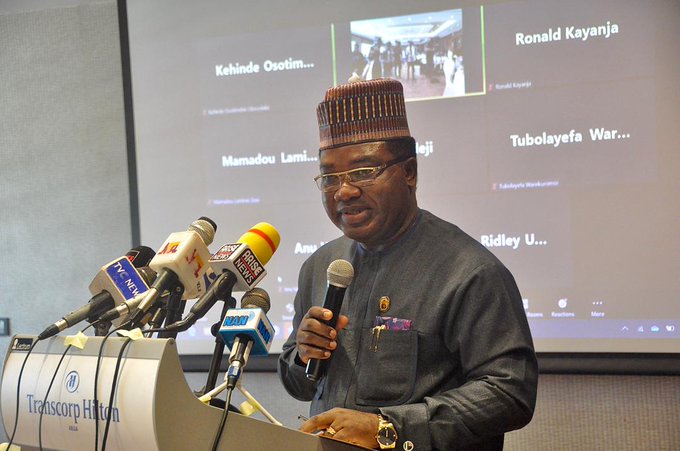
In a related development, PSN has placed pharmacists and community pharmacies across the country on high alert following a fresh outbreak of Ebola virus disease reported in parts of Central and East Africa.
In an urgent nationwide advisory issued to members, the President of the PSN, Ayuba Ibrahim Tanko, directed all pharmacists to immediately strengthen surveillance, infection-prevention measures, and emergency-response protocols to prevent a possible outbreak in Nigeria.
The directive comes amid heightened concerns over cross-border transmission risks, even as the Coordinating Minister of Health confirmed that Nigeria had not recorded any Ebola case.
The PSN, however, warned that pharmacists remained among the first healthcare professionals likely to encounter suspected cases and must therefore maintain absolute vigilance.
“Community pharmacies are often the first port of call for individuals experiencing early symptoms of illness. Pharmacists across all 36 states and the FCT must maintain a high index of suspicion.”
The society explained that Ebola symptoms may begin with sudden high fever, intense fatigue, muscle pain, headache, and sore throat before progressing to vomiting, diarrhea, skin rashes, and, in severe cases, internal and external bleeding.
It advised pharmacists to immediately screen patients with unexplained fever for a recent travel history to affected regions in East and Central Africa or for possible contact with travelers from those areas within the previous 21 days.
As part of emergency infection prevention measures, the PSN directed all pharmacies to revive compulsory hand hygiene stations at their entrances using soap and running water or alcohol-based sanitisers.