4 min readNew DelhiUpdated: May 22, 2026 10:14 AM IST
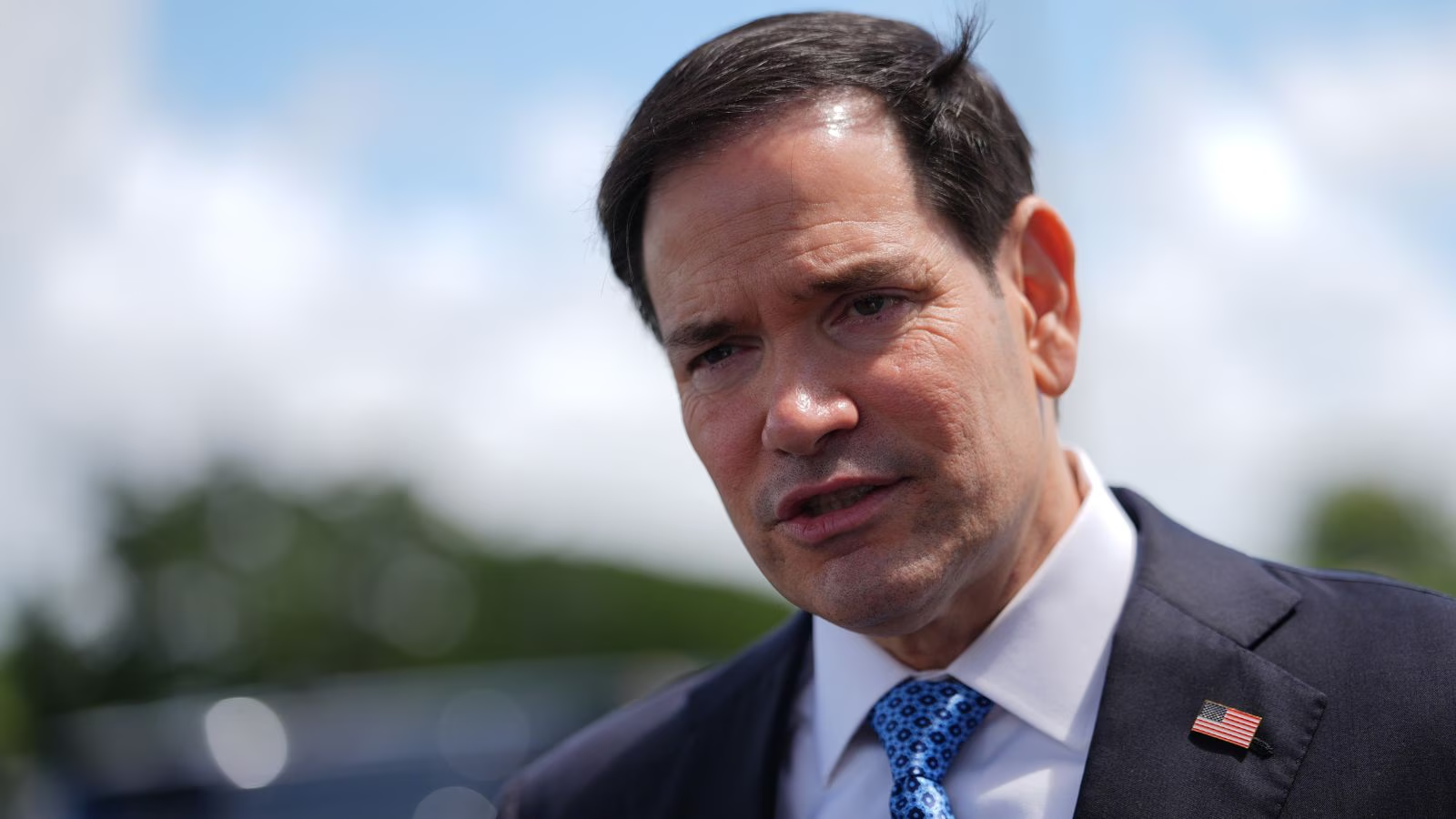
A day after the US indicted Cuba’s former President, Raúl Castro, US Secretary of State Marco Rubio on Friday said the island nation poses a “national security threat” and that the likelihood of a peaceful agreement was “not high.” Cuba’s Foreign Minister dismissed Rubio’s charges as “lies.”
While saying that Washington prefers diplomacy, Rubio said, “I’m just being honest with you, you know, the likelihood of that happening, given who we’re dealing with right now, is not high.” He also accused Cuba of being “one of the leading sponsors of terrorism in the entire region.”
Rubio’s statement comes at a time when tensions between Washington and Havana are high, as Havana reels under a severe energy crisis triggered by an effective blockade on oil supplies by the US.
Protestors took to the streets in recent weeks as the country experienced blackouts lasting up to 22 hours. Energy Minister Vicente de la O Levy said the island had completely run out of diesel and fuel oil.
US President Donald Trump’s administration has been building pressure on the communist regime in Cuba since January, reminiscent of his first term. After announcing the blockade, Trump mused about taking over the island.
On Thursday, the Trump administration indicted Raúl Castro, the brother of Fidel Castro, on charges stemming from the downing of two civilian planes belonging to a Miami-based Cuban exile volunteer organisation in 1996. Four people were killed in the incident, and at the time, Raúl was the country’s defence minister.
Although Raul relinquished the presidency and the leadership of the Communist Party in 2021, he is still regarded as one of the most powerful men in the country.
Story continues below this ad
As part of a pressure campaign in recent months, Washington sanctioned several entities and individuals linked to Grupo de Administración Empresarial S.A. (GAESA), the military-run conglomerate that allegedly controls between 40 per cent and 70 per cent of the Cuban economy, the New York Times reported.
GAESA was ideated by Raul, following the collapse of the Soviet Union, Cuba’s financial patron. It was initially created as a means to finance the military, but now the conglomerate controls virtually every corner of the Cuban economy – from tourism, malls and gas stations to the country’s largest commercial bank and its sole internet operator.
Rubio called GAESA a tool of Cuba’s political elite. Earlier this month, Trump signed an executive order saying the commercial empire’s revenues “are likely more than three times the state’s budget.”
On Thursday, Rubio announced the arrest of Adys Lastres Morera, the sister of one of the top officials linked to GAESA. Rubio alleged that while Morera was living in Florida, she was “also aiding Havana’s communist regime.”
Story continues below this ad
The charges against Raul echo those targeting Venezuelan President Nicolas Maduro, who was captured in January this year following a months-long diplomatic standoff with Washington over narco-terror charges against him.
The Trump administration has grown assertive in seeking cooperation from countries in Latin America, with analysts pointing out the US President’s embrace of foreign policy doctrines that justify military coercion in the neighbourhood.
In its National Defence Strategy published this year, the Pentagon has shown its openness to the use of “credible military options” in Central and South America to secure US interests. Critics, however, have argued that the broader approach reflect neocoloniality.
Last week, CIA director John Ratcliffe met Cuban officials in Havana to restore ties between the US and the island nation, the Cuban government said.
Stay updated with the latest – Click here to follow us on Instagram
© IE Online Media Services Pvt Ltd