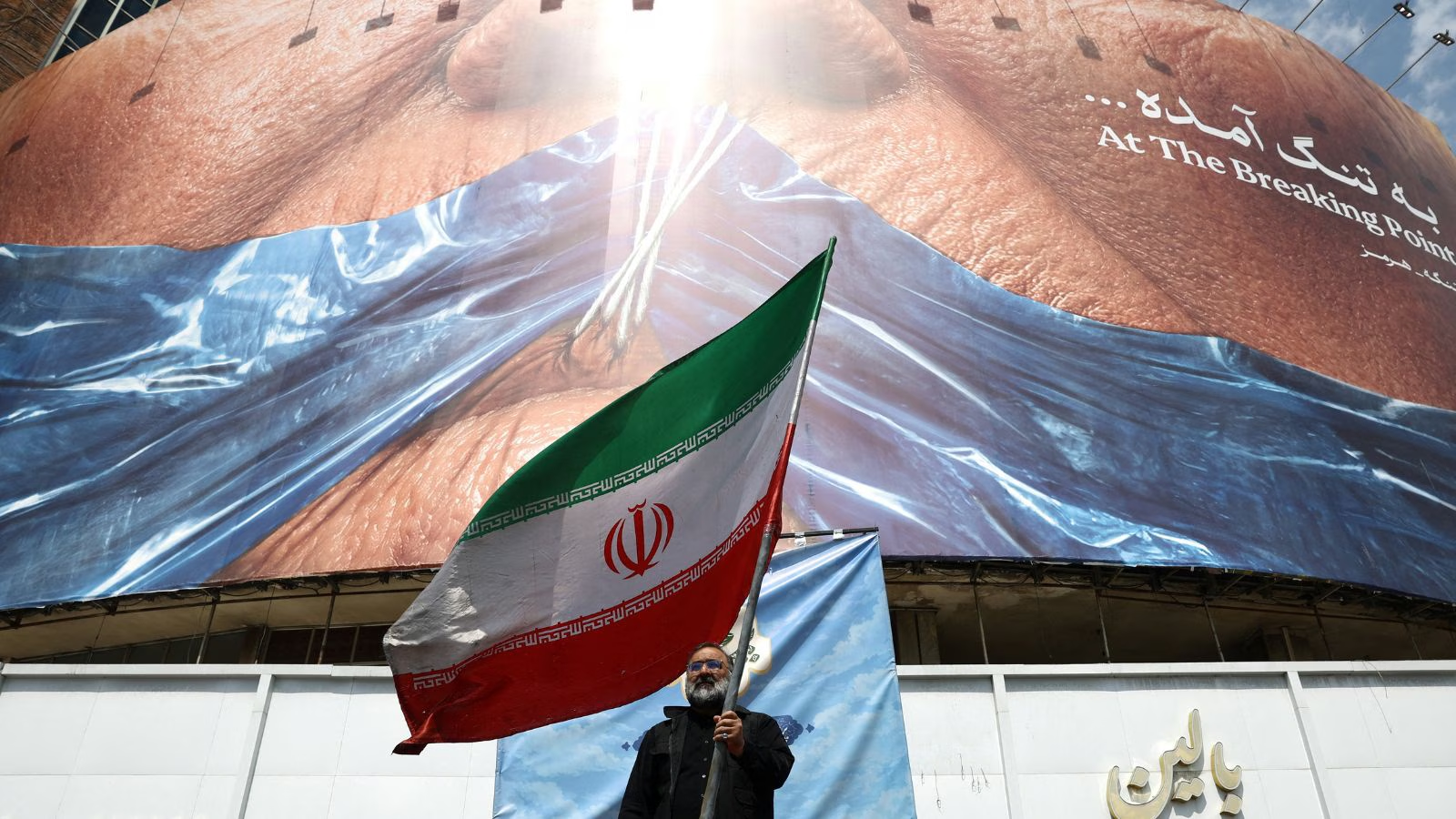
Iran-US war updates: The fallout from the ongoing Iran-US conflict continues to deepen, impacting global energy supply chains, military dynamics, and even the aviation industry. From fresh escalation warnings to economic disruptions and a major airline collapse, here are the 10 biggest developments from Saturday, May 2.
The United States has issued a strong warning to global shipping companies, saying they could face sanctions if they make payments to Iran for safe passage through the Strait of Hormuz, news agency Associated Press reported.
The alert by the US Office of Foreign Assets Control comes amid rising tensions over control of the strategic waterway. According to the advisory, such payments may not just be direct cash transfers but could also include “digital assets, offsets, informal swaps, or other in-kind payments,” including charitable donations or payments routed through Iranian embassies.
The move signals Washington’s attempt to choke off any alternative revenue streams Tehran may be building amid sanctions and conflict.
2. Iran accused of turning Hormuz into a ‘tollbooth’
Iran has effectively transformed parts of the Strait of Hormuz into what US officials describe as a “tollbooth” system, AP reported.
After attacking and threatening ships following the outbreak of war with the US and Israel on February 28, Tehran began offering certain vessels safe passage through routes closer to its coastline, sometimes in exchange for fees.
This development is significant because the Strait of Hormuz is one of the world’s most critical energy corridors, handling roughly one-fifth of global oil and gas trade. Any disruption or monetisation of transit routes has immediate global economic implications, including fuel price volatility.
Story continues below this ad
3. US naval blockade hits Iran’s oil lifeline
In response to Iran’s actions, the US launched a naval blockade of Iranian ports on April 13, aiming to cut off Tehran’s oil exports, a key source of revenue, AP reported.
The blockade has already had a visible operational impact. US Central Command said at least 45 commercial ships have been turned around since enforcement began.
By preventing Iranian tankers from leaving ports, Washington is attempting to exert maximum economic pressure, particularly at a time when Iran is already grappling with a strained economy and reduced access to international markets.
4. Iran says war with US could ‘flare up again’
Iran has warned that the conflict with the United States may not be over yet. Sardar Asadi, Deputy Inspector of Khatam al-Anbiya Central Headquarters, said the war could reignite, ANI reported, citing Fars News Agency.
Story continues below this ad
“The actions and statements of US officials are primarily media-driven… The armed forces are fully prepared for any new adventures or foolishness from the Americans,” he said.
His remarks come even as a fragile ceasefire holds, underscoring deep mistrust between the two sides and the risk that hostilities could resume at short notice.
5. US bases in Gulf ‘heavily damaged’
The conflict has already inflicted significant damage on US military infrastructure in the region. Iranian strikes have hit at least 16 US installations across eight countries, CNN reported.
One of the most striking examples is Camp Buehring in Kuwait — once a major US military hub — which is now described as nearly empty and heavily damaged after sustained missile and drone attacks.
Story continues below this ad
According to the report, several facilities are now “virtually unusable,” highlighting the scale of Iran’s retaliatory capabilities and raising concerns about long-term US military readiness in the Gulf.
6. Iran loses nearly $5 billion in oil revenue
The economic impact of the US blockade is becoming clearer. Iran has lost nearly $4.8 billion in oil revenue, according to Axios and Pentagon estimates.
The losses stem from disruptions to maritime trade routes and enforcement actions targeting sanctioned oil exports.
This sharp revenue decline is likely to deepen financial pressure on Tehran, limiting its ability to fund both domestic needs and regional military operations, and potentially influencing its negotiating stance.
Story continues below this ad
7. Trump rejects Iran’s latest proposal
Diplomatic efforts remain stalled after US President Donald Trump rejected Iran’s latest proposal aimed at ending the war, AP reported.
“They want to make a deal, I’m not satisfied with it, so we’ll see what happens,” Trump said Friday.
While negotiations are continuing via mediators in Pakistan, Trump also described Iran’s leadership as “very disjointed.” The rejection signals that a breakthrough remains elusive despite ongoing backchannel talks.
8. Iran executes two over alleged Israel spying
Amid heightened tensions, Iran has executed two men accused of spying for Israel, AP reported.
Story continues below this ad
The judiciary identified them as Yaghoub Karimpour and Nasser Bekrzadeh, saying the Supreme Court upheld their death sentences. Authorities alleged they passed sensitive information to Israel’s Mossad, including details related to the Natanz nuclear facility.
The executions are part of a broader crackdown, with more than a dozen people reportedly executed in recent weeks over espionage and terrorism-related charges, drawing criticism from human rights groups.
9. Iraq says oil output can rebound quickly
Despite the disruption caused by the Hormuz crisis, Iraq has expressed confidence in a rapid recovery. Deputy Oil Minister Basim Mohammed said the country could restore production and exports to normal levels within seven days once the situation stabilises, Reuters reported.
Currently, Iraq’s production stands at about 1.5 million barrels per day, with limited exports taking place through alternative routes such as Ceyhan.
Story continues below this ad
The statement offers a degree of reassurance to global markets, suggesting that supply chains could stabilise relatively quickly if tensions ease.
10. Spirit Airlines shuts down after 34 years
In a major aviation fallout linked partly to rising fuel costs amid the Iran war, US budget carrier Spirit Airlines has shut down operations, AP reported.
The airline said it had “started an orderly wind-down of our operations, effective immediately,” cancelling all flights and ending a 34-year run.
US Transportation Secretary Sean Duffy warned passengers, “If you have a flight scheduled with Spirit Airlines, don’t show up at the airport. There will be no one here to assist you.”
Story continues below this ad
The shutdown is expected to impact around 17,000 jobs and disrupt travel plans for thousands of passengers, making it one of the most visible economic casualties of the broader geopolitical crisis.
Why this matters
The Iran-US conflict is no longer confined to military exchanges; it is now reshaping global energy security, economic stability, and geopolitical alliances.
- Oil supply disruptions could drive sustained volatility in global markets.
- Military escalation risks remain high despite a ceasefire.
- Economic ripple effects are spreading across industries, including aviation.
(With inputs from agencies)