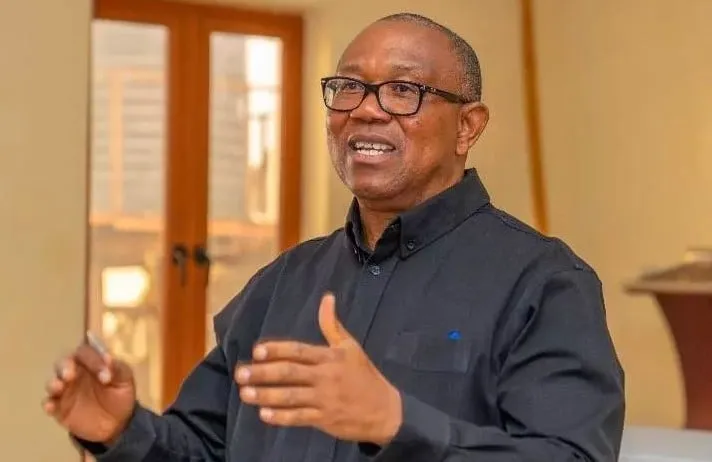
Former presidential candidate of the Labour Party, Peter Obi, has confirmed his resignation from the African Democratic Congress (ADC), citing political interference, internal instability and a growing climate of hostility within the party.
Obi, who recently joined the ADC after exiting the Labour Party, announced his decision in a statement shared via his X (formerly Twitter) handle on Sunday, where he spoke extensively about the pressures and challenges confronting him in Nigeria’s political space.
The former Anambra State governor said his decision was driven by what he described as “endless crises” and external interference that had begun to undermine the party’s cohesion and focus.
He said, “The same Nigerian state and its agents that created unnecessary crises and hostility within the Labour Party that forced me to leave now appear to be finding their way into the ADC, with endless court cases, internal battles, suspicion and division.”
Obi stressed that his exit was not borne out of personal grievances against the party’s leadership, noting that he still holds key figures in high regard, including the party’s National Chairman, David Mark, and former Vice President, Atiku Abubakar.
“I will continue to respect them. My decision is not because they treated me badly or did anything personally wrong,” he clarified.
The former governor, however, lamented what he described as a toxic political environment in the country, characterised by intimidation, misrepresentation and lack of internal unity among political actors.
He said public office holders and political participants often endure “silent pains” and private struggles while striving to serve, adding that the system frequently works against those committed to genuine change.
According to him, “We now live in an environment that has become increasingly toxic, where the very system that should protect and create opportunities for decent living often works against the people.”
Obi also decried what he termed betrayal from within political and social circles, noting that individuals who publicly associate with him sometimes distance themselves privately or join in criticising him unfairly.
He further expressed concern over societal values, saying humility is often misconstrued as weakness, while integrity and prudent management of resources are frequently criticised.
Despite the challenges, Obi maintained that he remains committed to national service and the vision of a better Nigeria, insisting that his political ambition is not driven by the quest for power.
“I am not desperate to be President, Vice President or Senate President. I am desperate to see a society that works for all Nigerians,” he said.
He added that his priority remains addressing insecurity, poverty and social inequality, including ensuring that citizens are safe and have access to basic necessities.
Meanwhile, former Kano State governor, Rabiu Musa Kwankwaso, has also raised concerns over the crisis rocking the ADC, revealing that he had commenced consultations with other political platforms amid uncertainty over the party’s future.
Kwankwaso noted that the ADC is currently battling a series of legal challenges, which he said have placed the party in a precarious position.
Obi, however, reaffirmed his belief in Nigeria’s potential, expressing optimism that the country could still achieve competent leadership anchored on justice, equity and compassion.
FOLLOW US
FOR MORE HERE