The delegation is expected to engage with the South African government and the leadership of its parliament to seek an end to the attacks on Nigerians.
The Nigerian Senate on Tuesday resolved to send a delegation of lawmakers to South Africa as part of diplomatic efforts towards finding a lasting solution to the attacks and killings of Nigerians in the country.
The resolution followed the adoption of a motion condemning the xenophobic attacks in South Africa, sponsored by the senator representing Akwa Ibom North East, Aniekan Bassey.
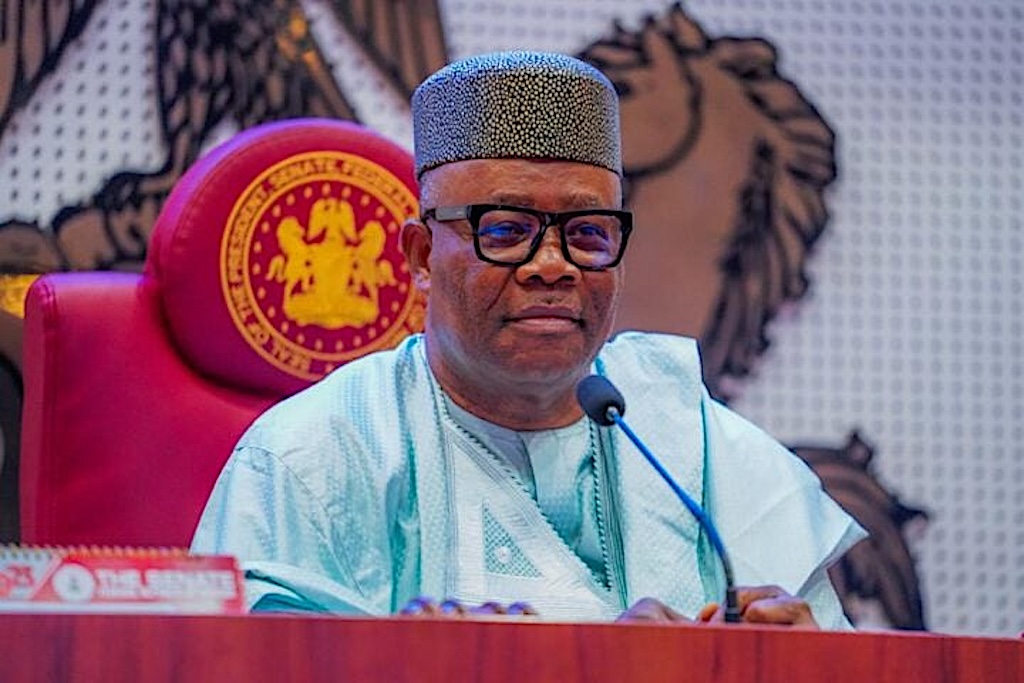
The Senate agreed that the delegation would be a joint committee of both chambers of the National Assembly and would be led by the Senate President, Godswill Akpabio.
The delegation is expected to engage with the South African government and the leadership of its parliament to seek an end to the attacks on Nigerians.
Mr Akpabio announced the decision after it was supported by a majority of senators through a voice vote. However, he did not specify when the delegation would travel.
The senate president is the chairman of Nigeria’s National Assembly.
This will be the second Nigerian delegation to South Africa since the recent wave of attacks began. Nigeria’s Minister of Foreign Affairs, Bianca Odumegwu-Ojukwu, is currently in South Africa alongside other officials for diplomatic talks with the South African government.
The minister recently disclosed that the Nigerian government is considering the repatriation of its citizens due to the violence. She also called for a thorough investigation into the reported killings.
Xenophobic attacks in South Africa are not new. They date back to the early 2000s, with one of the most severe outbreaks occurring in 2008, when many foreign nationals were killed and thousands displaced. Nigerians, alongside migrants from other African countries such as Zimbabwe, Mozambique and Somalia, have frequently been targets.
The violence is often driven by a mix of economic frustration, unemployment, and anti-immigrant sentiment among some South Africans who accuse foreign nationals of taking jobs, engaging in crime, or dominating small businesses. These claims are widely disputed, but they continue to fuel periodic outbreaks of violence, looting and harassment.
Major waves of attacks were recorded in 2015 and 2019, prompting diplomatic tensions between Nigeria and South Africa. During those episodes, Nigerian-owned businesses were destroyed, and several Nigerians were killed, forcing the Nigerian government to evacuate hundreds of its citizens.
In response to previous and ongoing attacks, the Nigerian government has consistently adopted diplomatic and protective measures. These include summoning South African envoys, engaging in bilateral talks, and dispatching high-level delegations to de-escalate tensions.
Nigeria has also, at different times, repatriated affected citizens, particularly during the 2019 crisis when the government, in collaboration with local airlines, facilitated the voluntary return of Nigerians from South Africa.
Additionally, both countries established mechanisms such as the Nigeria–South Africa Bi-National Commission to address recurring issues, including the safety of citizens and economic relations.
Presenting the motion, Mr Bassey condemned the xenophobic violence, including persecution, intimidation, harassment, displacement, destruction of businesses and property, and threats to lives of Nigerians and other African nationals.
He said the attacks have caused fear, humiliation, psychological trauma, and dehumanisation, noting that Nigerians are increasingly being profiled and targeted.
The senator recalled Nigeria’s role in supporting South Africa’s liberation struggle against apartheid from the 1960s, stressing that Nigerians across all sectors contributed to the fight for the country’s freedom and dignity.
Mr Bassey argued that the violence violates international human rights principles and contradicts the provisions of ECOWAS protocols on free movement, the African Union Charter, and other regional and international agreements that guarantee human dignity and protection.
He urged the Senate to condemn the attacks and called for the use of diplomatic and legal mechanisms, including summoning envoys where necessary.
He also recommended providing emergency humanitarian assistance, temporary shelters, evacuation support, legal representation, trauma care, and improved communication channels for affected Nigerians.
Most lawmakers who contributed to the debate supported the motion.
The senator representing Edo North, Adams Oshiomhole, called for the revocation of licences of South African companies operating in Nigeria.
Mr Oshiomhole specifically mentioned MTN Group and DStv, an entertainment company owned by MultiChoice Group, as firms whose licences should be withdrawn.
He said Nigeria should adopt retaliatory economic measures rather than rely solely on diplomacy.
However, the senator representing Kebbi Central, Adamu Aliero, advised against public debate on the issue, noting that the federal government was already engaging South Africa diplomatically.
Mr Aliero urged the Senate to prioritise diplomatic engagement over retaliatory actions.
Other lawmakers, including Abdul Ningi (Bauchi Central) and Osita Izunaso (Imo West), condemned the violence and encouraged continued diplomatic efforts.
In his response, Mr Akpabio said the National Assembly would not support measures targeting South African businesses but would instead pursue diplomatic solutions.
He added that the matter could be escalated to international organisations and assured that lawmakers would also engage with the South African parliament.