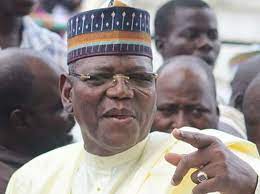
Former Jigawa State Governor, Sule Lamido, and the Economic and Financial Crimes Commission on Tuesday disagreed over the competence of a subpoenaed witness presented in his ongoing trial over alleged N1.35bn money laundering charges.
The disagreement occurred before Justice Ijeoma Ojukwu of the Federal High Court, Abuja, during the continuation of proceedings in the long-running case in which the EFCC is prosecuting Lamido alongside his two sons, Aminu and Mustapha, as well as Aminu Wada Abubakar and two companies—Bamaina Holdings Ltd and Speeds International Ltd.
The anti-graft agency, Economic and Financial Crimes Commission, had called an investigator, Kayode Oyetunde, to testify as a subpoenaed witness following earlier legal manoeuvres by the defence team led by Senior Advocate of Nigeria, Joe Agi.
The defendants had, after their no-case submission was dismissed, applied that the EFCC Chairman or any designated staff member be compelled to appear in court to give evidence in their defence.
At the resumed hearing, EFCC counsel, Chile Okoroma (SAN), informed the court that Oyetunde was not part of the original investigative team but was only directed to retrieve documents requested under the subpoena.
Following his appearance in the witness box, the defence counsel objected to proceeding with his testimony, arguing that the witness had no direct knowledge of the investigation and could not assist the court meaningfully.
Agi contended that the EFCC ought to present a more relevant officer who was directly involved in the investigation, insisting that the current witness could not give credible evidence on the core allegations.
However, the prosecution opposed the request, maintaining that the subpoenaed witness had complied with the court order by producing all requested documents already frontloaded as evidence before the court.
Okoroma further argued that the EFCC, as a corporate body, could be represented by any of its staff members, adding that a subpoena was not absolute and should not be used to stall proceedings.
He urged the court to discountenance the defence application for adjournment and proceed with the hearing.
The trial judge, Justice Ojukwu, declined to grant an adjournment but instead stood down proceedings briefly to allow the defence team to interface with the witness. She cautioned that granting unnecessary adjournments at that stage could undermine the progress of the trial.
When proceedings resumed, Oyetunde told the court that he was not part of the investigative team and was only assigned to search for and present documents demanded under the subpoena.
The defence thereafter maintained that the witness could not be relied upon, reiterating its request for a more relevant EFCC officer to be called to testify.
The prosecution, however, insisted that the evidence before the court remained valid and that the defence’s objection was unfounded in law.
Justice Ojukwu, while responding to submissions, advised the defence to formally apply for the recall of any witness it considered necessary for further examination. She also noted that subpoena powers are typically invoked where a witness refuses to attend court, not as a substitute for recalling previously examined witnesses.
The court subsequently admitted the documents presented through the subpoenaed witness as exhibits.
The matter was thereafter adjourned till June 4 for continuation of trial.
The case, which has attracted sustained public attention, stems from allegations that Lamido and other defendants were involved in the laundering of about N1.35bn during his tenure as governor of Jigawa State. The defendants, however, have consistently denied wrongdoing.
FOLLOW US