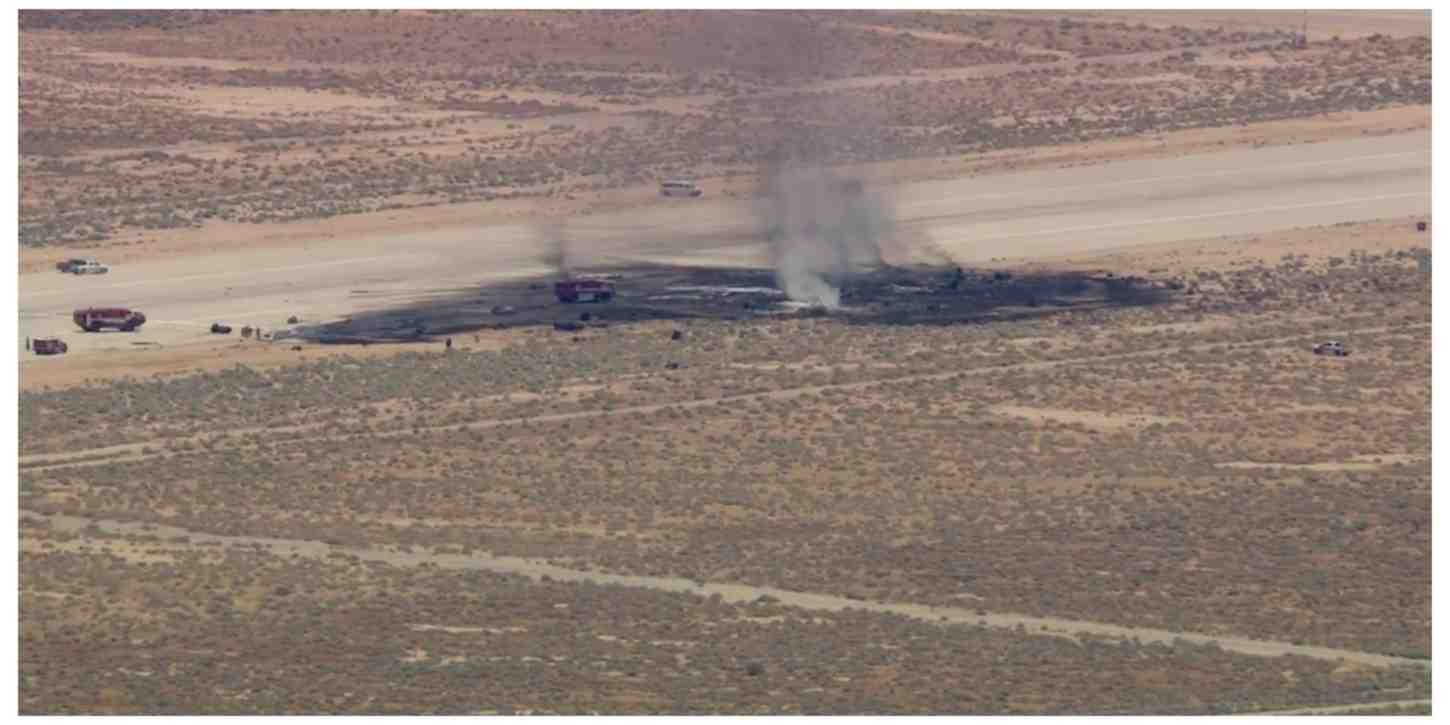
A US Air Force B-52 Stratofortress crashed shortly after takeoff on the Edwards airstrip at 11:20 a.m., according to the base’s Facebook page. Emergency crews immediately responded to the scene and the situation is ongoing.
It is unclear whether there are any injuries. CNN contacted the base for more information.
The collision produced a towering black smoke at Edwards Air Force Base, which is located in California’s Mojave Desert northeast of Los Angeles. The runway at the base was left with a massive charred scar and smoke, although it was difficult to identify any specific portions of the debris, according to video from CNN affiliate KCAL.
The airstrip is closed, inbound flights are being redirected, and all non-commercial visitor passes are suspended until further notice as the base focuses on emergency response, according to the statement.
The B52 bomber is one of the Air Force’s oldest aircraft, having entered service in 1955. The long-range heavy bomber, which normally has a crew of five, can transport up to 70,000 pounds of bombs and other ordnance.
The currently operational version, the B-52H, continues to play an important part in the Air Force’s arsenal, which contains 76 of the aircraft. It was employed in bombing missions during the ongoing confrontation between the United States and Iran. The B-52H can also transport nuclear bombs and nuclear-armed cruise missiles.
Prior to Monday’s incident, the most recent deadly mishap involving the aircraft occurred in 2008, when six Air Force members were killed after their B-52 fell into the Pacific Ocean off the coast of Guam while preparing for a parade flyover.
On September 19, 2025, flight crew from the US Air Force’s 501st Combat Support Wing and 307th Bomb Wing walk towards a B-52 Stratofortress bomber aircraft at RAF Fairford.
The Boeing-built bomber has not been in production since 1962, but multiple life-extension programs have upgraded the airframe and kept it operational.
According to Defense News, the Air Force just initiated another B-52 upgrade effort based on creating new engines, which is expected to cost $48.6 billion in total.
Because the aircraft is no longer in production, any replacements must be found from dismantled airframes held at the “Boneyard” at Davis-Monthan Air Force Base in Arizona, as was done following a non-fatal 2016 collision that damaged a B-52H in Guam.