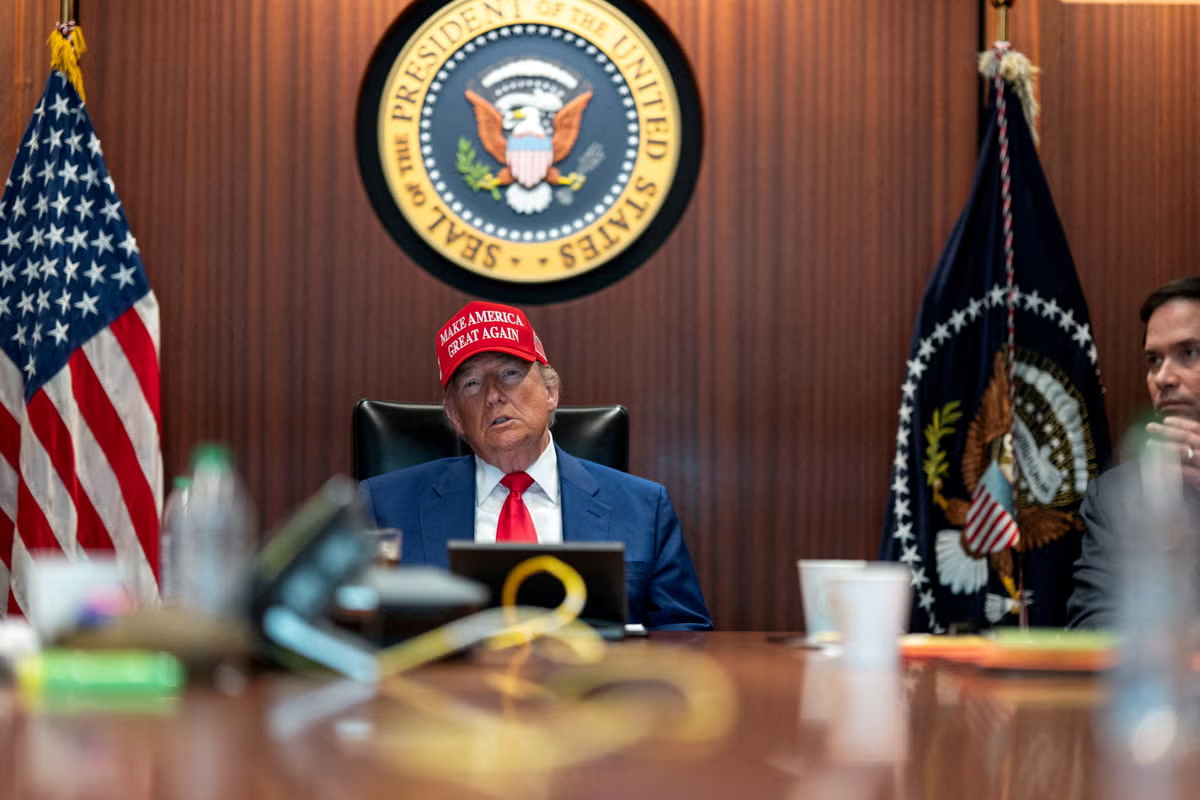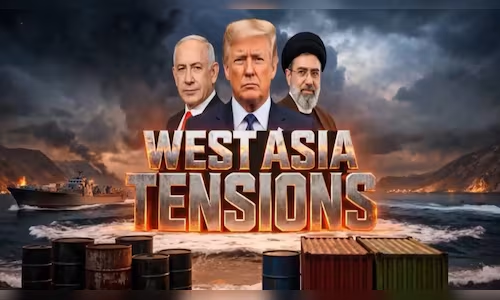
Trump said on social media that “final negotiations on peace are proceeding” and urged both sides to stop hostilities. His comments came as Iran and Israel exchanged fresh strikes over the past 24 hours, marking the most serious flare-up since the ceasefire announced earlier this year.
Speaking to CNBC-TV18, Waiel Awwad, Senior Journalist and West Asia Strategist, said efforts to end the conflict have been under discussion for months, but key stakeholders remain divided on the terms of any settlement.
“Actually speaking, it has always been the case that the United States and Iran wanted to end this war, and both sides wanted to be the winner,” Awwad said. He noted that negotiations have continued intermittently, but neither side has been willing to move significantly from its core positions.
According to Awwad, one of the principal obstacles has been Israeli Prime Minister Benjamin Netanyahu’s insistence that Israel’s military objectives be achieved before any lasting cessation of hostilities. He argued that disagreements over Lebanon, Gaza and other regional fronts have complicated attempts to reach a broader settlement.
Awwad also suggested that Trump is increasingly motivated to secure a diplomatic breakthrough as domestic political pressures mount in the United States. He said the US President appears keen to reach an agreement at a time when crucial discussions are taking place between Washington and Tehran.
The latest violence has underscored the fragility of any ceasefire effort. Iran fired missiles towards northern Israel after Israel said it had struck Hezbollah targets in Beirut’s southern suburbs. Tehran accused Washington of bearing responsibility for repeated ceasefire violations, while Israel later launched attacks on Iranian military sites and a petrochemical facility. Explosions were reported in several Iranian cities, including Tehran, Isfahan and Tabriz.
Amid the escalation, Iran suspended flights to key airports, while Iraq and Syria temporarily closed their airspace. Israeli authorities also reported a second wave of Iranian missile launches and indicated that preparations were underway for several more days of fighting.
Former diplomat Ashok Sajjanhar said the mixed signals emerging from Washington have contributed to uncertainty over the conflict’s direction.
“As far as Israel is concerned, the position of the United States might not be so very clear because they have been moving from one end to the other,” Sajjanhar said, pointing to changing American rhetoric around regime change, Iran’s nuclear programme and broader security objectives.
While acknowledging that Israel has shown an interest in continuing military operations, Sajjanhar noted that negotiations have nevertheless remained active in recent weeks.
Another major factor influencing the diplomatic landscape is the growing concern over global trade routes. Iran has repeatedly highlighted the Strait of Hormuz as a pressure point, while reports have suggested potential disruptions around the Bab el-Mandeb passage as well.
Sajjanhar warned that any prolonged disruption to these shipping corridors would have consequences far beyond the United States.
Also Read | Israel strikes Mahshahr petrochemical complex; Iran responds with attacks on plant in Israel’s Haifa city
“The whole world is really going to pay the price for that,” he said, referring to threats affecting key maritime routes. He added that Gulf economies, international trade flows and energy markets would all face significant challenges if tensions continue to escalate.
Awwad argued that Iran views strategic waterways and regional influence as important bargaining tools in negotiations. At the same time, he said Israel sees Iran as a long-term strategic challenge and remains determined to maintain its regional military advantage.
With both sides continuing to exchange strikes despite Trump’s calls for peace, analysts say the prospects for a quick resolution remain uncertain. While diplomatic channels remain open, disagreements over security objectives, regional influence and political survival continue to complicate efforts to bring the conflict to a definitive end.