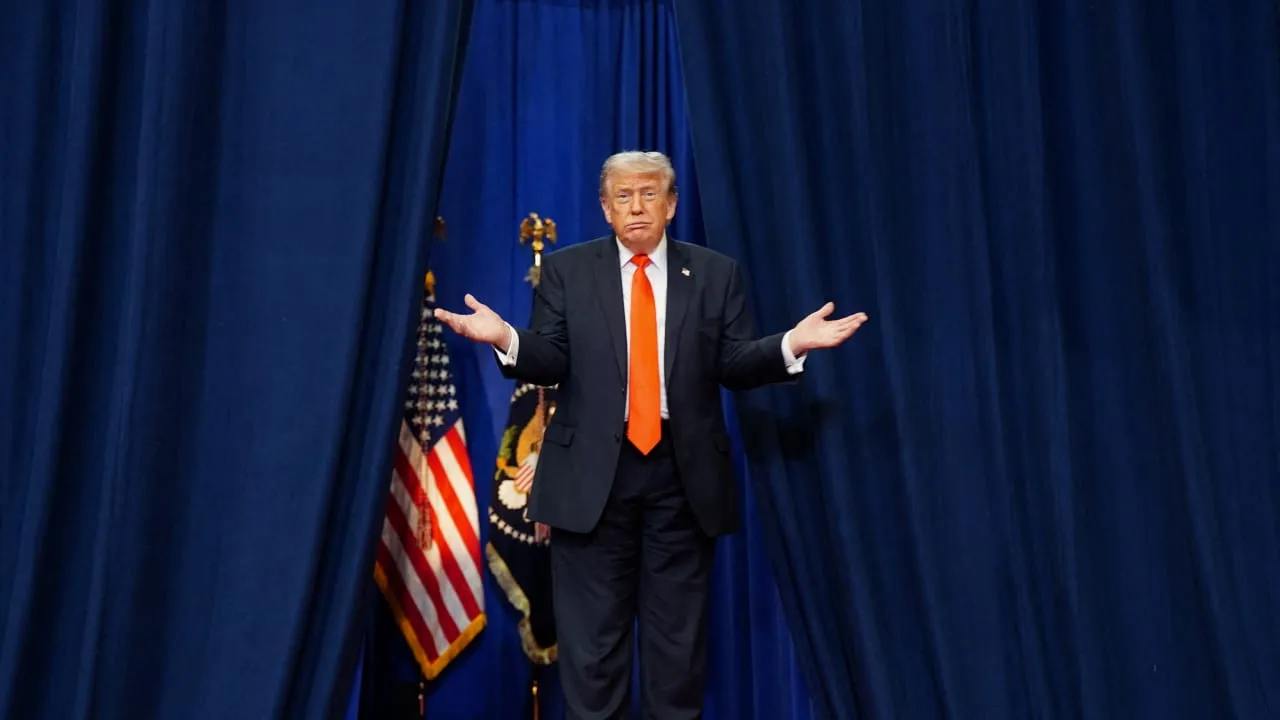
WASHINGTON — A spectacular economic upturn is on its way, President Trump promised Americans last week, galvanized in part by a deal brokered this month to end his war with Iran.
“Very soon you’ll be at $2.50 a gallon for gasoline,” Trump told a crowd Wednesday night on the National Mall. The next year, he said, “is set for an economic boom the likes of which no nation has ever seen before.”
Economists are skeptical. The effects of the war and other factors driving inflation are likely to stick around for months, experts say, presenting an ongoing challenge to American households — and to Trump’s party as it seeks to retain control of Congress in November’s midterm elections.
Yesenia De La Torre, 24, from Culver City pumps gas at the Chevron gas station on Sawtelle Boulevard and Culver Boulevard on June 15. Despite an agreement announced Sunday to end the Iran war and open the Strait of Hormuz, high oil, gasoline prices and energy supply problems won’t be solved overnight.
(Kayla Bartkowski / Los Angeles Times)
The war’s end will not create “a complete snap-back,” said Patrick Harker, professor at the University of Pennsylvania Wharton School and former president of the Federal Reserve Bank of Philadelphia.
“Markets are still cautious, and the infrastructure that’s been destroyed [in the Middle East] is going to take a while to re-create,” Harker said. “Inflation’s going to stay elevated for a while.”
Oil prices were dropping last week — falling to their prewar level Friday — and average gas prices fell by 7 cents per gallon over a week ago. But it will take significant time for oil shipping to ramp up through the Strait of Hormuz, infrastructure to be rebuilt and gas prices to drop, said Michael Negron, senior fellow for economic opportunity at the Center for American Progress.
“I would expect there to be a continued inching downward,” Negron said, but “we’re not going to just go back within weeks to $2.90 per gallon.”
That means the prices of gas and of other essentials aren’t likely to improve dramatically before the midterms, in which affordability has become a driving issue. It could heighten challenges for Republicans, who are defending their majorities in the U.S. House and Senate, as Democrats seek to leverage the issue to gain ground.
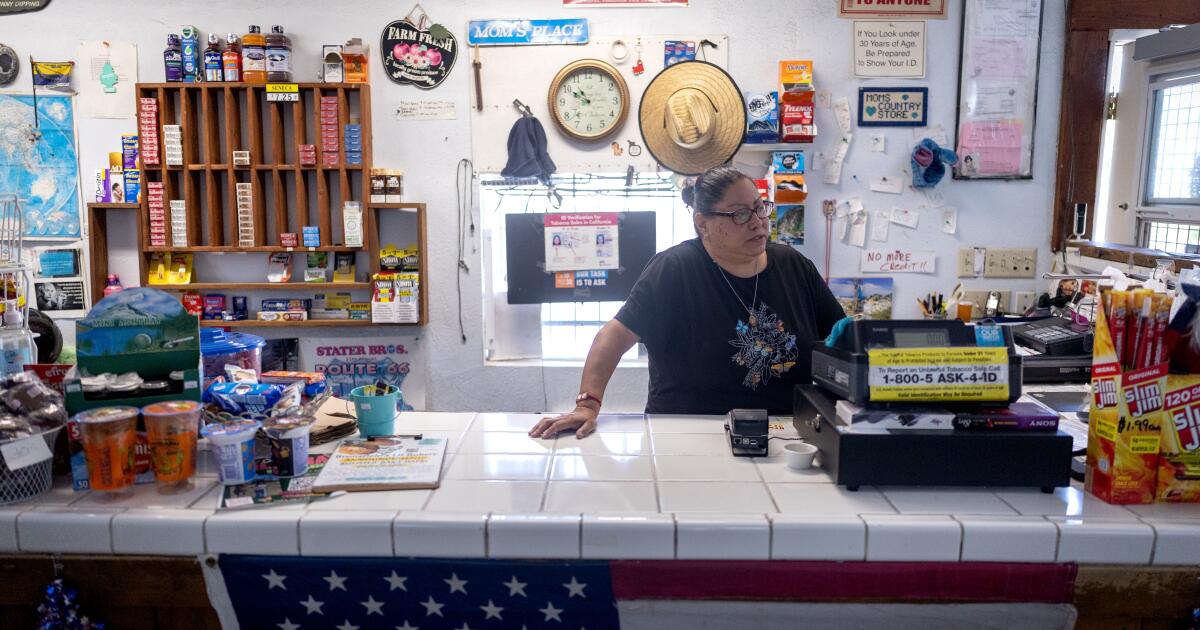
Positive messaging about the economy from Trump and other officials “doesn’t really resonate” with Americans who are struggling to make ends meet, said Gina Plata-Nino of the Food Research and Action Center, a national anti-hunger advocacy organization.
“When you’re still making the same amount of money but there’s less for you to be able to pay [for] your basic needs — gas is more expensive, food is more expensive — it doesn’t really add up,” she said.

A fruit stand on West 7th Street sells bananas for $2 per bunch.
(Carlin Stiehl / For The Times)
Americans question the costs
The Iran war has cost the average American household between $775 and $1,300 so far in fuel and taxpayer costs, according to an analysis by Roger Pielke, a senior fellow at the American Enterprise Institute.
The national average gas price sat at $3.90 on Friday, according to AAA, and California’s average was $5.48 per gallon, down 13 cents from a week earlier.
The increase in oil prices has also affected diesel and fertilizer prices, creating a ripple effect through several sectors, including agriculture. Consumer prices rose 4.1% in May from a year earlier, putting the inflation gauge at a three-year high.
Trump has leaned on a bullish message about the economy, but he has largely dismissed Americans’ worries about affordability, calling it a “fake word” and a “hoax.” Last week, he undermined the first major progress by Congress on the issue, refusing to sign a bipartisan housing affordability bill after both chambers passed it.

President Donald Trump closes his eyes as Dr. Ben Carson, left, speaks during an event with the White House Religious Liberty Commission in the Oval Office on Friday.
(Anna Moneymaker / Getty Images)
Meanwhile, the president’s approval rating on the economy dropped to 33% last week in an NPR/PBS News/Marist Poll — his lowest ever for that poll and 3 points below former President Biden’s worst reading on the question during his term.
Nearly four-fifths of respondents said that gas prices present some sort of strain, with 34% categorizing it as a major strain and 44% calling it a minor strain. Half of respondents who said they were not vacationing this summer said cost was the reason.
And only 23% of Americans say the war was worth the costs, according to a Reuters/Ipsos poll conducted days after the Trump administration announced the framework agreement to end the conflict earlier this month.
“People [are] just feeling like they’re getting left behind,” Harker said. “That’s a very real, palpable feeling when you go out and talk to people. They’re worried.”
The president and his party need a midterms message that “real economic change” is coming, said Brian Reisinger, a rural policy analyst in Wisconsin and a former GOP strategist.
“It has to be substance behind the sell,” Reisinger said.

Senate Majority Leader John Thune (R-S.D.) speaks to reporters after the weekly Senate policy luncheons at the U.S. Capitol on Tuesday in Washington, D.C. Thune spoke on a meeting with President Trump on the Iran deal.
(Kevin Dietsch / Getty Images)
U.S.-Iran talks on shaky ground
Trump’s boosters have hailed the Iran deal as a victory for the president. And Trump has justified the shock to gas prices as “worth it not to have a nuclear weapon” in Iran, though the war has not achieved the president’s stated aims, which included the elimination of its nuclear program.
“President Trump was clear all along that there would be short-term, temporary disruptions to energy markets, and that oil and gas prices will quickly fall as soon as the Iran situation is resolved,” White House spokesperson Taylor Rogers said Friday.
How rapidly the conflict will be resolved is not yet clear. The U.S.-Iran negotiations were on shaky ground by week’s end, with each country offering diametrically opposed messaging on the status of key points of negotiation.
Analysts say much of the increase in traffic through the strait has been driven by the return of Iranian oil to global markets. Trump agreed in the controversial deal with Iran to lift sanctions on Iranian oil, allowing Tehran to resume trading its most valuable export and breaking with decades of U.S. policy.
The unpredictability of the talks is another factor keeping energy companies, shippers and insurers cautious for now, Negron said.
“Everything is to be negotiated in the next nearly two months,” he said. “It is natural to expect there to be additional risk priced into each barrel of oil, into the insurance people are paying, just because of the volatility and uncertainty of where we are.”