Seeks phased state police rollout, warns against rushed implementation
Sunday Aborisade in Abuja
The national leader of the Nigeria Democratic Congress (NDC), Senator Seriake Dickson, yesterday declared that his party will participate in the 2027 general elections, dismissing a controversial court ruling last Friday as legally defective and devoid of jurisdictional basis.
Dickson, a former two-term governor of Bayelsa State and legal practitioner, spoke on Channels Television, where he addressed the ruling head-on and assured party members, candidates and supporters that the NDC remained firmly on course.
Dickson said: “NDC is on the ballot. All our candidates will be on the ballot. NDC has not been deregistered and won’t be deregistered. The laws of this country will speak. Justice will run its course, and they have nothing to worry about.”
The ruling in question, delivered by a Federal High Court in Lokoja, has been widely interpreted in some quarters as rolling back the earlier judgment that had compelled the Independent National Electoral Commission (INEC) to register the NDC as a political party.
Critics of the NDC claimed it effectively restored the pre-registration status quo, putting the party’s existence in legal jeopardy. Dickson flatly rejected that reading.
He said: “The court itself did not deregister the NDC, and no step has been taken whatsoever to that effect. This ruling did not contain a positive, mandatory order directing INEC to deregister. Orders of courts are to be construed strictly.”
He characterised the ruling as one issued by a court that ordinarily lacks jurisdiction to sit on appeal over its own earlier judgment. He added: “It is a court that is clearly far too sufficient, meaning a court that ordinarily doesn’t have jurisdiction to sit on appeal over its own earlier judgement. We disagree as a party about the legal basis and the propriety of the ruling.”
Dickson confirmed that the party had already filed applications for a stay of execution and an injunction to restrain any adverse administrative action by INEC, and that an appeal was being pursued to the highest levels of the judiciary.
He also dismissed the applicant that triggered the ruling, a body he described as an unregistered, dormant association, as lacking the legal standing to have sustained any case before the court.
He stressed: “That applicant is unknown to the laws of this country. It is not a registered political party. It is not sponsoring any candidate for any election. Nobody even knows the national chairman of that association. So this is not an association that can sustain this kind of action.”
The NDC national leader further revealed that far from weakening the party, the controversy had galvanised public interest.
“From Friday till now, thousands of Nigerians have been flocking to our website to register. They now know more about our party. They sympathise with our candidates and they are buying into our vision,” he maintained.
Dickson confirmed that primaries had been concluded at all levels, from state house of assembly to presidential, with all exercises monitored and recorded by INEC in accordance with its prescribed timelines.
“All nominations have been validly carried out, monitored by INEC in accordance with the time frame given by INEC. I myself am also a senatorial candidate of the party. All nominations are valid and source-based,” he added.
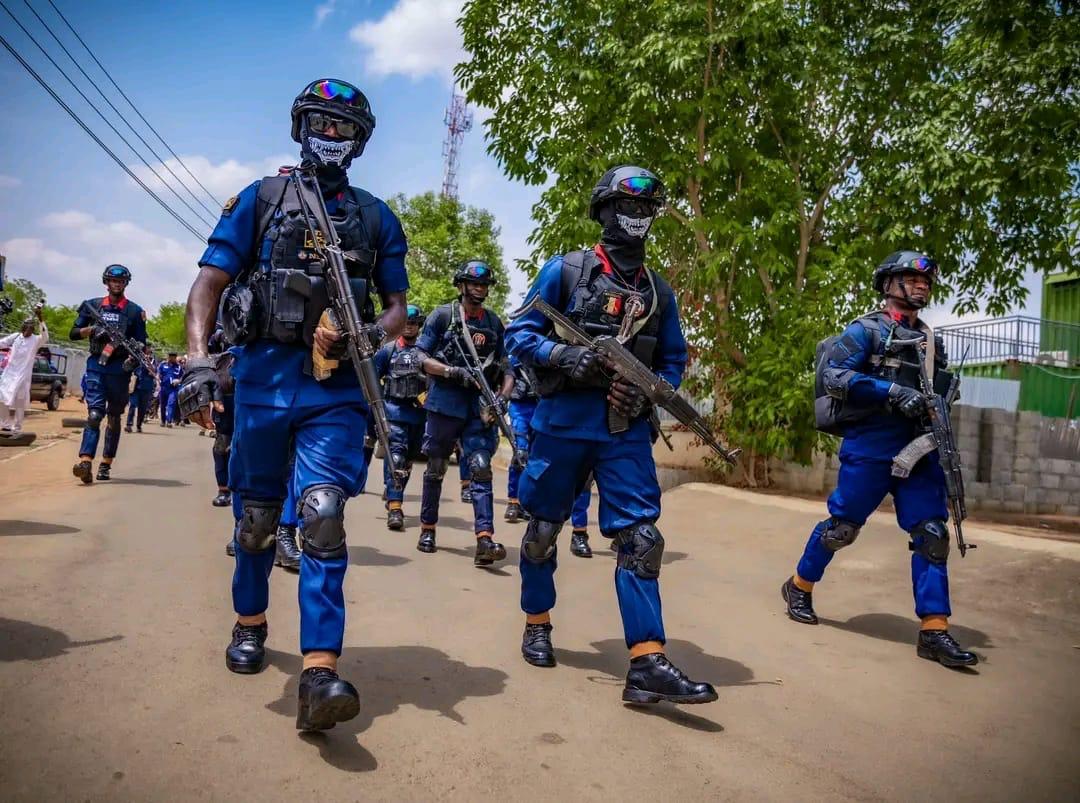
On the contentious question of state police, a reform now at the heart of Nigeria’s constitutional agenda, Dickson expressed qualified support for the federal government’s initiative while calling for a more measured and phased approach to implementation.
“As a committed federalist all my adult life, I commend the executive move to decentralise policing. But my prescription would have been to decentralise it first to the zonal levels,” he said.
The senator explained that the most senior police officers from each geo-political zone, being the Deputy Inspectors General (DIGs), already provide a ready-made administrative framework for this intermediate step.
He proposed that governors should subsequently be empowered to appoint state commissioners of police, working with the Police Service Commission, with such appointments subject to screening and oversight by state houses of assembly.
“A governor should not be without some measure of control,” he said, recalling his own experience as Bayelsa governor when police commissioners were repeatedly transferred to undermine his administration.
Dickson, however, cautioned that the present electoral climate was not the most appropriate moment for full implementation of the reform, aligning himself with the position of the NDC’s presidential candidate, Peter Obi, who had described the timing as suspicious.