New Delhi:
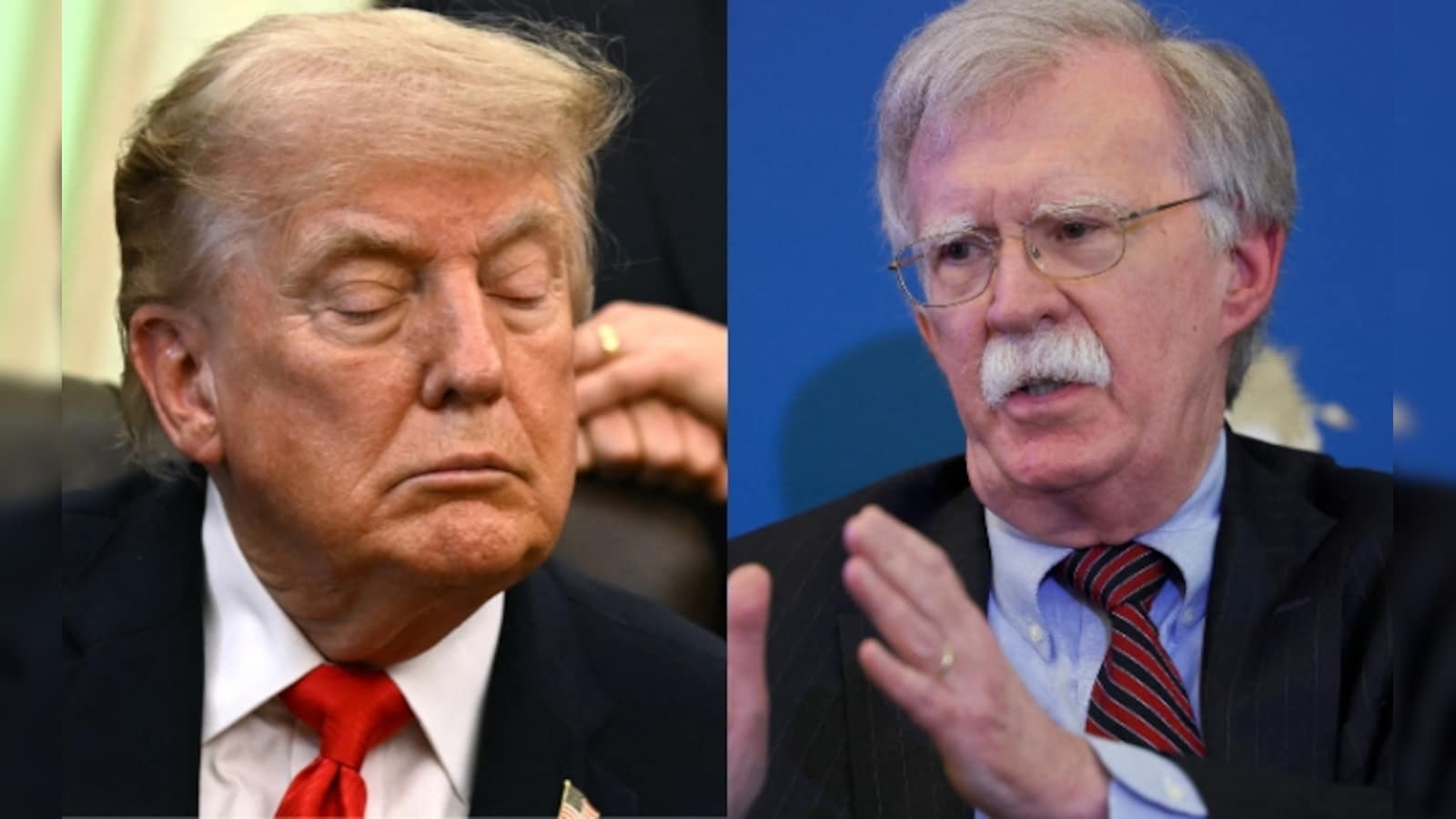
John Bolton, who served as Donald Trump’s national security advisor during his first term before becoming an outspoken critic of the US president, has launched a blistering attack on the newly signed US-Iran peace Memorandum of Understanding (MoU), describing it as a “very bad deal” that hands Tehran major concessions while failing to address the core issue of Iran’s nuclear programme.
In an exclusive interview with NDTV’s Senior Executive Editor Aditya Raj Kaul, Bolton said the agreement reflects Trump’s desire to secure a political victory at home rather than achieve long-term strategic objectives in the Middle East.
“I think the deal is a very bad deal,” Bolton said. “This is a test of wills between the regime in Iran and the Trump White House. And the answer we see in this MoU is that Trump blinked.”
He argued that the White House was driven primarily by concerns over rising energy prices after Iran disrupted shipping through the key route, the Strait of Hormuz, a move that severely affected global oil markets.
Bolton said Trump was caught off guard by the economic consequences of the crisis despite warnings that Tehran could use the strategic waterway as leverage.
“Nobody else was surprised that Iran did this,” he remarked, questioning why the administration had failed to prevent such a scenario.
Nuclear Question Left Unresolved
Bolton’s sharpest criticism was reserved for the MoU’s treatment of Iran’s nuclear programme. While the agreement lays out a framework for future negotiations, it reportedly postpones substantive discussions on nuclear restrictions for 60 days.
“This deal doesn’t even address the nuclear question,” Bolton said. “Any time Iran is not under military or diplomatic constraints, they are going to be rebuilding their nuclear programme.”
The former ambassador to the United Nations argued that Washington entered military action against Iran without clearly defining its objectives. “We still cannot get a clear statement from Trump on what the objectives of using military force were,” he said.
Bolton maintained that while military operations may have damaged Iran’s military-industrial infrastructure, the subsequent diplomatic settlement has undermined those gains.
“The military attack may have been successful from a military point of view, but this deal is a political disaster for the Trump administration,” he said.
Concerns Over Sanctions Relief
The agreement’s provisions on sanctions relief and economic reconstruction also drew criticism from Bolton.
One of the most debated clauses reportedly envisages the creation of a $300 billion reconstruction and development mechanism to aid Iran’s recovery after months of conflict. The MoU also outlines a phased lifting of sanctions.
Bolton questioned how such a framework could be implemented without benefiting Iran’s Islamic Revolutionary Guard Corps (IRGC), which remains designated by the United States as a foreign terrorist organisation.
“If we are establishing this fund and issuing waivers and permits, are we now supposed to waive our anti-terrorism sanctions so that the Revolutionary Guard can benefit?” he asked.
He warned that fresh revenues generated by sanctions relief and renewed oil exports could strengthen the Iranian regime rather than improve the lives of ordinary Iranians.
“When the blockade is lifted and Iran is allowed to sell oil on international markets, it will make billions of dollars,” Bolton said. “That money will not be used for the benefit of the Iranian people. It will be used to rebuild the regime’s instruments of power.”
Israel’s Security Fears
Bolton echoed concerns raised by Israeli officials who have criticised aspects of the agreement, particularly provisions relating to Lebanon.
The MoU reportedly calls for an immediate cessation of military operations involving Lebanon, a clause Israeli leaders fear could allow Hezbollah to regroup and rearm.
“Hezbollah and Hamas are arms of the Iranian state,” Bolton argued. “Many elements of this deal, Lebanon in particular, are going to be tested right from the very beginning.”
He suggested that sanctions relief and renewed financial flows to Tehran could eventually bolster Iran-backed groups across the region, increasing security risks for Israel.
Bolton also criticised recent remarks by US Vice President JD Vance directed at Israel’s leadership, saying public criticism of a key ally during an ongoing security crisis was counterproductive.
“Public criticism of your ally when it is under attack is highly inappropriate and highly damaging,” he said.
Wider Strategic Implications
Beyond the Iran agreement, Bolton touched upon broader geopolitical developments, including Pakistan’s role as a mediator and the evolving US-India relationship.
He dismissed suggestions that Pakistan’s recent diplomatic engagement reflected a major strategic shift in Washington’s South Asia policy. Instead, he portrayed it as an example of personal diplomacy aimed at appealing to Trump.
At the same time, Bolton reaffirmed support for stronger US-India ties and criticised the Trump administration’s tariff policies, arguing that trade disputes were distracting both countries from deeper strategic cooperation.
But it was the Iran deal that dominated his assessment. For Bolton, the agreement represents not a diplomatic breakthrough but a missed opportunity to secure lasting constraints on Tehran’s ambitions.
“This deal gives Iran concessions that previous Iranian regimes could only dream about,” he said, warning that the true test of the agreement would begin once implementation starts.
As debate over the MoU intensifies in Washington, Israel and across the Middle East, Bolton’s remarks underscore the growing criticism from hawkish voices who believe the deal has sacrificed long-term security objectives for short-term political gains.