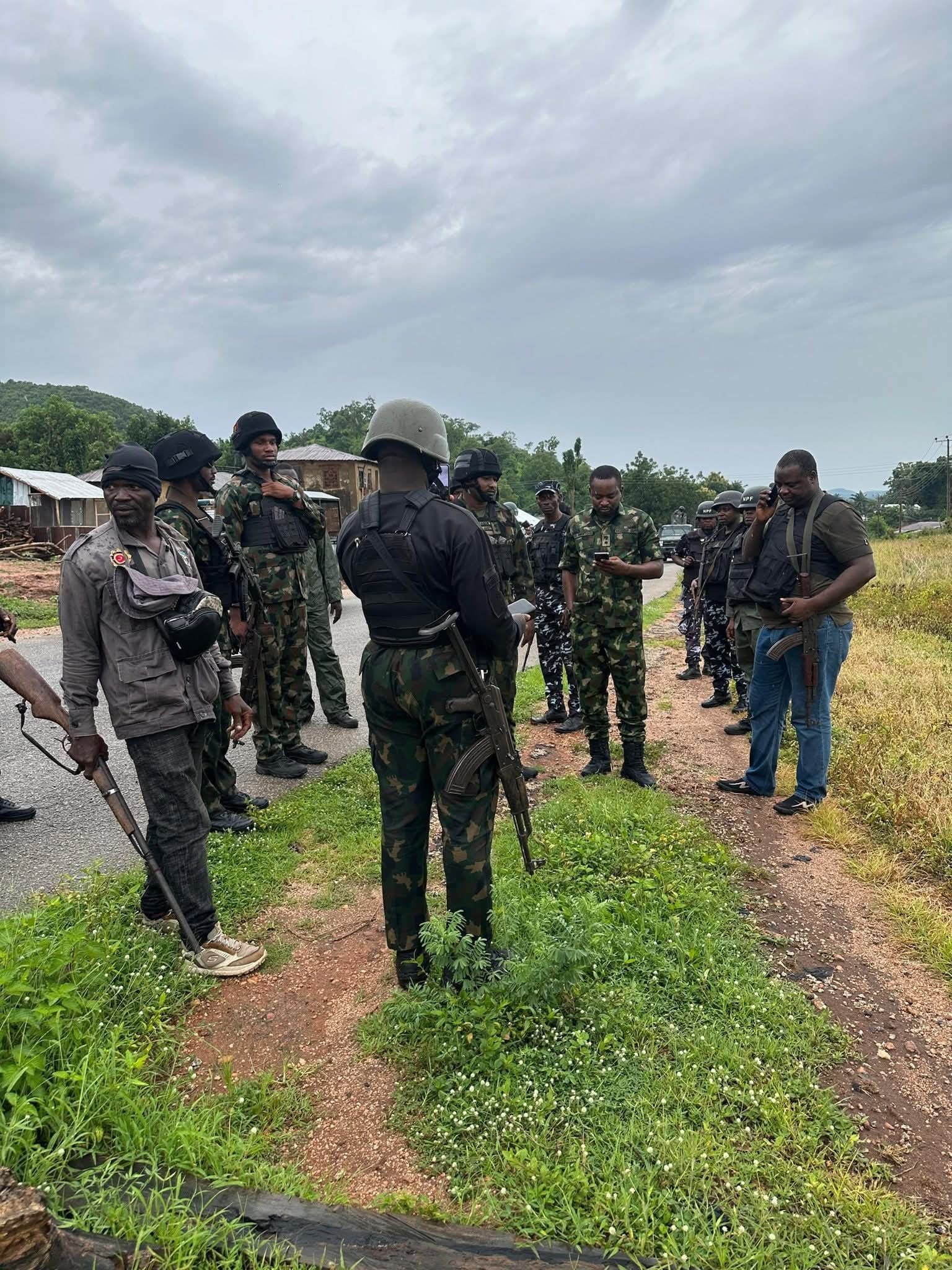
Gunmen storm Iluke Bunu during exams, killing three and attempting to abduct students before troops intervene. Students hid under desks as gunmen stormed school.
By Onibiyo Segun
ILUKE BUNU, Kogi State — Armed Fulani militia stormed Iluke Bunu on Wednesday, killing a vice principal, a six‑year‑old boy, and an elderly resident while attempting to abduct students writing WAEC examinations. A rapid military response prevented what could have been another mass school kidnapping.
Iluke Bunu, a semi-rural community in Kabba-Bunu County, Kogi State, became the scene of a deadly raid on Wednesday, June 10, 2026.
Armed Fulani militia, reportedly operating on about 40 motorcycles, stormed the community with rifles and machetes, targeting UBE Iluke Bunu, where students were writing the West African Senior School Certificate Examination (WASSCE).
Iluke Bunu lies roughly 15 kilometers north of Kabba town, bordered by forests and small rivers.
These areas have long been exploited by armed groups for hiding and launching attacks on remote communities.
Eyewitnesses described the attack as sudden and terrifying.
“Everyone ran when they came. The Vice Principal tried to intervene but was shot along with two others,” a local resident told TruthNigeria.
Timothy, a teacher at the school, said: “The students were terrified. Some hid under desks; others escaped through the back gates.”
The attack claimed the lives of Mr. Gani Anifowose, Vice Principal of Government Secondary School, Aharha-Bunu; a six-year-old boy, Sunday Ayele; and a 70-year-old man, Sunday Jacob Alhassan.
Troops of the Nigerian Army stationed at Suku-Kiri Bunu, a nearby community, responded promptly to the distress call.
Their intervention successfully thwarted what could have been a mass abduction, rescuing three students already seized by the attackers.
During the confrontation, one bandit was neutralized while the rest fled into the surrounding bush.
Who Are the Fulani Militias?
The Fulani militias, sometimes called Bororo, are a subgroup of nomadic Fulani herders historically known for cattle herding across West Africa.
In recent years, some factions have taken up criminal activity, combining livestock raiding, kidnapping, and ideological violence, particularly in remote North-Central Nigerian communities.
These groups have increasingly targeted schools, religious centers, and isolated villages.
Security Analysts Weigh In: Government Must Act
Retired Brigadier General Ibrahim Suleiman, Lagos-based security analyst, said: “This pattern is predictable. The government must establish permanent protective measures for communities, especially schools, rather than waiting for attacks.”
Suleiman added: “Students cannot be expected to pass WAEC under fear of abduction and murder.”
Similarly, Dr. Femi Adetokunbo, Abuja-based security strategist, said: “The military often operates defensively, responding only after the fact.”
Adetokunbo added: “There must be proactive patrols and intelligence-driven strikes to deter these bandits.”
“Waiting for them to strike is a failure of strategy.” Adetokunbo concluded.
Residents and local authorities in Kabba-Bunu County have long expressed concerns over escalating insecurity.
The repeated targeting of schools and public institutions underscores a growing trend in Kogi State, where armed bandits frequently attack isolated communities.
Historical Context and Regional Trends
Iluke Bunu is not the first community in Kogi or North-Central Nigeria to experience violent raids.
In January 2026, armed bandits attacked Obangede and Ayetoro, attempting to kidnap students and villagers.
Some victims were reportedly ransomed for 5,000,000 Naira ($6,800 USD).
Similar attacks occurred in Niger State in February 2026, when Chanchaga and Rijau communities were targeted.
Ransoms demanded ranged from 2,500,000 to 4,000,000 Naira ($3,400–$5,500 USD).
Security analysts note that these incidents reflect a broader North-Central pattern: terrorists operate with mobility, intelligence, and coordination, increasingly targeting schools, religious centers, and remote settlements.
Retired Wing Commodore Essien Albert, Lagos-based military analyst, said: “We are seeing a convergence of terrorism with ideological extremism.”
“Without structural reforms and preemptive security operations, attacks will continue and expand across the region.” Albert explained.
Government Response
The Kogi State government confirmed the Iluke Bunu attack, thanking the military, local vigilantes, hunters, and other security personnel whose intervention prevented a potential mass abduction.
Kingsley Fanwo, Kogi State Commissioner for Information and Communication, said in a statement: “Reports indicate the bandits disrupted an ongoing WAEC examination.”
“Security operatives engaged them in a fierce gun battle and forced them to retreat.” Fanwo added.
The police confirmed that there was no conclusive evidence of a successful mass abduction but investigations are ongoing.
A parent, Bamidele Atteh, said: “How many students must be targeted before we see permanent protection?”
Atteh added: “Security forces respond, yes, but why must the terrorists always strike first?”
Safety Measures and Ongoing Operations
Authorities are reviewing CCTV footage and interviewing witnesses to map the attackers’ escape routes.
Combined teams of police, military personnel, and local vigilantes continue to conduct intensive bush-combing operations across affected areas.
Experts call for fortified school compounds, community liaison officers, and rapid-response military units strategically positioned near schools.
“Protection should be the default, not reactionary,” Suleiman emphasized.
Broader Context: Previous Mass Kidnapping
On May 15, 2026, bandits abducted 39 schoolchildren and seven teachers across three schools in Oriire, Ogbomoso, Oyo State.
Gunmen killed an assistant headmaster and a motorcyclist during the attacks.
Days later, one of the abducted teachers, Michael Oyedokun, was beheaded, triggering nationwide outrage.
On May 16, suspected Boko Haram terrorists abducted 42 pupils and students in Mussa Primary and Junior Secondary School, Askira/Uba county, Borno State.
Conclusion
The Iluke Bunu attack highlights the persistent insecurity facing students and residents in North-Central Nigeria.
With elections and rising terror activity, proactive measures, intelligence-driven operations, and community vigilance are crucial to safeguarding lives and education.
Onibiyo Segun reports on terrorism and conflict for TruthNigeria.