There is no machine that drains a person’s blood and replaces it with another before they assume public office. Neither is there a process that erases character and installs a new personality with the oath of office. Public office does not create character. It reveals it. It amplifies truth, or exposes its absence.
Yesterday, I came across a thought-provoking line quoted in one of Governor Eno’s adumbrations: “In a world packed with noise, facts are sacrosanct. The louder the noise, the more important the facts become.” Indeed, it is often said: “You can’t burn the truth,” no matter how hard the naysayers try. Ultimately, facts and performance speak louder than noise, and tangible results remain the most enduring response in the midst of contrived narratives.
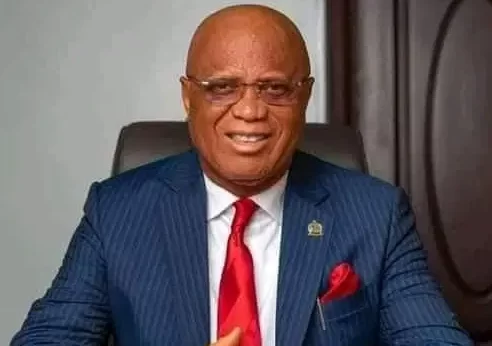
In Akwa Ibom State, the story of governance over the past three years has largely been one of promises made and promises kept, reflected in measurable results. Governor Umo Eno has demonstrated a leadership style rooted in consistency, doing what he says and saying what he does. His developmental trajectory has maintained a bottom-up approach where the people remain at the centre of governance. To him, the office of Governor may confer a title, but it cannot manufacture virtues that were never planted by God in the first place.
As Governor Eno enters his fourth year in office, a compelling picture emerges when campaign promises are juxtaposed with tangible outcomes shaped by deep compassion and people-centred governance. The defining feature of his development philosophy is that he started from the grassroots. Like a man filling a bottle with water, he pours from the bottom upward, ensuring that every layer is touched before the bottle approaches the brim.
Governor Eno flies on the wings of the ARISE Agenda mantra, which is his developmental blueprint 1.0. True to his campaign pledge to open up rural communities, he has woven a network of over 1,300 roads and 40 bridges across previously underserved areas. These roads have become arteries through which development circulates between rural and urban communities, stimulating agriculture, commerce, mobility, and economic growth.
Agriculture has been repositioned as a strategic pillar of economic development through the Ibom Model Farms Project, the Tree Crops Revolution, the revitalisation of AKADEP, and other interventions aimed at promoting agribusiness, food security, employment, and sustainable growth. This is further strengthened by initiatives such as the ARISE Home Farms Programme, alongside targeted farmers’ grants of N2 billion each to farmers and traders, as well as over N15 billion spent on direct citizen empowerment and equipment support, designed to deepen grassroots enterprise development.
Rural Development focuses on bridging the urban-rural divide through the provision of clean water, rural roads, electricity, and healthcare to underserved communities, while Infrastructure Maintenance and Advancement ensures continuous rehabilitation of roads, bridges, and primary healthcare facilities, alongside expansion of aviation and transport infrastructure.
Security Management has been strengthened through collaboration with security agencies, provision of operational support such as vehicles and gunboats, and community intelligence initiatives like the Ibom Community Watch. These efforts have contributed to significantly improved security conditions across the state.
In the educational and health sectors, the administration continues to deliver free and compulsory education, rehabilitation of school infrastructure, and the establishment of model primary healthcare centres across all 31 local government areas, alongside a health insurance scheme that has enrolled over 200,000 beneficiaries in less than two years.
His rural development drive extends deeply into education and healthcare delivery. Model primary schools and modern healthcare centres have been established across all 31 local government areas, nurturing future leaders while improving access to quality healthcare, with many facilities built to standards comparable to general hospitals.
Housing has also received significant attention, with over 1,048 units delivered across different categories, about 70 per cent of which fall under social and compassionate schemes. Through the Compassionate Homes Initiative, nearly 500 homes have been delivered to vulnerable citizens, including persons with disabilities, whom the Governor describes as persons with special abilities. In addition, over 600,000 vulnerable households have benefited from direct food support interventions aimed at cushioning economic hardship and strengthening household resilience. The housing programme also extends to civil servants’ estates and institutional housing for members of the Judiciary and Legislature, reflecting a broad commitment to improved living conditions.
Recognising the importance of innovation and technology, the administration has invested in e-governance, improved digital processes, and strengthened internal revenue management systems, alongside decentralised ICT hubs located in youth development centres across the state. This is expanding access to technology, skills development, and economic opportunities for young people.
Beyond infrastructure, human capital development has taken deep root. Through empowerment programmes, enterprise support schemes, skills acquisition initiatives, and targeted interventions, nearly 100,000 opportunities have been created for direct and indirect empowerment, while over 53,000 civil servants and 750 political appointees remain on the payroll, reflecting one of the most significant human capital investments in the state’s history.
The administration’s commitment to inclusivity is also evident in its support for the elderly, youths, and women through cooperative societies and empowerment platforms, enabling thousands to access funding, training, and economic opportunities that strengthen household resilience.
Another defining feature of Governor Eno’s leadership is his willingness to complete viable projects inherited from previous administrations. Though not elected merely to finish unfinished projects, he has prioritised rescuing viable initiatives from abandonment, ensuring value for public resources and continuity of governance.
Having strengthened the foundations, he has gradually moved into strategic urban renewal projects. Roads, bridges, and regeneration initiatives are improving connectivity across the state, while Ring Road 4 and the Uyo Village Road ecological remediation and reclamation projects stand as symbols of transformation and modernisation.
Healthcare expansion has moved beyond primary care with the development of the Medical City, which includes the Senior Citizens Centre and a 350-bed international hospital with 24 specialist departments, positioning Akwa Ibom as a destination for world-class healthcare delivery.
The aviation sector has witnessed remarkable progress, with four additional aircraft acquired for Ibom Air and the inauguration of international flight operations from the Victor Attah International Airport terminal, strengthening Akwa Ibom’s connectivity to regional and global markets. The Aviation Village, the new airport hospital, the MRO, and related projects further reinforce this ecosystem.
In tourism, the ARISE Palm Resort has transformed a former 73-hectare ravine into a destination for tourism, business, and recreation. This is complemented by the 5,000-capacity Ibom International Convention Centre, Ibom International Hotel, the ARISE Shopping Centre, Ibom Convention Arena, and the ongoing rehabilitation of Ibom Hotels and Golf Resort, strengthening the state’s position as a tourism and investment hub.
The administration’s development vision also recognises the importance of reliable energy. Through structured reforms and the establishment of the State Electricity Regulatory Commission, efforts are underway to ensure the state takes charge of its electricity market and secures adequate power supply to improve productivity and sustainable growth.
Beyond land and skies, Governor Eno has embraced the opportunities of the blue economy. The Oron Maritime Infrastructure Project—featuring shoreline protection, four jetties, a terminal building, cold storage facilities, parks, and two ultra-modern ferries—has set in motion maritime commerce, fisheries, transportation, and tourism development.
This maritime vision culminates in the Ibom Deep Seaport Project, designed to position Akwa Ibom as a major maritime and trade hub, with international partnerships aimed at unlocking the state’s vast potential. Following the recent presentation of final feasibility studies and its approval by the Federal Government for inclusion among the five ports under national consideration, the project has entered a critical phase of international engagement. In furtherance of this, the Governor led a high-level delegation to Paris for a technical session with prospective partners, focusing on implementation frameworks, investment structuring, and delivery pathways.
The engagement underscores a deliberate shift from concept to execution, anchoring the project on global best practices, technical credibility, and investor confidence, while reinforcing Akwa Ibom’s emergence as a serious contender in the regional maritime economy.
Governor Eno’s approach to governance remains distinctive and instructive: development is not pursued as spectacle, but as disciplined statecraft—carefully sequenced, structurally grounded, and steadily executed. Each intervention builds upon the last, ensuring that progress is not only visible but enduring.
Like a bottle filled from the bottom upward, Akwa Ibom is rising across all critical sectors, connecting brute dots in an intentional manner.
As the administration enters the fourth year of his first term, the vessel is not yet full, but its rise is unmistakable.
The waters of development continue to climb, quietly, steadily, and with gathering force. Welcome to the hand of God made possible in Governor Umo Eno”s Akwa Ibom. Happy Saturday Folks!
. Umanah is the Akwa Ibom State Commissioner for Information.