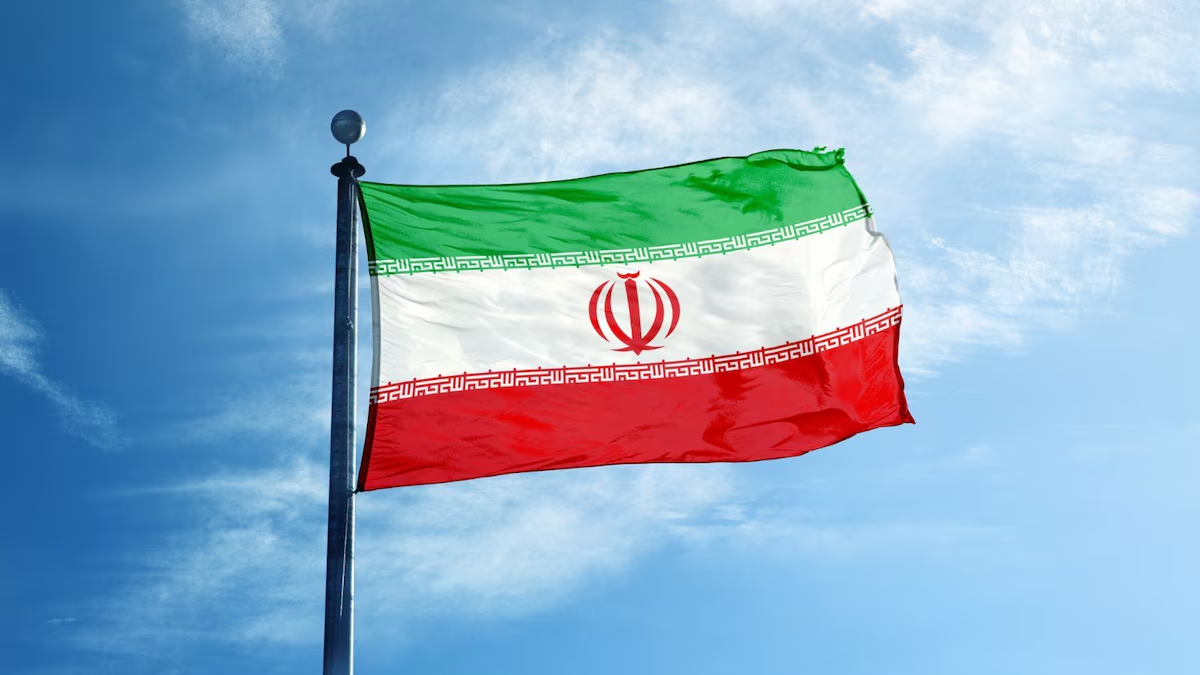
The allegations were made by Dr. Ghadir Nezamipour, Deputy Secretary of Iran’s Supreme National Security Council, during the 16th Meeting of National Security Advisers of BRICS countries.
According to the Iran embassy’s statement on X, Nezamipour rejected allegations made earlier by the UAE representative and accused the United States and Israel of initiating recent hostilities in the region.
“The entire world witnessed that the United States and the Zionist regime were the initiators of the aggression and the crisis in the Strait of Hormuz,” he said.
Dr. Ghadir Nezamipour, Deputy Secretary of Iran’s Supreme National Security Council, speaking at the 16th Meeting of Heads of Security Agencies and National Security Advisers of the #BRICS countries in New Delhi, rejected the allegations made against the Islamic Republic of Iran… pic.twitter.com/n5xK0ljB4W
— Iran in India (@Iran_in_India) June 23, 2026
Nezamipour further alleged that some attacks against Iran were launched from military facilities located in the UAE. He claimed that Abu Dhabi had allowed its territory to be used as a platform for strikes targeting Iranian civilian infrastructure, including schools and hospitals.
He added that Iran’s arms remain open to its neighbors, but some countries must reconsider their policy of accompanying aggressor states against Iran and refrain from providing their territory for attacks against Iran.
He urged the UAE to abandon what he described as “propaganda and adventurism” and instead pursue regional peace, stability and cooperation.
The exchange comes weeks after a similar confrontation at a BRICS foreign ministers’ meeting in New Delhi, where Iranian Foreign Minister Abbas Araghchi accused the UAE of involvement in military operations against Iran.
The repeated exchanges highlight how tensions in West Asia are increasingly spilling into multilateral forums. While the UAE has rejected accusations of involvement in attacks against Iran, Tehran has continued to raise the issue at international forums .
Also Read: Typhoon Mekkhala threatens Philippines with flooding and landslide risks