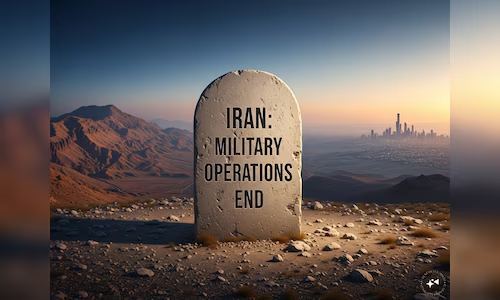
The announcement came as Iran’s armed forces warned that any further Israeli attacks, including those in southern Lebanon, would invite “much harsher and more crushing actions” than previous responses, according to a statement cited by semi-official Fars news agency.
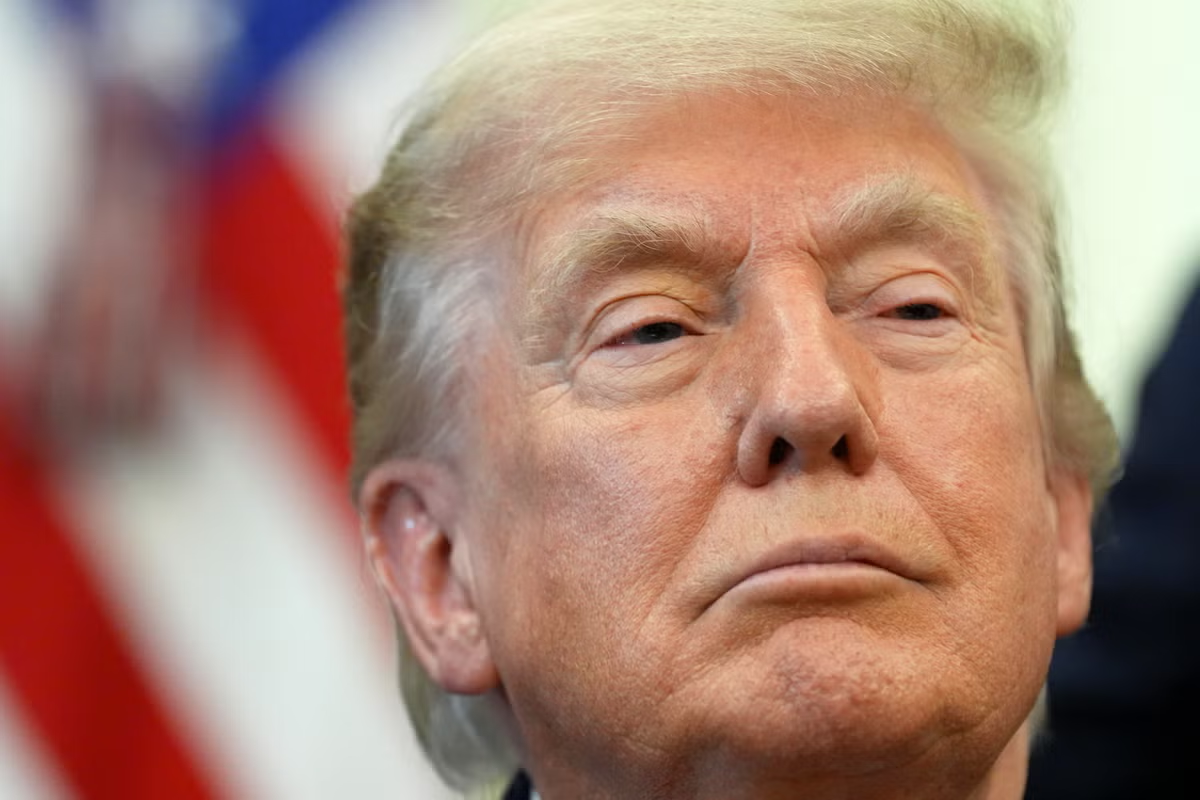
The development came amid renewed diplomatic efforts to halt the conflict, with Trump saying in a Truth Social post that discussions on a ceasefire were progressing, while warning that the process could be affected by “ignorance or stupidity”.
The latest escalation followed Iranian missile attacks on Israel over Sunday and Monday, after which Israel carried out strikes on military targets in western and central Iran.
Israel also targeted Iran’s Karun petrochemical facility in Mahshahr on Monday. Tehran responded by warning that it could strike oil and gas assets connected to Israel, the US, and their regional allies if attacks on Iranian energy infrastructure continued, Fars reported.
Iran launched its latest offensive after Israeli strikes on Beirut, Lebanon, marking a rare instance of Tehran directly responding in support of Hezbollah, the Iran-backed group based in Lebanon.
The confrontation has emerged as a major threat to ceasefire efforts that began on April 8, ending a conflict that started in February after US and Israeli strikes on Iran. The war has resulted in thousands of deaths across the region, disrupted energy markets and pushed oil prices higher, raising concerns over global inflation.
The violence intensified despite Trump’s earlier warning that further escalation could undermine efforts to secure a new 60-day ceasefire between Washington and Tehran. The proposed pause was expected to create room for broader negotiations aimed at ending the conflict.
The Israel Defense Forces is preparing for the possibility that operations against Iran could continue for several days, and has been making arrangements for a large-scale reserve mobilisation, Army Radio reported.
Iran has also indicated that it is prepared for an extended confrontation with Israel and potential strikes against US interests, according to Tasnim news agency, citing an unnamed source.
Meanwhile, Yemen’s Iran-aligned Houthi movement claimed it had launched missile attacks towards Israel and threatened further restrictions on Israeli maritime movement in the Red Sea. The group said future actions would depend on developments in the wider conflict.
Saudi Arabia issued a missile alert on Monday in an area near the Prince Sultan Airbase, where US forces are stationed, the Associated Press reported. Saudi authorities later said the threat had passed, while Iran denied targeting the base.
Oil prices, which had surged during the latest escalation, eased after Iran announced the end of its attacks. Brent crude was trading 1.7% higher at $94.74 a barrel in London. Asian markets declined as investors assessed the risks from the Middle East crisis, though US stock futures recovered slightly.
The Israeli shekel also rebounded, gaining 0.9% against the dollar after earlier losses.
Trump reportedly urged Israeli Prime Minister Benjamin Netanyahu during a phone call on Sunday not to retaliate immediately against Iran’s missile strikes and to allow diplomatic efforts more time, according to Axios, citing US and Israeli sources.
Since negotiations between the US and Iran began, Israel has maintained that any agreement should not include its conflict with Hezbollah. Iran has continued to support Hezbollah, while Trump has focused on reaching a broader deal.
In an interview with the Financial Times, Trump said Netanyahu would have to accept any agreement reached between Washington and Tehran.
“I call the shots. I call all the shots,” Trump said, adding that Netanyahu “doesn’t call the shots”.
The latest round of fighting followed rising tensions between Israel and Hezbollah. On Sunday, the Lebanon-based group attacked targets in northern Israel, leading to an Israeli strike in Beirut’s southern suburbs that killed two people and injured 11 others.
Last week, Hezbollah and Israel had agreed to a limited ceasefire, with attacks on Beirut and northern Israel expected to stop. Days later, Lebanon and Israel reached a conditional wider truce linked to Hezbollah withdrawing from areas near the Israeli border, but the group rejected the arrangement.