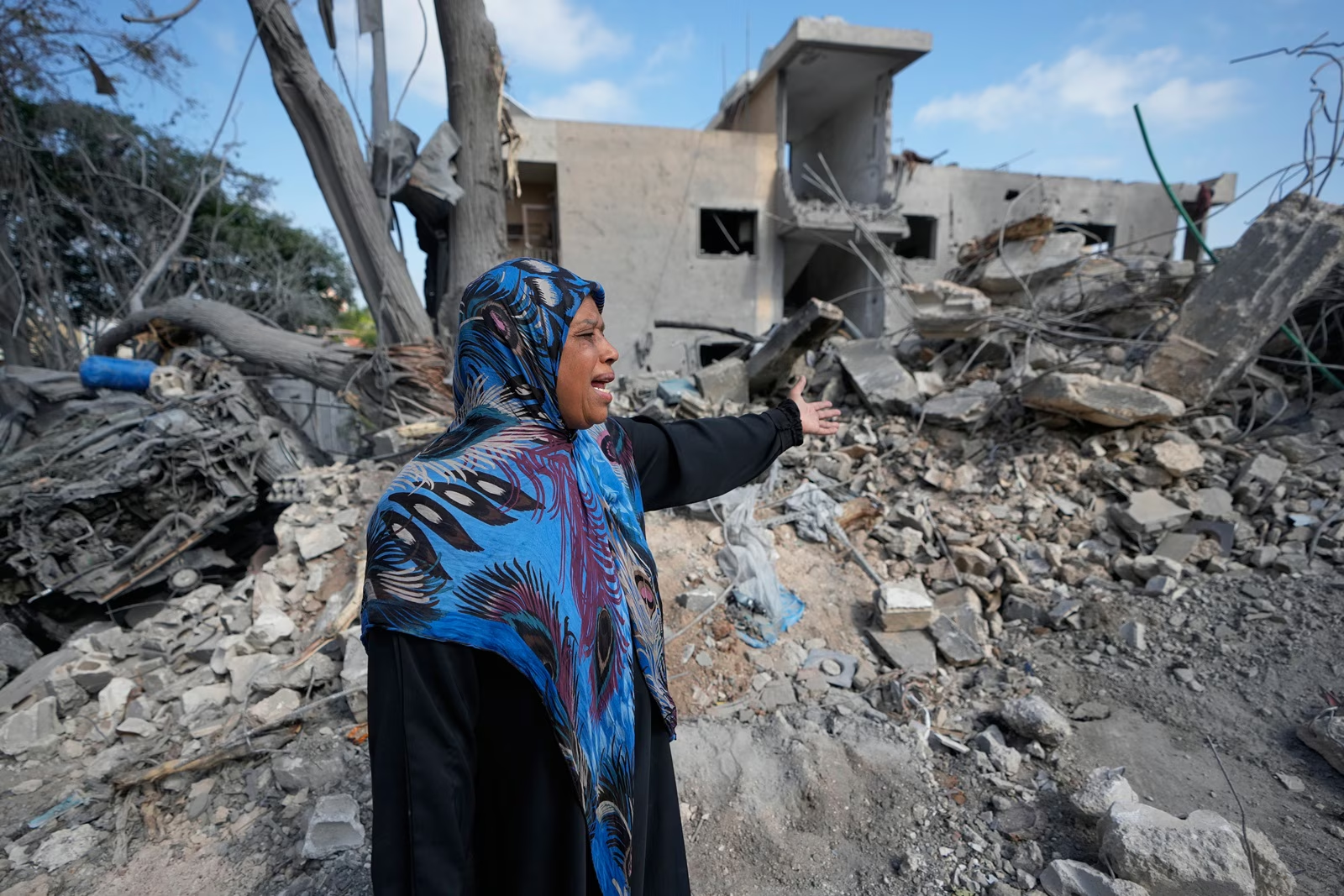
Israeli Prime Minister Benjamin Netanyahu and Defence Minister Israel Katz on Monday ordered fresh strikes on targets in Beirut’s southern suburbs, escalating tensions on the Lebanon front even as diplomatic efforts to end the broader regional conflict continue.
The move drew a swift response from Iran, with Foreign Minister Seyed Abbas Araghchi warning that the ceasefire between Tehran and Washington applies “on all fronts, including in Lebanon”, and that any violation in Lebanon would constitute a breach of the wider ceasefire. Israel’s military also issued fresh evacuation orders for residents of seven villages in southern Lebanon recently, following the directive by Netanyahu.
In a joint statement, Netanyahu and Katz said they had instructed the Israeli military to target sites in Dahiyeh, allegedly a Hezbollah stronghold in southern Beirut, citing what they described as repeated violations of the ceasefire by the Iran-backed group.
“Following the repeated violations of the ceasefire in Lebanon by the Hezbollah terror organization and the attacks against our cities and citizens, Prime Minister Benjamin Netanyahu and Defence Minister Israel Katz instructed the IDF to strike terror targets in the Dahiyeh quarter of Beirut,” the statement said.
בעקבות ההפרות החוזרות ונשנות של הפסקת האש בלבנון על ידי ארגון הטרור חיזבאללה והמתקפות נגד ערינו ואזרחינו, הוריתי לצה״ל יחד עם שר הביטחון ישראל כ”ץ לתקוף מטרות טרור ברובע הדאחייה בביירות
— Benjamin Netanyahu – בנימין נתניהו (@netanyahu) June 1, 2026
Videos shared by Arab media outlets on X showed residents leaving parts of Dahiyeh following reports of impending Israeli strikes.
The announcement came hours after the Israeli military issued evacuation warnings for residents in the southern Lebanese towns of Mlikh and Kfarhounah, saying it would soon “act forcefully” against Hezbollah positions there in a social media post. It also said that residents of the two towns should “immediately evacuate” their homes and “move at least 1,000 metres [0.6 miles] away from the villages and towns to open areas”.
Israel expands Lebanon operations
The strikes on Beirut come amid a broader expansion of Israeli military operations inside Lebanon. Netanyahu said Sunday that he had ordered troops to move deeper into Lebanese territory in the battle against Hezbollah.
Israel’s military also issued fresh evacuation orders for residents of seven villages in southern Lebanon, including Houmine al-Faouqa, Bnaafoul, Arab Salim, Roumine, Aazze, Arkey and Jbaa. In a post on X, the military’s Arabic-language spokesperson Avichay Adraee instructed residents to move at least 1,000 metres away from the affected areas, warning that Israeli forces were preparing to carry out attacks there.
#عاجل ‼️انذار عاجل الى سكان لبنان المتواجدين في البلدات والقرى التالية: حومين الفوقا, بنعفول, عربصاليم, رومین, عزة, اركي, جباع
🔸في ضوء قيام حزب الله الارهابي بخرق اتفاق وقف اطلاق النار واستهدافه للجبهة الداخلية الاسرائيلية يضطر جيش الدفاع للعمل ضده بقوةّ لا سيما في مناطقكم. جيش… pic.twitter.com/lknI2ddodG
— افيخاي ادرعي (@AvichayAdraee) June 1, 2026
The moves follow Israel’s recent capture of the strategic Beaufort Castle ridge in southern Lebanon, which Israeli officials described as their deepest military advance into Lebanon in more than 25 years. The operation gave Israeli forces an elevated position overlooking large parts of southern Lebanon and northern Israel. Israel has argued that Hezbollah used the area to launch repeated attacks against Israeli communities and military positions.
Story continues below this ad
In recent weeks, Israeli troops have crossed the Litani River and advanced closer to the southern city of Nabatiyeh, while airstrikes have intensified across southern Lebanon and the Bekaa Valley.
The latest evacuation orders marked a further expansion of Israel’s operations in southern Lebanon. The Israeli military had earlier issued similar warnings for the towns of Mlikh and Kfarhounah last week too, instructing residents to move at least 1,000 metres away before planned strikes on what it described as Hezbollah positions.
Lebanon and the US-Iran ceasefire
The latest escalation underscores how the conflict in Lebanon has become one of the major hurdles in ongoing diplomatic efforts between Iran and the United States.
Iran’s Foreign Minister Seyed Abbas Araghchi has sharpened Tehran’s position in a post on X, stating that the ceasefire with the United States was “unequivocally a ceasefire on all fronts, including in Lebanon”. “Its violation on one front is a violation of the ceasefire on all fronts,” he wrote, adding that the United States and Israel would be responsible for the consequences of any breach.
For immediate attention:
The ceasefire between Iran and the US is unequivocally a ceasefire on all fronts, including in Lebanon.
Its violation on one front is a violation of the ceasefire on all fronts.
The US and Israel are responsible for the consequences of any violation.
— Seyed Abbas Araghchi (@araghchi) June 1, 2026
Earlier in the day, Iranian Foreign Ministry spokesperson Esmaeil Baghaei said Monday that any agreement to end the war must include a ceasefire in Lebanon, reported news agency Reuters.
Story continues below this ad
Reuters also reported that Baghaei accused Washington of constantly shifting its negotiating positions and said talks were taking place in an atmosphere of “severe suspicion and mistrust”. He argued that changing demands from the United States were prolonging negotiations. “Negotiations have started amid severe suspicion and mistrust, and the exchange of messages is taking place in this atmosphere,” he said, adding, “The other party is constantly changing its views and putting forward new or contradictory demands… it is natural that this situation will prolong negotiations”.
Iran’s semi-official Tasnim news agency reported earlier on Monday that Tehran is currently reworking a draft memorandum of understanding after receiving Washington’s latest response, with both sides continuing to exchange amendments.
US pushes for de-escalation
The renewed fighting comes as Washington continues efforts to broker a wider settlement.
Reuters reported that US Secretary of State Marco Rubio has held discussions with both Lebanese President Joseph Aoun and Netanyahu and proposed a framework for a gradual de-escalation between Israel and Lebanon.
Story continues below this ad
A preliminary US-Iran understanding under discussion reportedly includes extending the ceasefire, reopening shipping through the Strait of Hormuz and provisions that could eventually lead to an end to Israel’s military campaign in Lebanon.
However, with fresh Israeli strikes ordered on Beirut and Hezbollah remaining at the centre of regional negotiations, prospects for a broader settlement remain uncertain.