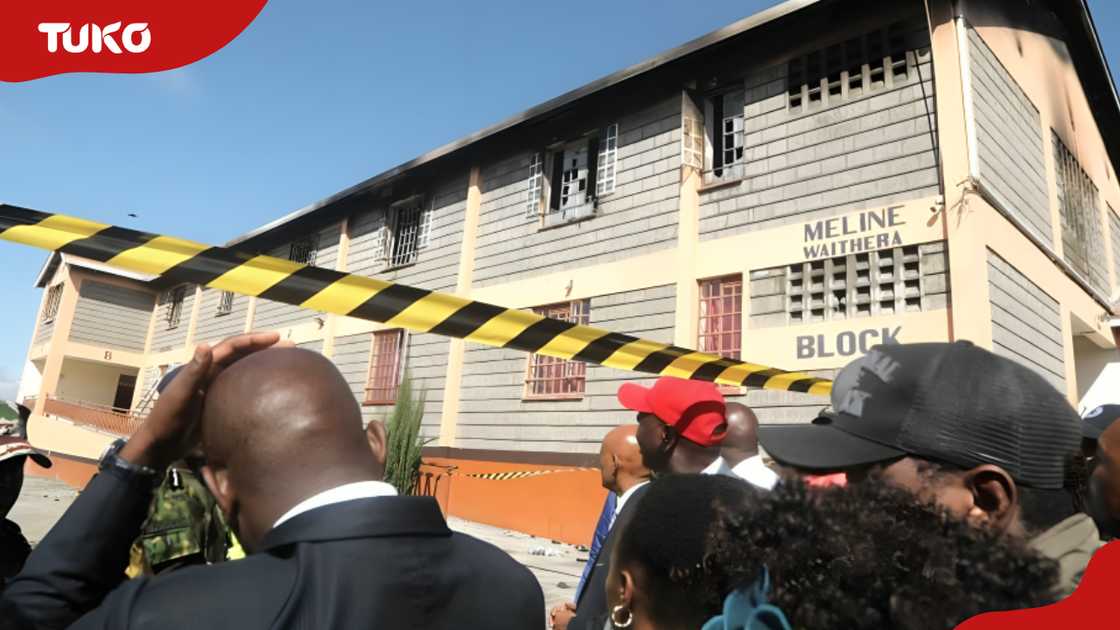
The death of 16 students in a dormitory fire at Utumishi Girls’ has once again thrust the issue of safety in Kenyan schools into the national spotlight. While the tragedy has shocked the country, it is far from an isolated incident.
Source: UGC
For decades, fires, stampedes, structural collapses, floods, and other disasters have claimed the lives of learners in institutions that are supposed to be safe havens for education.
From the infamous Kyanguli Secondary School dormitory fire in 2001 that killed 67 boys, to repeated infernos reported across the country over the years, Kenya’s education sector has struggled to effectively address disaster preparedness and response.
Each tragedy is followed by investigations, promises of reforms, and renewed calls for accountability.
Yet the recurrence of similar incidents raises a difficult question: are Kenyan schools truly prepared to protect learners when disaster strikes?
Search option is now available at TUKO! Feel free to search the content on topics/people you enjoy reading about in the top right corner 😉
Existing legal and policy framework
Kenya is not short of laws and policies governing school safety, as the Ministry of Education developed the Safety Standards Manual for Schools.

Read also
Alliance High School closed, parents directed to pick children after fire incident
IT provides guidelines on infrastructure, emergency preparedness, fire safety, student welfare, and disaster response mechanisms.
The Basic Education Act places responsibility on school boards and administrators to ensure learners are provided with a safe and secure learning environment.
Additionally, county governments, the Directorate of Occupational Safety and Health Services, and fire departments have mandates relating to inspections and compliance.
Schools are expected to develop disaster preparedness plans, conduct regular fire drills, install and maintain firefighting equipment, and ensure adequate emergency exits.
“The manual also provides that institutions should train staff and students on emergency response and prevent overcrowding in dormitories and classrooms,” Julliet Afandi, a high school teacher, told NGBREAKINGNEWS.
On paper, these requirements appear sufficient. The challenge has largely been implementation, as there exist loopholes that continue to endanger learners.
Poor enforcement of safety standards
Many schools only conduct safety audits after a tragedy has occurred. Fire extinguishers expire, emergency exits remain locked, and evacuation plans exist in documents rather than practice.
In some cases, inspections are announced beforehand, allowing institutions to temporarily address deficiencies before inspectors arrive.

Read also
Kenya newspapers review: Fresh opposition rift emerges as Martha Karua makes demand for picking 2027 candidate
Despite dormitory fires being among the most common disasters affecting schools, many institutions still lack comprehensive fire safety measures.
“We have never participated in a practical fire drill. In emergencies, panic sets in because learners are unfamiliar with evacuation procedures,” a student expressed.
Some dormitories continue to have limited escape routes, barred windows, and congested sleeping arrangements that make evacuation difficult.

Source: UGC
Poorly maintained infrastructure
Numerous public schools operate in buildings constructed decades ago with outdated electrical wiring, overcrowded dormitories, and insufficient maintenance budgets.
The rapid expansion of student populations has also outpaced infrastructure development, leading to overcrowding and increased safety risks.
Faulty electrical systems remain a leading cause of fires in learning institutions, compounded by the fact that many schools are located far from fire stations, hospitals, and emergency services.
When disasters occur, response times can be lengthy, allowing situations to escalate before professional assistance arrives.
Some institutions lack first-aid facilities, emergency communication systems, or trained personnel capable of coordinating effective responses during crises.
Mental health and student welfare gaps

Read also
New twist as health workers table 5 fresh demands to govt over Ebola facility
Investigations into previous school fires have occasionally linked incidents to student unrest, disciplinary disputes, or psychological distress.
“While security measures often focus on physical infrastructure, mental health support remains inadequate in many institutions,” counsellor Anne Mbuthia shared.
The growing pressures facing learners, including academic stress, social challenges, and emotional difficulties, require stronger counselling services and early intervention systems.
Why similar tragedies keep repeating
Experts often point to a culture of reactive rather than preventive safety management.
Following every major incident, investigations reveal familiar findings: Poor maintenance, inadequate supervision, weak enforcement of regulations, and failure to implement recommendations from previous inquiries.
Unfortunately, many recommendations are never fully implemented nationwide. As public attention fades, urgency diminishes until another tragedy occurs.
The debate over CCTV cameras in dormitories
The Utumishi Girls tragedy has reignited debate about whether CCTV cameras should be installed inside dormitories.
Supporters argue that cameras could detect fires early, improve security by discouraging vandalism, assist investigations after incidents, and enable real-time monitoring during emergencies.

Read also
Utumishi Girls: MPs call for abolishment of boarding schools after 16 students died in dormitory
However, critics raise serious concerns about privacy and children’s rights, as dormitories serve as students’ living spaces.
Learners change clothes, rest, and engage in personal activities there. Continuous surveillance could infringe on their dignity and privacy, particularly for minors.
A balanced approach
Many child protection and privacy advocates suggest that cameras should not be placed inside sleeping areas.
“Schools could install CCTV systems in corridors, at entrances and exits, in common rooms, on perimeter fences and in administrative areas,” Mbuthia proposed.
Modern technology also offers alternatives such as smoke detectors, heat sensors, and alarm systems that can provide early warning without compromising students’ privacy.
The challenge is balancing safety with the constitutional rights of children.
What needs to change?
The first is that schools should undergo regular unannounced inspections conducted by independent professionals rather than relying solely on internal compliance reports.
School administrators, boards of management, and relevant authorities should also face consequences when safety standards are ignored.
Accountability should not emerge only after lives have been lost, and schools should stop relying on fire extinguishers, which are often insufficient during large-scale incidents.

Read also
Kenya newspapers review: Ebola scare in Nairobi as foreigner hospitalised with virus-like symptoms
Disaster preparedness should become part of school culture, where students and staff regularly practise responses to fires, floods, earthquakes, and other emergencies.
Expanding counselling services and strengthening student welfare programmes can also help identify risks before they escalate into crises.
Safety should not be treated as an optional expense, with schools embracing technology that enhances safety without violating privacy rights.
Beyond mourning
The deaths at Utumishi Girls’ Academy are a painful reminder that school safety remains a national challenge.
While Kenya has made progress through policies and regulations, implementation gaps continue to place learners at risk.
The real test will not be the promises made in the days following the tragedy, but whether long-standing recommendations are finally implemented across the country’s thousands of schools.
For many Kenyan families, sending a child to school is an act of trust. That trust demands more than condolences after disaster strikes.
It requires a sustained commitment to prevention, preparedness, accountability, and the protection of every learner’s right to study in a safe environment.

Read also
Nandi: Outrage as clip of yet another girls’ school rioting, forcing way out at night emerges
Until safety becomes a non-negotiable priority rather than a post-tragedy discussion, the country risks reliving the same painful lessons generation after generation.
Source: NGBREAKINGNEWS