Russia is bumping up its already intense recruitment campaign for soldiers as the war in Ukraine rages on.
Signing bonuses pushed by the Kremlin are at an all-time high, some up to four times the national annual salary. However, with Ukraine launching mass drone attacks on Russian soil, recruitment numbers are trending negatively.
The Kremlin’s drives for recruitment are down 20% this year, compared to years prior, Russian economic expert Janis Kluge wrote in April. She stated in June that the regional drive in Russia recruited approximately 71,216 soldiers in the first quarter of the year, as compared to 89,601 in the first quarter of 2025.
According to Ukrainian intelligence, cited by the Kyiv Independent, Moscow is now prepared to call up tens of thousands of soldiers for duty but is reportedly considering a vastly unpopular forced mobilization rather than increasing recruitment through other means.
What happened in the last partial mobilization?
In 2022, Russia launched a wave of “partial mobilization,” drafting at least 300,000 soldiers. Some were lured in by promises of large signing bonuses and positions away from the front lines.
Some went under questionable circumstances. Russia launched a mass recruitment initiative in prisons, sending convicts to the front lines in exchange for pardons. Hundreds of thousands of draft-age Russian men fled the country.
But the Kremlin was able to withstand the blowback in 2022. Now, however, as the war enters its fifth year and as Russians grow more war-weary, dissent to a mobilization order could be harder to contain.
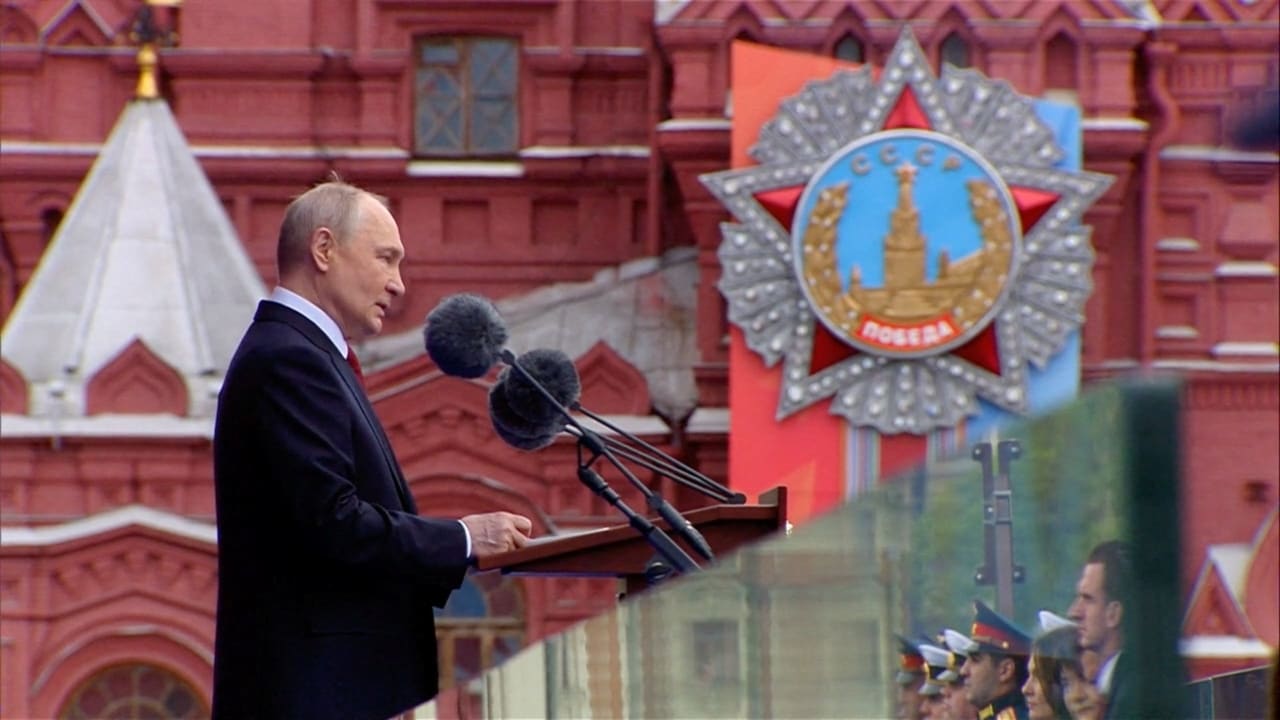
“If Russia does trigger military mobilization, it is a sign that the regime is under tremendous strain and is politically trapped,” Analyst at the Center for Strategic and International Studies (CSIS) Max Bergmann told the Kyiv Independent.
He told the Ukrainian outlet that it would be a “huge gamble for Putin, a bet that could put himself and his regime at risk.”
Notably, the Ukraine-Russia War is the first war in Russia’s history in which it has not technically imposed conscription, Nigel Gould-Davies, a senior fellow for Russia and Eurasia at the International Institute for Strategic Studies (IISS), wrote in a recent report.
Instead, the Kremlin moved to promising hefty bonuses, some more than four times the average annual salary. Ironic, seeing as Russia maintains that the war is still a mere “special military operation.”
But now, analysts like Gould-Davies believe that the Kremlin’s financial incentives are no longer working for younger Russians.
“There are signs that this incentive may no longer be working effectively, and that Russia has begun to lose more troops than it can recruit,” Gould-Davies wrote.
Will Russia be able to last the war in Ukraine?
Russia’s strategy so far has been to simply outlast Ukraine in a slow, grinding war. But now that one of its major advantages, its sheer manpower, is dwindling, analysts are unsure how Russia can keep up in the war.
“Russian casualties have started to surpass the Russian recruitment rate as of late 2025, meaning that the Kremlin will need to recruit more personnel just to sustain ground assaults at the rate that Russia used to conduct in 2025,” Institute for the Study of War analyst Kateryna Stepanenko told the Kyiv Independent.
There have been countless reports of how Russian soldiers are mistreated on the frontlines. Ukrainian intelligence has released reports of Russian soldiers resorting to cannibalism after supplies ran low in the dead of winter in remote Ukrainian villages.
Some have been called back to combat with significant injuries, CNN reported in 2025.
But beyond that, Russia has reportedly lost around 1.2 million soldiers since the onset of the war in 2022, the CSIS wrote in January. The institute added that Russia is advancing only 70 meters per day at most, which it said is slower than most other campaigns in modern military history.
Some analysts believe that Putin will not risk a partial mobilization in the very near future for political reasons, despite the negative data. Mikhail Komin, an analyst at the Center for European Policy Analysis, told the Kyiv Independent that he only saw it happening in two scenarios.
The first is a massive frontline crisis. The second would be a decision by Putin to “escalate the war to a new level for Russia, with the declaration of martial law, a full-scale shift of the economy to a war footing, the unleashing of provocations on the borders with NATO countries, and the buildup of combat units there for a potential invasion.”
Still, Komin told the Ukrainian outlet that if a mobilization were to occur, it would be widely unpopular among Russians.
“Today, the backlash would be even greater (than in 2022), as war fatigue has increased, while the Kremlin has failed to explain to a significant portion of the population why this war is necessary and why it should be considered just,” Komin said.
Russia’s economy during the Ukraine war
On the Russian home front, the recruitment drive is causing a major economic issue for the Kremlin.
“It’s not just struggling to find people to go to the front,” Gould-Davies told CNN. “They’re [Russia] struggling to find people to employ.
“The whole Russian economy is suffering from the most severe labor shortage in history.”
The Jerusalem Post previously reported that the Kremlin is spending up to half of its federal budget on the war.
Russia’s total expenses directly related to the war in Ukraine reached approximately 11.1 trillion roubles ($137.9 billion), Meduza, an independent Russian news outlet, reported. The Economic Ministry estimated Russia’s 2025 GDP at 217.3 trillion roubles ($2.7 trillion).
On top of this, Russians’ support for the war is reportedly wearing thin. Data from the independent Levada Center suggests that six out of 10 respondents believe that peace talks are necessary.
With the mounting war costs and dwindling support for the war, Russia faces a crossroads.
“The Kremlin will soon face a fundamental choice over whether to radically escalate its demands on Russia’s economy and society or to scale back its war aims,” Gould-Davies said.