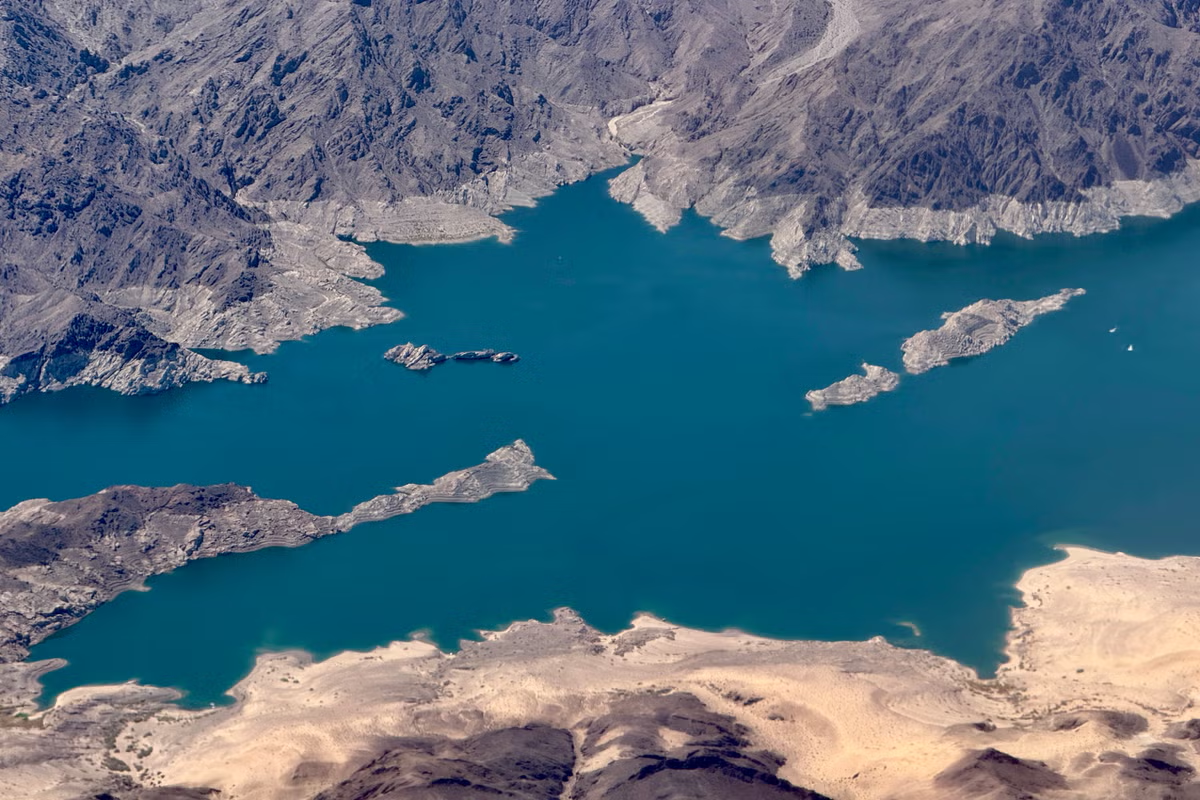
The Colorado River system is racing toward a potential breaking point, with water experts warning that Lake Mead and Lake Powell could face a “system crash” within the next few years unless states dramatically reduce water consumption.
A new report from a group of leading Colorado River researchers and former water officials warns that the Southwest’s two largest reservoirs are approaching levels at which they would lose much of their ability to function as water storage systems. Rather than serving as buffers during drought years, the reservoirs could effectively become pass-through channels that move water downstream as it arrives.
Study author Anne Castle explains that the concern is tied to specific water thresholds where the system starts to fail as storage.
“If the reservoirs drop to that level, we’re not getting any benefit from them anymore,” Castle told the Las Vegas Review-Journal. “If that happens, it’s like the Colorado River is running free. We get what we get, what nature provides, and we have no ability to buffer dry years.”
For Lake Mead, that threshold is 975 feet above sea level. On Friday, it sat at about 1,049 feet, the Review-Journal reports, but officials say a recent decision by the Trump administration to reduce water releases from Lake Powell could cause Lake Mead to drop by about 28 feet by July 2027, which is well below its previous record low. The warning comes after another unusually dry winter across the Colorado River Basin, which supplies water to about 40 million people in seven Western states.
Conditions are even more complex at Lake Powell. Experts warn that if water levels fall below 3,490 feet, structural and plumbing issues at Glen Canyon Dam could make it extremely difficult, or even impossible, to safely release water downstream. Because of that risk, federal managers have already taken emergency steps, including reducing releases and even moving water in from upstream sources, to keep levels from falling too quickly and avoid a near-term crisis.
Still, Rhett Larson, a water law professor at Arizona State University, said the bigger concern is that managers are running out of tools to manage the system if dry conditions persist.
“They’ve already shot that bullet, and you can’t unshoot it,” Larson told the Las Vegas Review-Journal. “Unless Mother Nature bails us out, I don’t see what emergency measures the federal government can take next year.”
The study suggests that if the region gets a stronger snow season, possibly boosted by an upcoming El Niño pattern, it could temporarily ease pressure on the Colorado River system. That kind of runoff could give Lake Mead and Lake Powell about two more years before conditions slip back into crisis again.
Even so, a “system crash” wouldn’t immediately disrupt water supplies in major Southwestern cities, experts said. Major cities, such as Las Vegas, Phoenix and Southern California, have backup water supplies and conservation systems that help shield residents from sudden shortages, at least in the short term.
“A system crash doesn’t necessarily mean that people’s taps go dry because there are other sources to rely on,” Castle said. “But not every water user has that potential of using other sources. That’s why we’ve expressed concern that agricultural water users, and maybe some rural communities that don’t have other supplies available, could be in a world of hurt.”
People would, however, notice tougher restrictions, like crackdowns on lawn watering, which are already implemented in some municipalities across Colorado, according to Colorado Public Radio News. The biggest impact would hit farmers and rural communities, which rely heavily on Colorado River water and could face deeper cuts, lower crop yields and higher food prices, according to the report and Colorado State University.
Lower water levels could also reduce hydropower generation at Lake Mead and Lake Powell, potentially raising electricity costs, The Colorado Sun reports.