Restaurants have had a tough run in recent years — between the pandemic and the war in Iran, many small eateries have struggled with high costs and razor-thin profit margins.
In the U.S., more than 9,500 independent restaurants closed in 2025, dropping 2.3 percent, according to Nation’s Restaurant News.
And now more may feel the squeeze as Sysco, the largest food service distributor in the U.S., has announced plans to acquire Jetro Restaurant Depot, a competitor known for its low-cost warehouses, in a $29.1 billion deal.
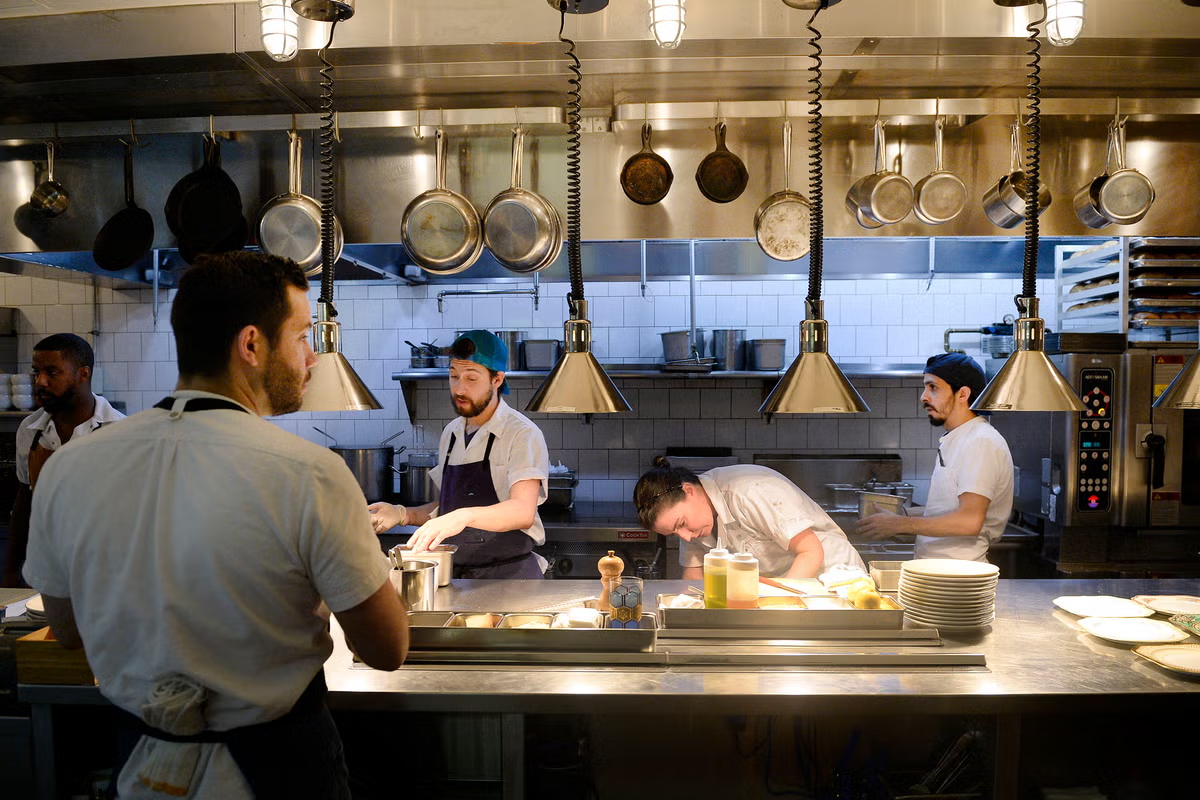
Restaurant Depot, known as a “cash and carry” or wholesale business, serves more than 725,000 independent restaurants at its 166 locations across the country. Unlike Sysco, which delivers ingredients and other goods directly to restaurants, operators who shop at Restaurant Depot must trek through the store, hand-selecting items and hauling them back to their businesses.
Independent restaurant operators fear that a merger would mean less competition, fewer choices and having to pay more for necessities restaurants need to stay open.
“If you’re an independent operator, you’re reliant on Restaurant Depot,” Robert Mahon, of Mahon Hospitality Group, told The Independent. “Long term, I would be worried about pricing. Restaurants across the country, generally speaking, are suffering greatly from cost price pressures across the board.”
“A lot of restaurant owners, including myself, unfortunately, are eating that (profit) margin,” said Mahon, whose group includes Manhattan restaurants Langan’s and Toro Loco. “I think short term it’s a bit worrying, but long term, it’s definitely going to be a negative impact on independent restaurants.”
Sysco, which is based in Houston, Texas, sells and distributes ingredients and other restaurant essentials to businesses, restaurants, hospitals schools, hotels and more. Companies that can afford accounts with Sysco get their items delivered to the door. Sysco’s customers are grocery stores like Whole Foods and Kroger, as well as fast food locations, including Yum Brands-owned Pizza Hut and Taco Bell, according to Mashed.
On the other hand, many smaller operators rely on Restaurant Depot for affordable ingredients, among other necessities — from takeout containers and disposable coffee cups, to cooking equipment and even cleaning supplies.
Some of those operators depend on Restaurant Depot not out of choice, but necessity, Colorado-based restaurateur and author, Bo Bryant, told The Independent.
“Many of these operators cannot qualify for standard broadline delivery accounts. They shop warehouse stores not as a preference but as a necessity,” Bryant, who previously worked for Sysco, said. “This deal hands Sysco a direct relationship with a segment of the market they previously could not access.”
While shopping and hauling can be time-consuming, the process is more cost-effective. Most restaurants, especially neighborhood and family-run joints, operate at low profit margins and would do anything to avoid raising prices out of fear of losing customers.
“Restaurants are really notorious for trying to keep prices low, and that means that they’re shrinking their margins, and they do so willingly, but it’s not a great business model,” Erika Polmar, the executive director of the Independent Restaurant Coalition, told The Independent.
As profit margins continue to shrink, Polmar added, there is “a place that they have to break, at which point the prices on the menu are going to go up.”
Mahon, whose company operates 15 bars and restaurants in New York and Ireland, agreed that restaurants are hesitant to raise prices on customers and usually just lower their profit margins.
“If I were an independent operator only working off a five percent margin, I think I’d be very worried,” Mahon said about the merger.
“Sometimes, if you have a really loyal fan base, [restaurants] do get through,” he noted. “It’s just they really need to focus on getting their profit margins to double digits without driving up their prices so much that it will drive away their customers.”
Polmar said that sometimes restaurants rely on both Sysco and Restaurant Depot – especially if Restaurant Depot offers a better price on an item than Sysco. And then there’s the ease of access.
“We also need to think back to during the pandemic, when food distribution was a problem. If Sysco didn’t have a product, you could go to Restaurant Depot,” Polmar said.
The coalition has started a petition against the merger, emphasizing that independent restaurants use Restaurant Depot not only as an alternative to Sysco, but also “rely on the fact that they compete.”
The coalition is calling on the U.S. Federal Trade Commission to block Sysco’s proposed acquisition, which Polmar says would allow Sysco to own about 30 percent of the food distribution system in the U.S. Sysco says it expects to close its deal by the end of the fiscal year in 2027.
Restaurateur Bo Bryant agreed with the coalition’s assessment, noting that Restaurant Depot has “functioned as a crucial alternative to Sysco for independent operators — precisely because it was independent of Sysco.”
He added: “The risk isn’t that operators lose access to product. The risk is that they lose leverage.”
Kevin Hourican, the chief executive of Sysco, has insisted that the merger will not raise prices at Restaurant Depot but industry experts are hesitant to believe it.
Mahon said he wouldn’t see Sysco following through on that promise “unless they’re going to start taking a hit on their bottom line profit margin,” which he thought was unlikely.