3 min readJun 1, 2026 10:52 PM IST
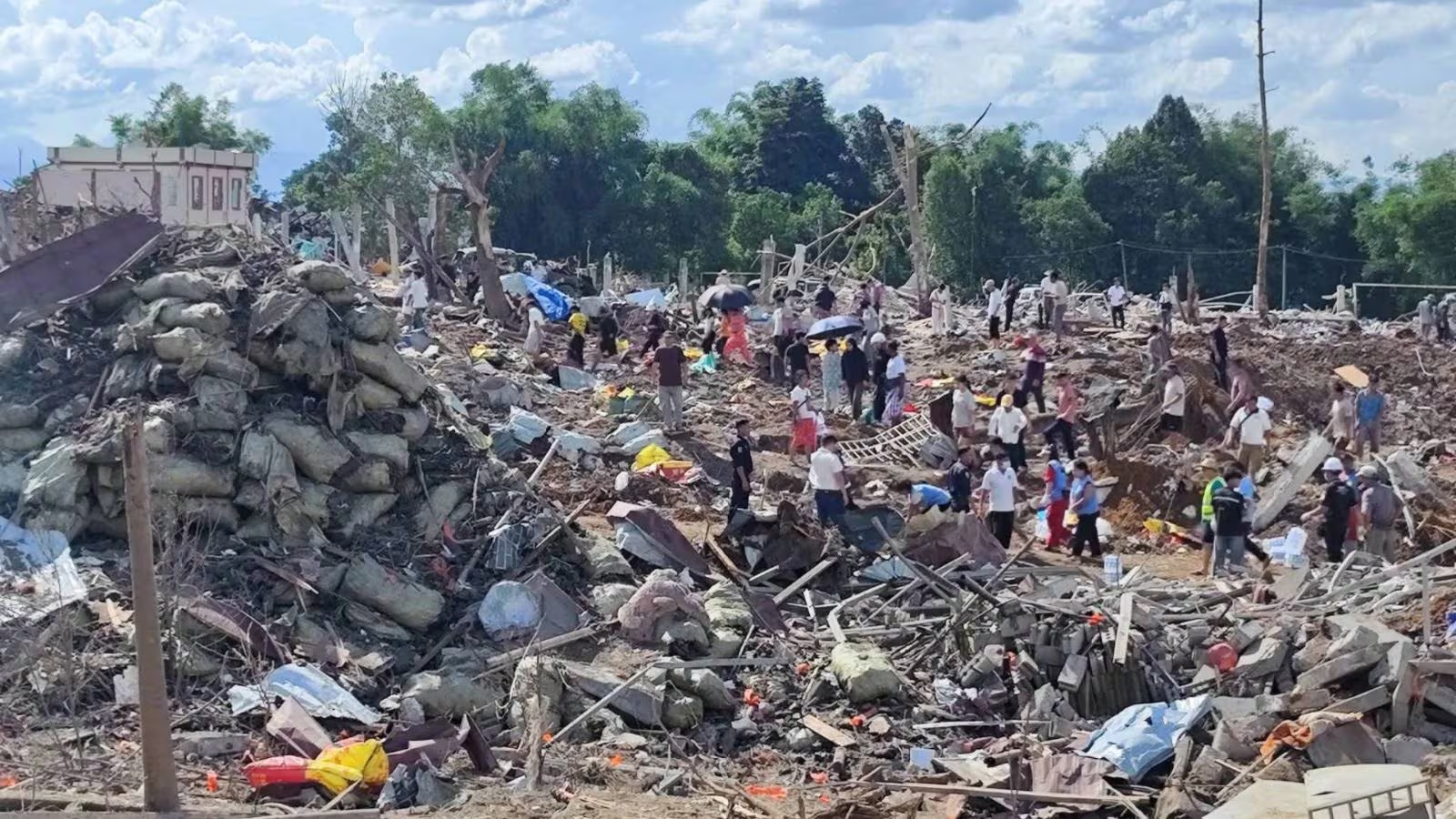
A building storing industrial mining explosives accidentally detonated, killing at least 55 people and injuring over 100 others, on Sunday, May 31, 2026. This incident happened around noon, in Kaungtup village in the Namhkam township of northeastern Myanmar.
According to the BBC, a source familiar with the ground situation confirmed the death toll had risen to at least 55, higher than the 45 initially reported. Among the 46 bodies recovered and cremated by Sunday evening, three were confirmed to be Chinese nationals. The victims also included children, among them a one-year-old toddler.
The Ta’ang National Liberation Army (TNLA), an ethnic armed group that controls the area and is actively fighting Myanmar’s central military junta, officially classified the incident as an “accidental explosion.” The group’s economic department confirmed the facility was storing gelignite- a type of industrial blasting explosive- for use in local mining operations, and stated that an active investigation is underway to determine exactly how the material ignited.
What did the blast destroy?
The scale of destruction was significantly wider than initially understood. The explosion completely destroyed or damaged approximately 200 homes in Kaungtup village and a further 100 homes in the neighbouring village of Pan Lone.
The site of the blast is located roughly 3 kilometres south of the Chinese border, which explains the presence of Chinese nationals among the victims.
Because of the ongoing civil conflict in the region, local villagers initially panicked and believed the massive blast was a military air strike, according to the BBC.
What are survivors saying?
Eyewitness accounts describe a scene of near-total devastation. Survivors told reporters it felt as though “the world had come to an end,” with people screaming for their parents amid a vast crater of rubble, smoke, and twisted trees. One resident said she survived only by chance – she happened to be in her bedroom looking at her phone rather than in her kitchen when the blast hit.
Story continues below this ad
Beyond grief, residents are also expressing sharp anger, questioning why a warehouse filled with volatile industrial explosives was permitted to operate so close to a residential area. Survivors have said they will not be satisfied until authorities provide a full accounting of the safety failure.
Why are explosives stored here in the first place?
Rebel groups like the TNLA rely heavily on mining precious minerals to fund their military campaigns against Myanmar’s ruling junta. However, lax safety standards make catastrophic accidents and mine collapses a recurring reality across the region- and Sunday’s explosion is the deadliest illustration yet of what that negligence costs civilian communities.
(Written by Nityanjali Bulsu, who is an intern at indianexpress.com)
Stay updated with the latest – Click here to follow us on Instagram