An investigation into the fate of Iraqi Kurdish migrants, who sought to cross into the United Kingdom has revealed their pathetic condition. One captive is dead, and dozens more remain missing after more than 300 young Iraqi Kurdish migrants were kidnapped by militia from Libya and held for ransom under threats of forced organ removal, the BBC investigation has revealed.
The investigation has exposed an extensive extortion network preying on those attempting to reach the United Kingdom via illegal immigration routes.
The young men of Iraqi Kurdish identity were captured in Libya by a militia that demanded $5000 from every family member. The victims’ families were threatened; with surgically removing the victim’s kidney if the payments were delayed.
A BBC investigation, including interviews with escaped hostages, uncovered evidence of an organ-harvesting network in operation. The 180 hostages were reportedly threatened, abused, and kept in severely cramped conditions.
In February 2025, the Libyan authority was urged to investigate the smuggling crimes against the vulnerable groups after uncovering bodies of 50 immigrants who died of dehydration and starvation in the south-eastern part of the nation. Reports cited the possibility of smuggling.
Libya is one of the world’s most dangerous corridors for human trafficking. The oil-rich nation has struggled with prolonged political instability and conflict since the 2011 NATO-backed uprising that led to the overthrow and death of longtime ruler Muammar Gaddafi. The revolt, which emerged during the wider Arab Spring, triggered years of civil unrest, factional violence, and foreign intervention. More than a decade later, Libya continues to grapple with the consequences of that turmoil, creating conditions that have enabled human trafficking networks to flourish.
The last stretches of ungoverned land ensured the possibility for traffickers to flourish in lawlessness. Smuggling networks now operate freely across Libya’s porous borders with six nations — Chad, Niger, Sudan, Egypt, Algeria, and Tunisia — funnelling tens of thousands of migrants northward each year toward the Mediterranean and, beyond it, Europe.
What did the investigation reveal?
Story continues below this ad
Noah Aaron, the militia member who tricked and trapped the migrants to become the victims of the organ harvesting ring, is serving a 10-year prison sentence on charges of money laundering and smuggling. A dispute over payment between a militia and Aaron, who had promised the migrants help through the route from Libya to the Mediterranean coast.
Kardo Joff was arrested last month on account of smuggling and kidnapping. Aaron and Kardo are from Ranya, a town in Iraqi Kurdistan, a place known for smuggling networks, according to reports from the UK think-tank Chatham House.
Investigations revealed that throughout the summer of 2025, consecutive groups of Iraqi Kurdish migrants flying into Libya were intercepted and imprisoned inside a guarded compound.
The route that brought tragedy
The route that passed through Libya has been cited as a spot for human organ trafficking due to the “huge vacuum of government”, according to Anthony Dunkerley, a UN adviser. Libya is controlled by rival militias. The instability creates an advantageous pool for smuggling networks that cooperate to perform illegal surgery.
Story continues below this ad
Condition of the hostages
The investigation further revealed that Aaron’s smuggling gang had charged a victim’s father a lump sum amount of money for organizing false promises of travelling to the UK from the North African route via the Mediterranean region to Europe.
The militia in Libya would then demand $5000 for each captive, claiming that Aaron had failed the previous deal. If the families were unable to make quick payments, the payment would be made through the hostage’s kidney.
The militia aggravated the hostages’ plight by filming and photographing the hostages in distress. One video showed a young man filmed when he was taken to a doctor.
Story continues below this ad
The victim’s father revealed that his son was among the 110 hostages who were flown home in January by the Iraqi government. Photographic evidence of a scar revealed that forced organ removal surgery had been performed, the victim’s father said in fear.
Dozens more people gathered the courage to show the distressing plight of the hostages and forced surgery operations.
One young man had his leg burned when the captors tortured them.
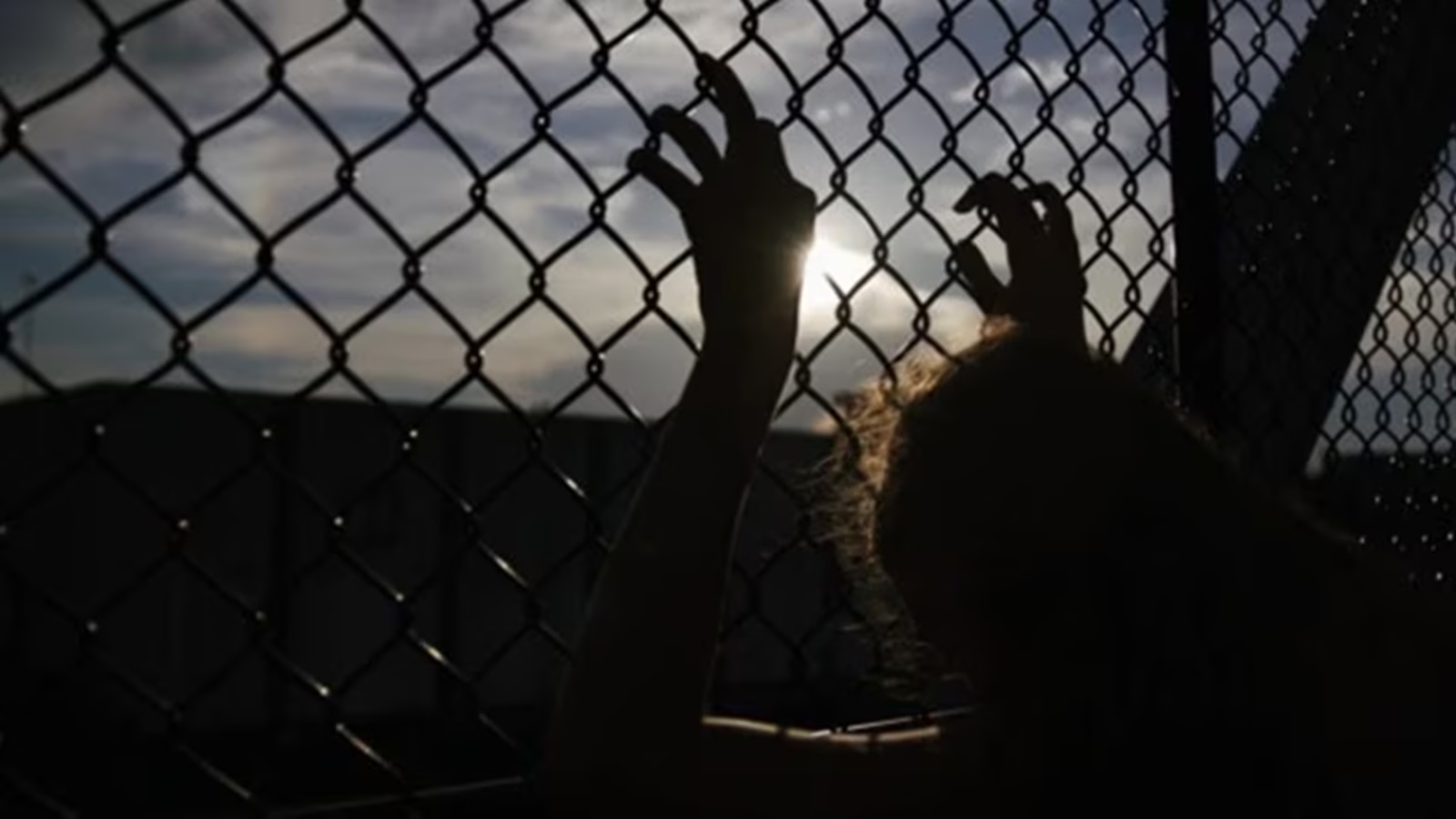
“We didn’t see the sun for six months,” said a 16-year-old captive boy who had been cramped in a tiny cell with 178 others. “It was so cramped that everyone had to sleep sitting up. All the prisoners shared a single toilet, and those who took too long would be beaten,” said the young boy.
Story continues below this ad
If the captors were paid extra money, one piece of bread was provided to the hostage.
Photographic evidence uncovered a distressing plight
A consultant in the UK revealed that the photo shows scars which are consistent with the incision made during kidney operations. While many hostages have been released, many families have paid through ransom. Authorities suspect the possibility of payment through organs by hostages.
Hemn Merany, a senior official at the Kurdistan Regional Government’s Ministry of the Interior, cited growing concerns and the inability to stop the flow of illegal immigrants from the route of Iraqi Kurdistan to Europe. Families and friends were encouraged to share the horrific experience, ensuring no family or friend takes a similar route for the journey. He shares the story of a son who died in an organ trafficking scheme via the route. At his funeral, his father discovered that the victim’s cousins had left for Europe via the same route.
Story continues below this ad
“The very sad part of this business is we do not learn,” says Merany.
(The article is curated by Salonee Kulkarni, who is an intern with The Indian Express.)