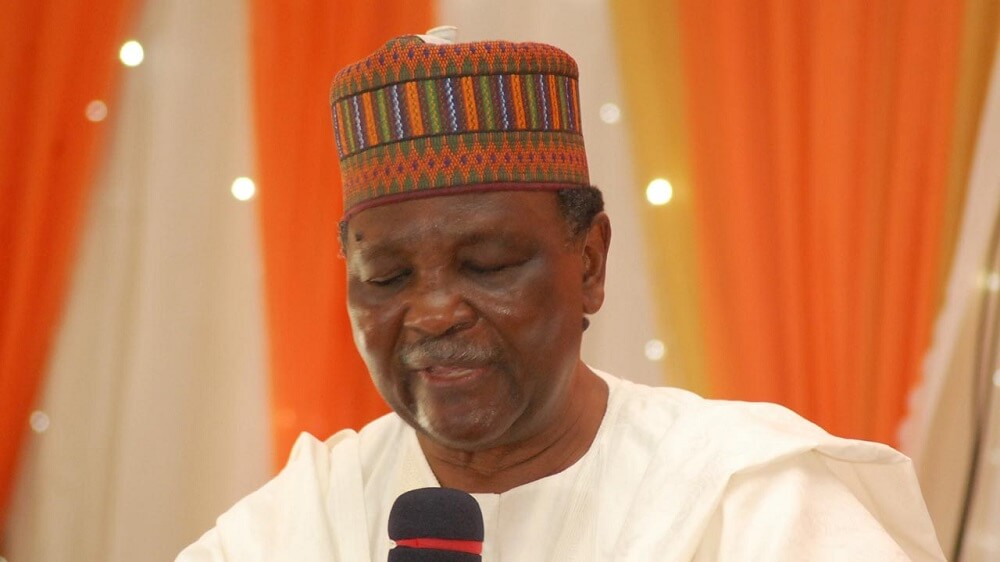
He said that at 90, the former Head of State should have emulated former military President Ibrahim Badamosi Babangida by clearing all cobwebs of deceit or doubts about the events that culminated in his disagreement with Lt Col Chukwuemeka Odumegwu Ojukwu, shortly after they reached the Aburi Accord.
He said he and other Nigeria Elders such as Ibrahim Babangida; Oluesgun Obasano, Theophilus Danjuma, as well as President Bola Tinubu, ought to have learnt by now that we cannot continue to deceive the younger generation, especially now at their twilight ages.
Obidigbo, who said he waited to digest the salient historical lessons contained in Gowon’s “My Life of Duty & Allegiance,” before commenting, noted that the entire biography read like a command narrative that was intended to serve as a personal position on the troubling issues that gave rise to Nigeria’s troubled structure.
“I can say without equivocation that Jack did not include the basic facts and truth regarding the greatest historical challenge that troubled Nigeria’s political economy. Perhaps, having been used to the command and control structure of the military, which remains his constituency, the former Head of State maintained allegiance to the institution rather than to the nation.
“One area that I felt Gowon should have elaborated was the fact that the Biafra and the attempted secession by the Eastern Region was not the original idea of Ojukwu. The former Head of State knows that Ojukwu was a victim of unexpected circumstances, and the unintended consequences of the pogrom in Northern Nigeria that culminated in the hostilities,” he remarked.
He noted that even though Ojukwu was very angry at the situation at the time, his single intention was the protection of the people of the Eastern region rather than the declaration for a separate republic.
According to Obidigbo, “I know this as true. In April 1967, Ojukwu had August visitors that included the then British Deputy High Commissioner to Eastern region, Mr Roland Walter Parker, the Managing Director of Shell BP Development Company, Mr Stanley Gray, Mr Frederick Stephens, the chairman of Shell international, who visited Port Harcourt at the time, and a representative of Sir David Hunt, the then British High Commissioner to Nigeria.
“These visitors’ assignment to Enugu was to encourage Ojukwu to pull Eastern region out of Nigeria, and secondly to discuss the fate of petroleum exploitation in a new nation expected out of the then Eastern region, since according to them, Gowon got British backing to renege on the terms and modalities for the peaceful association as agreed on the Aburi Accord in Ghana.”
Further, Obidgbo said that Ojukwu disclosed that he told the visitors that since his people were very itinerant, Nigeria offered them the space they needed to transact, secondly that he felt that since the country was in the early stages of bonding, such secession may not be in the overall best interest of the new country, Nigeria.
Thirdly, Ojukwu informed his visitors that he did not have the resources and reasonable materials to execute an all-out war with the Nigeria side, which was working in cahoots with Britain and other Western backers, and finally, any discussions on the fate of the oil, at that point in time, was not only premature, but also one that only him cannot take.
The Elder statesman said that it was at that juncture that the British agents assured Ojukwu of full support, both locally and internationally, including funding, weapon supplies, and the immediate remittance of the accumulated royalties being withheld by Shell to Ojukwu
“As they mounted severe pressure on Ojukwu, the Eastern Nigeria leader was made to consider all the benefits of separating from Nigeria, which he said included, security of lives and property of his people, with an opportunity to grow their economy at their own pace.
“Thereafter, Ojukwu held wide consultations with most major stakeholders from the then eastern Nigeria, including his top military officers and senior civil servants before he convened a meeting of all eastern region traditional rulers.
“It was at that meeting that Ojukwu was mandated to pull the eastern region out of Nigeria. That same day, the name, Biafra, was proposed by Chief Frank Opigo, an Ijaw traditional ruler from Bayelsa and it was unanimously adopted since it bore no resemblance to any of the tribes that make up Biafra,” he stated.
Obidigbo maintained that Gowon knew about the pressures being mounted on Ojukwu, stressing that the Nigeria leader was also facing intense British pressure to attack as soon as the Biafran declaration was made.
His words, “At the end of the war, Gowon was right to declare a verdict of No victor, No vanquished, because neither Nigeria nor Biafra won or lost the war. Both lost. In fact, Britain was the victor, just Nigeria and Biafra came out deep losers as the situation still remains so till date.
“As soon as Ojukwu declared Biafra, the four august visitors disappeared and immediately after that, controversies over the payment of Shell royalties commenced with the late chief Obafemi Awolowo as Nigeria’s finance Commissioner, pitching for the Nigerian side and Ojukwu standing for the Biafran side for who receives the royalties.
“But, for strange reasons, when Mr Stanley Gray ventured into Port Harcourt, Ojukwu angrily ordered for his immediate arrest and detention. And It took the intervention of Sir David Hunt and the British government to secure his release. It however, dawned on Ojukwu that he had got himself enmeshed in a war for which he was subtly deceived into and totally unprepared.”
Obidigbo therefore concluded that Gowon knew full well that Ojukwu was not preparing for war, and that both he and Ojukwu, were schemed into the war by a common influencer, Britain.
“So, Gowon’s priority at this juncture, should be thanking God for longevity, good health and last-minute opportunity to make peace with God and mankind by revealing the truths about what transpired.
“He should make peace with all Nigerians, but particularly Igbo and his Langtang people that he led into a fruitless war that cost millions of lives with no justification and no benefit to Nigeria as a country.
“He will then go all out to seek the forgiveness of the igbo nation by applying all the pressure he could muster to demand for the immediate and unconditional release of Mazi Nnamdi Kanu, Simon Ekpa and all Biafrans still languishing in various security outfits across Nigeria.
It was after the war that I heard about the true cause of the war through an information leaked out from a former British Prime Minister, Sir Edward Heath, where he spoke, during a Graduate Convocation Lecture at Lancaster University in 1979.
He spoke about Britain’s role in the African renaissance, pointing out that after granting independence to countries in Africa, some of their regions started making frantic efforts to grow their economies.
According to Heath, economic independence was something that Britain never wanted for her colonies. Therefore, the question that confronted Britain and the rest of the civilized world during the immediate post-colonial era, was whether to allow such countries to continue to grow their economies or to stop them from growing.