As political actors position for the next election, voters are expected to prioritize competence, policy direction and economic vision over ancestry and identity politics, writes Olanrewaju Fatunmbi
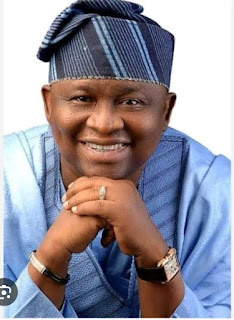
The 2023 governorship candidate of the Peoples Democratic Party (PDP) in Ogun State, Hon. Oladipupo Adebutu, is on the march again. Having secured his party’s nomination for a second shot, he is warming up for another slugfest. This time, with the flag bearer of the All Progressives Congress (APC), Senator Solomon Olamilekan Adeola (popularly known as Yayi).
Adebutu lost the 2023 election to the incumbent Governor, Dapo Abiodun, not because voters doubted his pedigree as a true son of Iperu land. He lost because the electorate had confidence in Abiodun’s policy record and voted for continuity. The 2023 result was not close: Abiodun won 13 of the 20 Local Government Areas (LGAs), swept the Yewa/Awori (Ogun West) bloc, and firmly held his base in Ogun Central. While Adebutu carried Ogun East, that margin was simply not enough to overturn the advantage of incumbency.
That defeat should have served as a reset moment. Electorate in Ogun state are merciless with repeat candidates who fail to evolve. Voters remember what you said last time, and they will ruthlessly compare it to what you are saying now. If there is no growth in your ideas, there will be no growth in your votes. While political watchers expected a bagful of fresh ideas from Adebutu’s drawing board, he has instead hit the relay lane empty-handed. Rather than proposing policy solutions, he prefers to play on emotions by raising fresh dust about Adeola’s paternity to score cheap political points. This “where is he from?” narrative dominated the early 2023 campaigns, and it failed. Ogun people asked for manifestos, not ancestry charts.
While emotional appeals sometimes work in politics, especially where the voting population is easily persuaded, playing the ethnic card in an enlightened state like Ogun is a sheer waste of time. This is a state boasting eight (8) federal and state universities, over 6,000 registered manufacturing industries, and the second-highest Internally Generated Revenue (IGR) in Nigeria, hitting ₦194.9bn in 2024. Voters here read budget documents. They debate policy on X and WhatsApp. They will not trade good governance for genealogy. What voters will look out for in 2027 is not emotional sentiment, but a candidate with demonstrable capacity and superior ideas to transform the state’s socio-economic and industrial landscape—someone who will consolidate the foundation and gains of the current administration.
Ogun is already Nigeria’s manufacturing capital; the next governor must make it the innovation capital too.
There is no gainsaying the fact that Senator Adeola is a bona fide son of Yewaland, in flesh and blood. While his political career took root in Lagos, his paternal connection to Ogun State is clear, definable, and traceable. Born in Lagos, his father hailed from Ilaro in Yewa South—a fact repeatedly affirmed by family members, community leaders, and traditional rulers alike. The identity debate is settled.
Besides, the capacity to govern is not derived from blood ties. It is the product of intellectual endowment, requisite experience, and a genuine commitment to the greater good. Historically, Ogun has a track record of rejecting identity politics. In 1999, Olusegun Osoba won despite being labeled a Lagos returnee. In 2011, Ibikunle Amosun won from Ogun Central even though critics argued he was “too Abeokuta.” In 2019, Dapo Abiodun secured victory despite debates surrounding his Iperu roots. The pattern is clear: Ogun votes competence first, origin second.Adeola’s core strength lies in his legislative record: eight years as Senator for Lagos West and four years as Chairman of the Senate Committee on Appropriations. He thoroughly understands the federal budget cycle, knows how to lobby for constituency projects, and intimately understands which federal ministries control vital infrastructure like the Lagos-Ota-Abeokuta road, the railway corridor, and regional power transmission lines.
Granted, Oke-Mosan is not the National Assembly chamber. Governance is executive, not legislative. As governor, you don’t move motions; you sign memos at 2:00 AM. You must decide which hospital gets equipment first, and you must balance the competing daily demands of Ijebu traders, Yewa farmers, and Ota industrialists.Therefore, the question Yayi will face is not “Are you from Ogun?” The real questions are: “Can you govern Ogun? What is your four-year economic plan? How will you fund infrastructure without pushing state debt beyond sustainability? How will you handle the perennial flood crises in Isheri (Ifo LGA) and Mowe (Obafemi-Owode LGA)? What will you do to make the $200m Gateway International Airport, Ilishan/Iperu commercially viable?”
Bloodline might answer the door, but capacity enters the room. These are far bigger problems to solve than ancestry.
To win the hearts of the electorate, a candidate must truly understand Ogun’s structural, rather than sentimental problems. The state hosts over 6,000 manufacturing industries across Agbara, Ota, Sagamu, and Mowe, yet youth unemployment remains a glaring issue. National Bureau of Statistics (NBS) data ranks Ogun 6th nationally with an 8.8% unemployment rate, accounting for 260,361 unemployed individuals. Graduates roam the streets while factories import technical labour from Ghana and Togo. The skills gap is the real enemy here, not outsiders. This problem is further compounded by manufacturers reporting that capacity utilization dropped to 2.4% due to forex scarcity and infrastructure decay.
Furthermore, the Lagos-Ota-Abeokuta Expressway was once a nightmare until the recent intervention of the Abiodun’s Administration, the Mowe-Ibafo axis floods annually, and rural roads in Imeko-Afon, Yewa North, and Ijebu North East are virtually impassable for six months of the year. While Abiodun’s “Building Our Future Together” mantra fixed some of these corridors, many more desperately need attention. Manufacturers frequently complain that poor road networks have forced haulage firms to hike fares or refuse service entirely.
Then there is the energy paradox. Despite hosting the Olorunsogo power plants, Ogun suffers severe load shedding. Industrial estates are forced to run on diesel 70% of the time, spikes production costs, and ultimately kills jobs. The next governor must negotiate directly with NERC, Transmission Company of Nigeria (TCN), and private investors for dedicated industrial feeders. Without stable power, the 140 new factory registrations recorded in H1 2024 cannot translate into employment.This is compounded by Ogun’s silent healthcare crisis. The Nigerian Medical Association (NMA) reveals that Ogun has a dismal ratio of 1 doctor to 6,400 patients, whereas the World Health Organisation (WHO) recommends 1:600. This means Ogun’s healthcare deficit is ten times worse than the global standard. With a population exceeding 6 million people served by only 1,000 doctors across both public and private hospitals, primary healthcare centres in rural areas are left starving for doctors and drugs. This doctor-patient ratio alone should be at the forefront of every 2027 manifesto.
On the fiscal front, Ogun’s IGR hit ₦194.9bn in 2024, up from ₦50bn in 2019. The state is targeting ₦500bn for 2026 and ₦750bn by 2027, but collection efficiency remains low, and multiple taxation continues to drive SMEs underground. The next administration must fully digitize tax collection and make the business environment friendlier, a reality Abiodun himself acknowledged when he noted: “This state has no business generating less than ₦500 billion a year.”
None of these complex issues will be solved by asking, “Where is your father from?” They require data, negotiation, and execution. The 2027 winner must be a project manager, not just a politician. If Adebutu wants to win in 2027, he must do what he failed to do in 2023: bring policy, not provocation.
In 2023, his campaign was heavy on accusations and remarkably light on alternatives. When voters asked, “What will you do differently?” the answer was unclear. To win in 2027, he needs a rigorous sectoral blueprint.In terms of agriculture, Ogun ranks number one nationally in poultry and cassava production. Only a candidate with true executive capacity can successfully move these farmers from subsistence to export, or revive the languishing Olokola Free Trade Zone and the pending Dangote Olokola Deep Seaport project. Furthermore, Abeokuta and Sagamu have the potential to become thriving tech hubs, but what concrete incentives will Adebutu offer startups? Does he possess the requisite knowledge to negotiate and partner with institutions like, RUN, Covenant and Babcock universities for industrial Research and Development? No. With an 8.8% unemployment rate, the youth need tangible economic roadmaps, not slogans or blood ties.The healthcare sector is similarly beset with a myriad of problems. Yet, Adebutu has offered no answers on how to fix the 1:6,400 doctor-patient ratio, nor has he put forward ideas on how to implement health insurance for informal workers. Currently, the Ogun State Health Insurance Scheme coverage remains severely limited, particularly within the informal sector.Security also demands a coordinated response, from the herder-farmer clashes in Yewa to kidnappings along the Lagos-Ibadan and Sagamu-Ijebu-Ode-Benin Expressways. What is Adebutu’s plan? PDP members and neutral voters alike will only seriously consider him if he shows real substance. Without it, 2027 will mirror 2023: a good effort marred by the wrong message. You simply cannot give what you do not have.
Conversely, Yayi’s pedigree offers a sharp contrast; he has concrete ideas, and the voters know them. His extensive legislative experience serves as potent campaign material because people already understand his vision for Ogun in plain language. He has articulated a clear blueprint on how to fix regional transport, complete the light rail link to Lagos, decongest Mowe, and optimize intra-city transport networks in Abeokuta and Ijebu-Ode. For instance, the industrial corridor stretching from Mowe to Ibafo now hosts dozens of firms, but gridlock routinely kills productivity. Yayi’s action plan explicitly includes solving this transport bottleneck and establishing the Ogun State Power Company to provide embedded generation specifically for industrial clusters—a vital cushion for industries currently paying premium rates for diesel due to ongoing forex volatility.
To grow the state’s IGR painlessly, his strategy relies on digitizing taxes, blocking leakages, and aggressively reducing the cost of doing business. While IGR grew spectacularly from ₦50bn to ₦240bn over six years, hitting the ₦500bn target for 2026 requires this exact brand of fiscal creativity, rather than merely slamming higher tax rates on businesses.Crucially, his vision includes protecting the vulnerable by expanding social investment programmes directly targeted at market women, artisans, and rural farmers. With 260,361 individuals currently unemployed, robust welfare programmes cannot afford to be an afterthought. Adeola is notably not campaigning on the singular rhetoric of “I am from Yewaland.” Instead, his pitch is clear: “I know how budgets work, and I will use that knowledge to transform Ogun.” That is the exact type of message that wins over swing voters in Ogun State.
The Ogun voter of 2027 is fundamentally different from the voter of 2023. Today’s electorate is younger, more educated, and highly connected. Over 60% of registered voters are under the age of 40. They wield smartphones, actively fact-check political claims, and openly compare Ogun’s road infrastructure to Oyo’s. They demand to know why Lagos’s BRT system works while Ogun’s struggles, and they actively monitor budget performance directly on the state website. Ethnic insults will not move them; they will gravitate toward the candidate who respects their intelligence. In 2019, Adekunle Akinlade of the Allied People’s Movement (APM) was popular but lacked the necessary party structure. In 2023, Adebutu possessed the party structure but lacked policy clarity. Meanwhile, Abiodun possessed both a track record of performance and the leverage of incumbency. Voters ultimately chose the complete package. The year 2027 will follow that exact same logic. The winner will be the candidate who successfully combines identity, ideas, and integrity. Bloodline gives you identity; experience gives you ideas; character gives you integrity.
Ogun deserves substance over drama. The 2027 election will not be decided by who shouts “son of the soil” the loudest. It will be decided by who presents the most credible, data-driven plan for the state’s future. Adeola possesses the platform and the pedigree. Adebutu has the party machinery and a second chance. Both must recognize that the people of Ogun are not mere spectators—they are active shareholders in the Ogun project. Bloodline may win you a primary election, but capacity will win you the governorship. Ultimately, only capacity can deliver the Ogun of our dreams: a state where 6,000 factories operate seamlessly 24 hours a day, where 260,361 unemployed youths find gainful employment without needing political connections, where rural roads cease to be death traps, and where a single doctor is no longer forced to serve 6,400 patients. The march has begun, and the political drums are beating. But this time around, let the contest be strictly about ideas, not insults; about data, not dust; about governance, not genealogy. The people of Ogun are watching, and they are ready to vote for the future, not the past.
*Fatunmbi writes from Okeagbede, in Imeko-Afon LGA of Ogun state