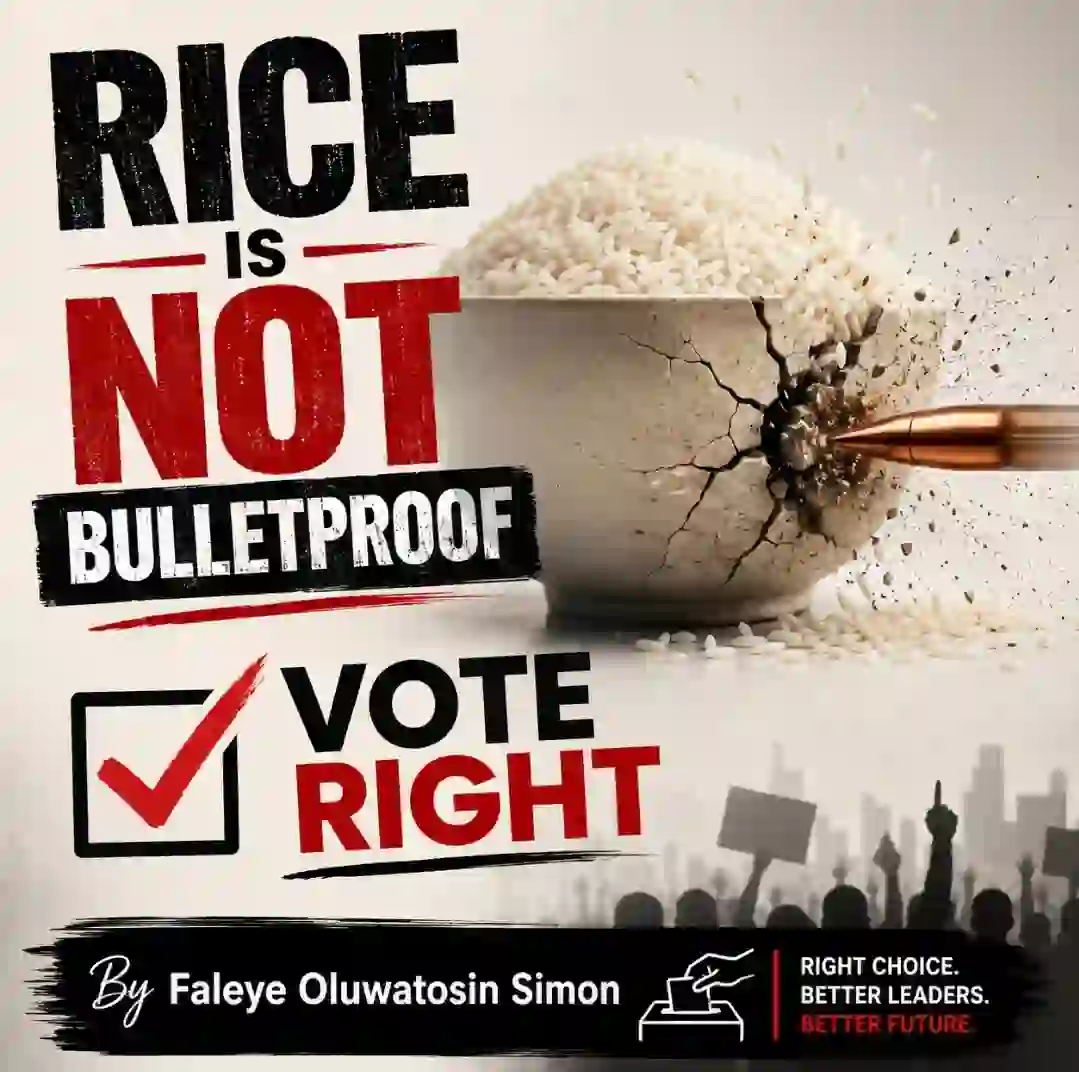
In every election cycle in Nigeria, a familiar ritual unfolds. Politicians distribute bags of rice, small cash envelopes, and other token items to voters in exchange for loyalty at the ballot box.
For many, it feels like immediate relief in a harsh economy. But beneath that temporary comfort lies a dangerous illusion—one that continues to cost the nation its future.
A bag of rice cannot shield a community from insecurity. It cannot fix broken hospitals, repair dilapidated roads, or create sustainable jobs for millions of unemployed youths.
It cannot protect families from the consequences of poor governance, nor can it build the kind of nation we all desire. Yet, time and again, voters are persuaded sometimes by necessity, sometimes by desperation—to trade long-term prosperity for short-term survival.
This phenomenon, often described as “stomach infrastructure,” has become one of the most potent tools in Nigeria’s political playbook. It thrives on poverty and deepens it. It exploits the vulnerability of citizens while ensuring that accountability remains elusive. When leaders are elected based on handouts rather than competence, vision, and integrity, governance becomes transactional rather than transformational.
The consequences are evident everywhere, Communities remain underdeveloped. Public institutions struggle. Insecurity festers. The same voters who received rice today may find themselves tomorrow facing the harsh realities of bad leadership without protection, without opportunity, and without hope.
The real tragedy is not that politicians give rice. The real tragedy is that many citizens have come to believe that this is the best they can get.
But it doesn’t have to be this way.
Voting is not merely a civic duty, it is a powerful tool for shaping the future. It is the voice of the people the mechanism through which accountability is enforced and progress is demanded. When voters begin to prioritize competence over convenience, integrity over inducement, and vision over immediate gratification, the political landscape will inevitably change.
We must ask harder questions: What are the candidates’ plans for education? How will they address insecurity? What is their track record? Are they prepared to serve, or simply to benefit?
A bag of rice may last a few days. Good governance lasts generations.
Nigeria stands at a critical crossroads,The choices made at the ballot box will determine whether the country continues in a cycle of underdevelopment or begins to chart a new course toward stability and prosperity. Citizens must recognize that their votes are far more valuable than any material inducement offered during campaigns.
Hunger is real. Hardship is real. But the solution is not in surrendering the future for temporary relief. The solution lies in demanding better and voting accordingly.
It is also very important for every eligible citizen to get their Permanent Voter’s Card (PVC) ready and participate actively in the electoral process. Democracy only works when citizens show up prepared to make informed and responsible choices at the ballot box.
It will not save us from the consequences of bad leadership.
Only the right choices will.
And those choices begin with the voter.
By: Faleye Oluwatosin Simon