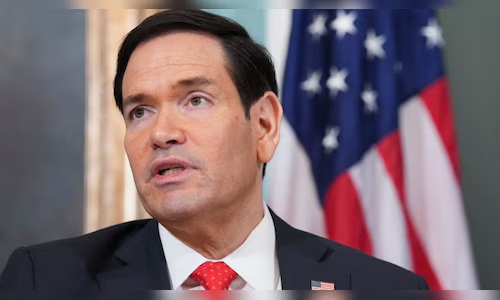
Testifying before the Senate Foreign Relations Committee, Rubio said negotiations with Iran are being conducted through intermediaries and described recent diplomatic progress as encouraging.
“Talks with Iran are not like talks with Switzerland. They require the use of intermediators,” Rubio told lawmakers. He added that Iran had agreed to negotiate parts of its nuclear programme that “just a month ago, just a year ago, they were refusing to even mention.”
Rubio cautioned that the discussions may not necessarily result in a deal acceptable to Congress or the American public, but said they would allow Washington to “truly test” how far Tehran is willing to go in addressing concerns over its nuclear activities.
The remarks marked a notable shift in tone from President Donald Trump’s comments a day earlier, when he told CNBC that he did not care whether talks with Iran had collapsed. Rubio’s testimony, however, suggested the administration still sees a diplomatic path forward.
Appearing before Congress for the first time since the Iran conflict began in late February, Rubio defended the administration’s military campaign, arguing that Tehran had sought to build a “conventional shield” of missiles, drones and naval assets to protect its nuclear programme.
“If you come and do anything about our nuclear program, we will overwhelm you with missiles, we will overwhelm you with drones, and we will overwhelm you with our navy,” Rubio said, describing what he called Iran’s strategic posture.
Rubio said the US military operation, known as Operation Epic Fury, had significantly degraded Iran’s missile and drone capabilities, although he acknowledged that Tehran still retains substantial drone manufacturing capacity. He also reiterated that reopening the Strait of Hormuz remains a key objective of any de-escalation effort.
“They need to announce that they will no longer fire on commercial ships that are going through or threaten to fire on ships,” Rubio said, adding that Iran must declare the waterway open, assist in clearing mines and refrain from targeting commercial vessels.
The hearing comes amid growing unease in Congress over the war’s duration, economic costs and the administration’s authority to continue military operations without explicit congressional approval. Senator Jeanne Shaheen, the top Democrat on the committee, criticised the administration for failing to adequately consult lawmakers and provide a clear endgame for the conflict.
“When I talk to my constituents, they asked for economic relief at home, not regime change in Havana or Caracas or Tehran,” Shaheen said, arguing that the administration had attempted to avoid congressional scrutiny over the war.
Rubio is scheduled to appear before additional House and Senate panels later this week as lawmakers continue to seek answers on Iran, Venezuela, Cuba and the administration’s broader foreign policy agenda.