A Russian warship fired warning shots at a retired British couple sailing on a UK-registered yacht in the English channel, risking a major international incident.
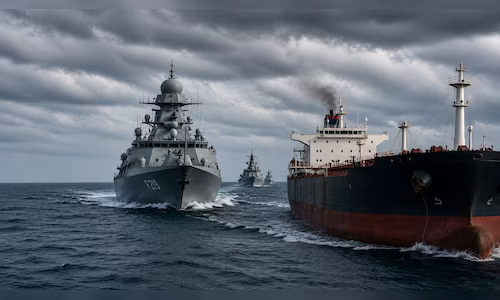
The frigate Admiral Grigorovich fired several shots near the 40ft civilian yacht, Bright Future, on Tuesday as it sailed around 20 nautical miles south of the Isle of Wight.
The popular route is regularly traversed by ferries, yachts, commercial ships and the international high-speed rail service, the Eurostar.
A Ministry of Defence spokesperson insisted that that the event was “an isolated incident” that was “not linked” to the UK’s interception of the Russian shadow fleet tanker the Smyrtos over the weekend.
Russia has claimed that the shots were fired as a warning to prevent a collision with the yacht, which appeared to be on course to hit the warship after drifting towards it in foggy conditions.
But Jane Kelvey, 68, and her husband Alan, 70, said called Moscow’s statement “just normal lies”. “It’s just not true,” they told BBC Newsnight in the aftermath of the incident. “They’re blaming us, and as far as we’re concerned, we were blameless.”
The English Channel is located between the border of England and mainland Europe and is regularly used by commercial ships, naval vessels and civilian traffic including P&O ferries and underwater rail like the Eurostar.
It is the busiest shipping lane in the world through which over 500 to 600 commercial vessels pass per day and sees more traffic than the Strait of Hormuz and the Suez Canal combined.
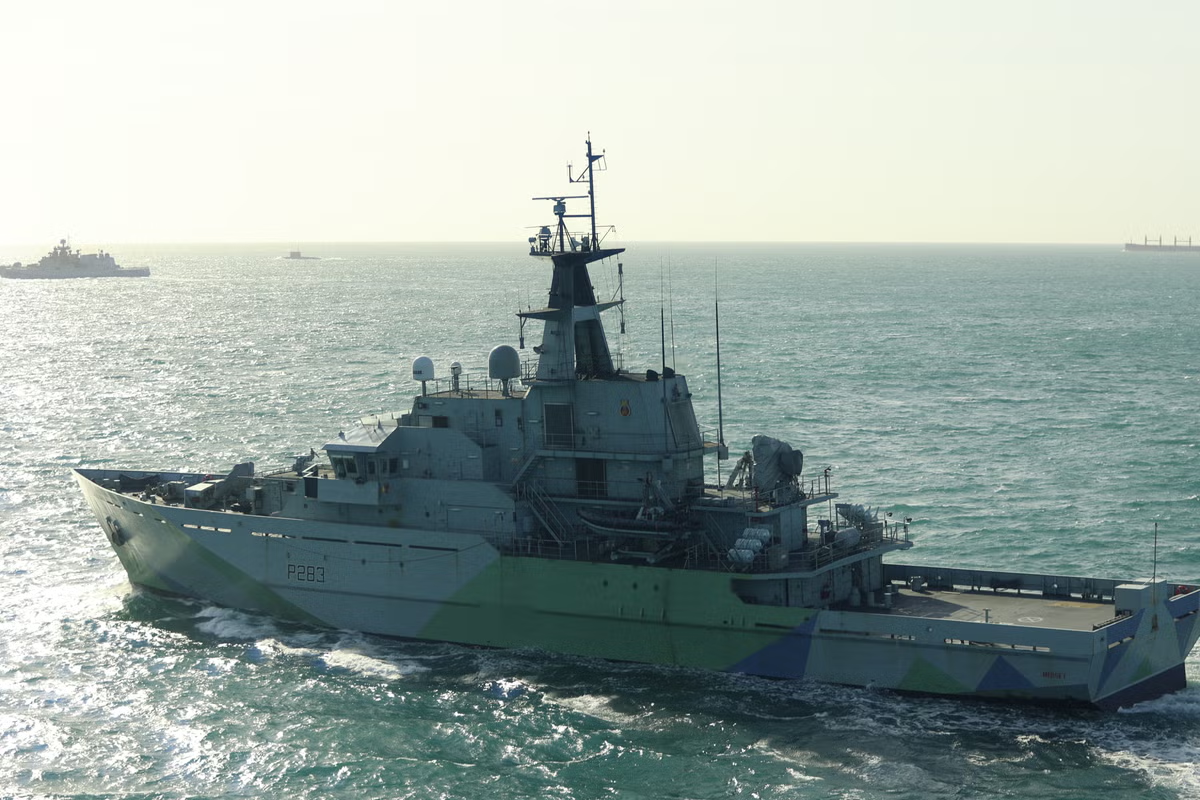
Russian warships do transit through the passage and are regularly shadowed as a matter of routine by the Royal Navy. On the day of the incident the HMS Mersey had been monitoring the Grigorovich.
There were no injuries or damage caused during the event and an MoD spokesperson said: “These (shots) were not aimed at the vessel and were an attempt to prevent a possible collision.”
There has been no known firing towards a civilian vessel by Russia before but Moscow’s naval vessels do appear to be getting closer to British waters.
In April, the Admiral Grigorovich escorted sanctioned shadow tankers carrying Russian oil through the Channel.
The 3,500-tonne vessel was observed accompanying two other shadow fleet ships along England’s southern coast, with the British tanker RFA Tideforce trailing behind.
The Grigorovich is a heavily armed ship equipped with anti-ship and land-attack cruise missiles, surface-to-air missiles and a main gun and is the lead ship of a class of Russian frigates.
The same month, the UK government revealed a covert Russian submarine operation in and around British waters.
British aircraft and warships identified a Russian attack submarine entering international waters in the High North in the weeks before they were picked up. The submarine’s activity was subsequently tracked around the clock.
“As part of the operation, which saw British ships cover thousands of miles, the RAF and Navy deployed sonobuoys to track the Russian vessels,” read a statement by the Ministry of Defence on 9 April.
“While the Russian attack submarine has now headed back towards Russia, the UK has kept both naval vessels and aircraft ready to respond should Russian vessels return.”
In November 2025, defence minister at the time John Healey, said that a Russian spy ship had entered UK waters and aimed lasers at military points. It has sparked concern that Russia may be testing the UK’s military capacities with the provocations.
Sidharth Kaushal, a senior research fellow at the Royal United Services Institute (Rusi) think tank, said: “While warning shots are not unheard of, they are a last resort when a vessel is behaving in a threatening way.
“There is no indication that the yacht in question had done anything to present a threat to the Russian frigate – though, of course, much is still unknown.
“It seems, since this is irregular behaviour, like the Russians are trying to indicate that the vessels they dispatch can do more than protect their own shipping and will also be a disruptive presence in and around the UK. This would seem to be a way of disincentivising further interdictions.”
The Independent has contacted Eurostar and P & O ferries for comment.
Last month, ACLED (Armed Conflict Location and Event Data) reported that Russia’s shadow fleet presented a sustained hybrid war threat at sea.
“The shadow fleet has been implicated in two main types of suspected hybrid activity: damage to undersea infrastructure and drone operations,” it wrote in its report, published on 22 May.
More details here...