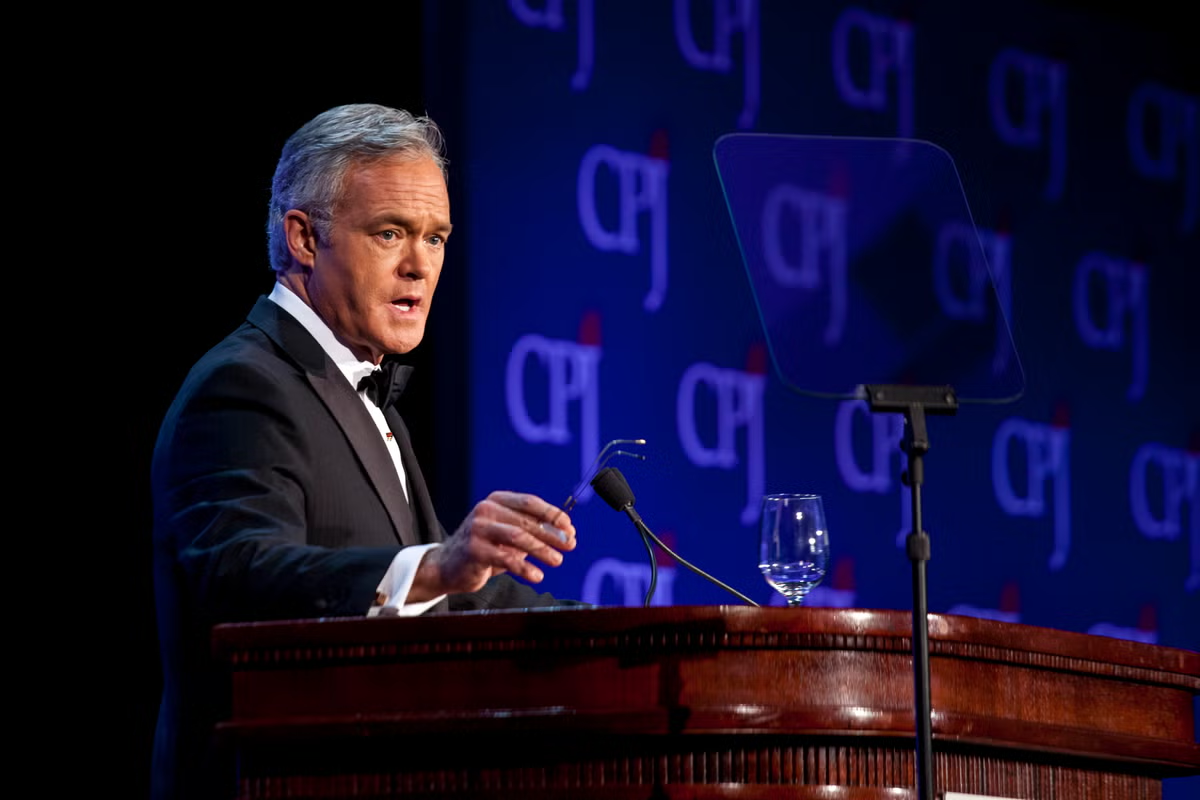
Scott Pelley’s high-profile career as a “60 Minutes” correspondent, marked by years of globetrotting and a seven-figure salary, culminated in a dramatic public confrontation with his bosses that has resonated with countless workers.
His searing rebuke of CBS management this week, questioning their credentials and motives, may have cost him his job, but it embodied a fantasy many workplace employees only dream of: telling off the boss.
“That’s the American dream — to be able to tell off your boss and walk out the door,” remarked Zach Tyra, a 40-year-old data analyst from Jones, Oklahoma, who found a kindred spirit in Pelley.
Tyra recalled his own experience with a “clueless” former boss, adding, “I couldn’t do what Scott Pelley did because I didn’t have the safety net or the resources or the network that he has. I couldn’t tell my boss to stick it. I just had to sit there and eat it.”
While Pelley delivered his message in the measured baritone of a seasoned broadcaster, his outspokenness stirred many who have felt the simmering frustration of working under an incompetent manager.
“It’s also kind of weird, like, Pelley isn’t some blue-collar hero. There’s a wide gap between, like, Pelley and your local everyday guy down at the hardware store,” Tyra conceded.
“But I think everyone can relate to standing up for what they believe.”
The dramatic dressing-down occurred during a Monday staff meeting with Nick Bilton, the new executive producer of “60 Minutes,” who was appointed by Bari Weiss, CBS News’ editor-in-chief since October.
Pelley reportedly grilled Bilton over the recent firings of Bilton’s predecessor, Tanya Simon, and correspondents Sharyn Alfonsi and Cecilia Vega.
He accused management of “murdering” the program, a revered cornerstone of television journalism for nearly six decades.
“She has no qualifications for her job,” Pelley reportedly stated of Weiss, according to media news site Status, before turning his ire to Bilton: “You have slender qualifications for this job.”
In response, Bilton fired Pelley, labeling his outburst an “ambush” of “remarkable incivility and contempt.” Yet, for many, Pelley became a proxy for the American worker, drawing widespread applause.
Parry Headrick, who runs a public relations firm in Boston, was transported back to his early days as a reporter.
He recalled quitting a small newspaper after editors sensationalized a story about a sick child, reducing him to a “toxic boy” in a headline.
“I lost my goddamn mind when they did that. And the story with Pelley resonated so hard specifically because of that,” said the 57-year-old, who believes many can empathize with Pelley’s stance.
“There exists in most Americans the desire to speak truth to power.”
Such an outburst within the news industry is perhaps unsurprising; journalists often pride themselves on speaking truth to power and giving a voice to the voiceless.
Staff meetings where reporters challenge editors are common, and managers in newsrooms frequently face the same tough questions they expect their staff to ask others.
The threshold for dismissal, however, varies significantly across different workplaces.
“In the real world, there are layers of politeness and cordiality that don’t really exist in journalism,” Headrick noted, applauding Pelley for “pushing back on something larger.”
Clare Haynes experienced her own “Pelley moment” two decades ago while in a middle-management role at a nonprofit.
Three weeks into a job she believed she was hired to implement innovative changes, she found every suggestion was dismissed. When her boss claimed his superior wouldn’t approve her ideas, she snapped, “Are you saying you’re too weak to ask?”
Her boss stared silently for a full minute.
Haynes survived, remaining at the firm for three more years, though things were never the same.
“I didn’t lose my job, but I paid the price, being seen as maverick,” said the 55-year-old from Royal Leamington Spa, England, who now runs a coaching firm that trains executives in handling difficult workplace conversations.