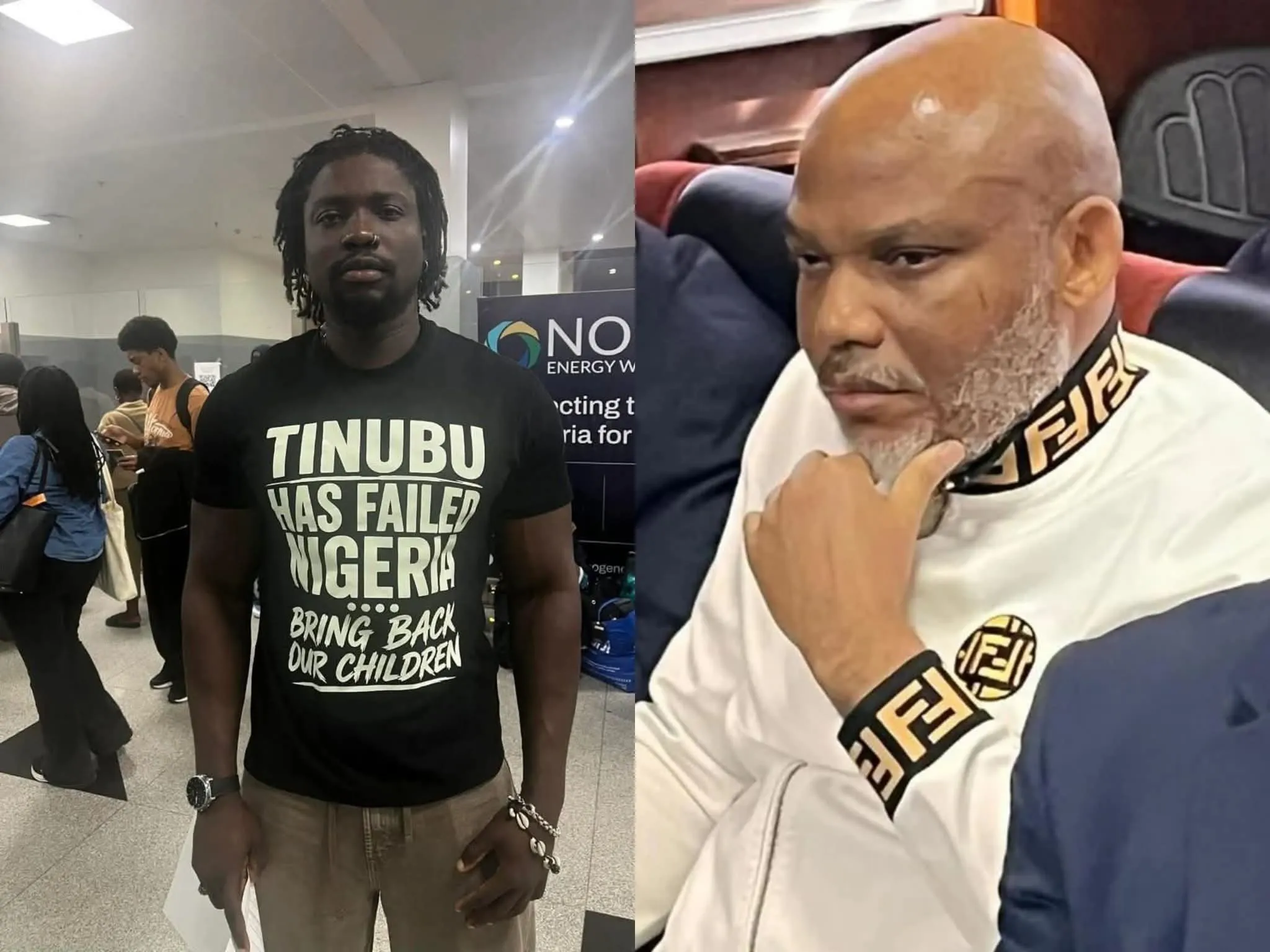
In every generation, societies produce individuals who challenge the status quo and speak against perceived injustice. In Nigeria, many people believe that social media activist Martins Vincent Otse, popularly known as VeryDarkMan (VDM), has emerged as one of those voices. While he is different from Mazi Nnamdi Kanu in ideology, methods, and objectives, some Nigerians argue that the similarities between both men are difficult to ignore.
For years, Mazi Nnamdi Kanu became a symbol of resistance for many people who felt marginalized, unheard, and frustrated by the state of governance in Nigeria. Through his broadcasts and public engagements, he openly criticized government policies, insecurity, corruption, and what he described as systemic injustice. His arrest and continued legal battles led many supporters to believe that the government was attempting to silence a vocal critic.
However, the issues that gave rise to Kanu’s popularity did not disappear. Concerns about insecurity, corruption, economic hardship, unemployment, and poor governance continue to dominate public discourse. In this environment, VeryDarkMan has risen to prominence by using social media as a platform to challenge powerful individuals, expose alleged wrongdoing, and demand accountability from public officials and institutions.
Supporters of VeryDarkMan argue that his popularity stems from his willingness to address issues that many Nigerians discuss privately but are afraid to confront publicly. Whether investigating allegations of corruption, speaking on social injustice, or questioning the conduct of influential figures, he has built a reputation as someone who is unafraid of controversy.
To many observers, the comparison with Nnamdi Kanu is not necessarily about politics or separatism. Instead, it is about the role both men play as outspoken critics of authority. Their supporters see them as individuals who refuse to remain silent in the face of perceived injustice, regardless of the personal consequences.
Another factor fueling the comparison is the public reaction to attempts to investigate, arrest, or prosecute outspoken critics. Some Nigerians believe that whenever a government appears focused on a critic rather than the issues being raised, it can unintentionally increase public sympathy for that individual. This dynamic was evident in the case of Nnamdi Kanu and, according to some observers, can also be seen in the growing support VeryDarkMan receives whenever he faces legal or institutional challenges.
Critics, however, argue that the comparison has limits. Nnamdi Kanu’s activism was deeply connected to the political aspirations of the Indigenous People of Biafra (IPOB), while VeryDarkMan’s activities are largely centered on social accountability, consumer advocacy, and exposing alleged misconduct. The two men operate in very different contexts and pursue different goals.
Nevertheless, what remains undeniable is that many Nigerians are increasingly drawn to voices they believe can challenge powerful interests and demand accountability. Whether one agrees with VeryDarkMan or not, his rise reflects a broader public desire for transparency, justice, and responsible governance.
Ultimately, the claim that “VeryDarkMan is another Nnamdi Kanu” is less about equating the two men and more about the perception that whenever one outspoken critic is silenced, another voice eventually emerges to occupy that space. History shows that public dissatisfaction with governance often creates new advocates, activists, and reformers. As long as Nigerians continue to demand accountability and justice, new voices will continue to emerge, each representing the concerns and aspirations of different segments of society.
BY: Godwin Offor