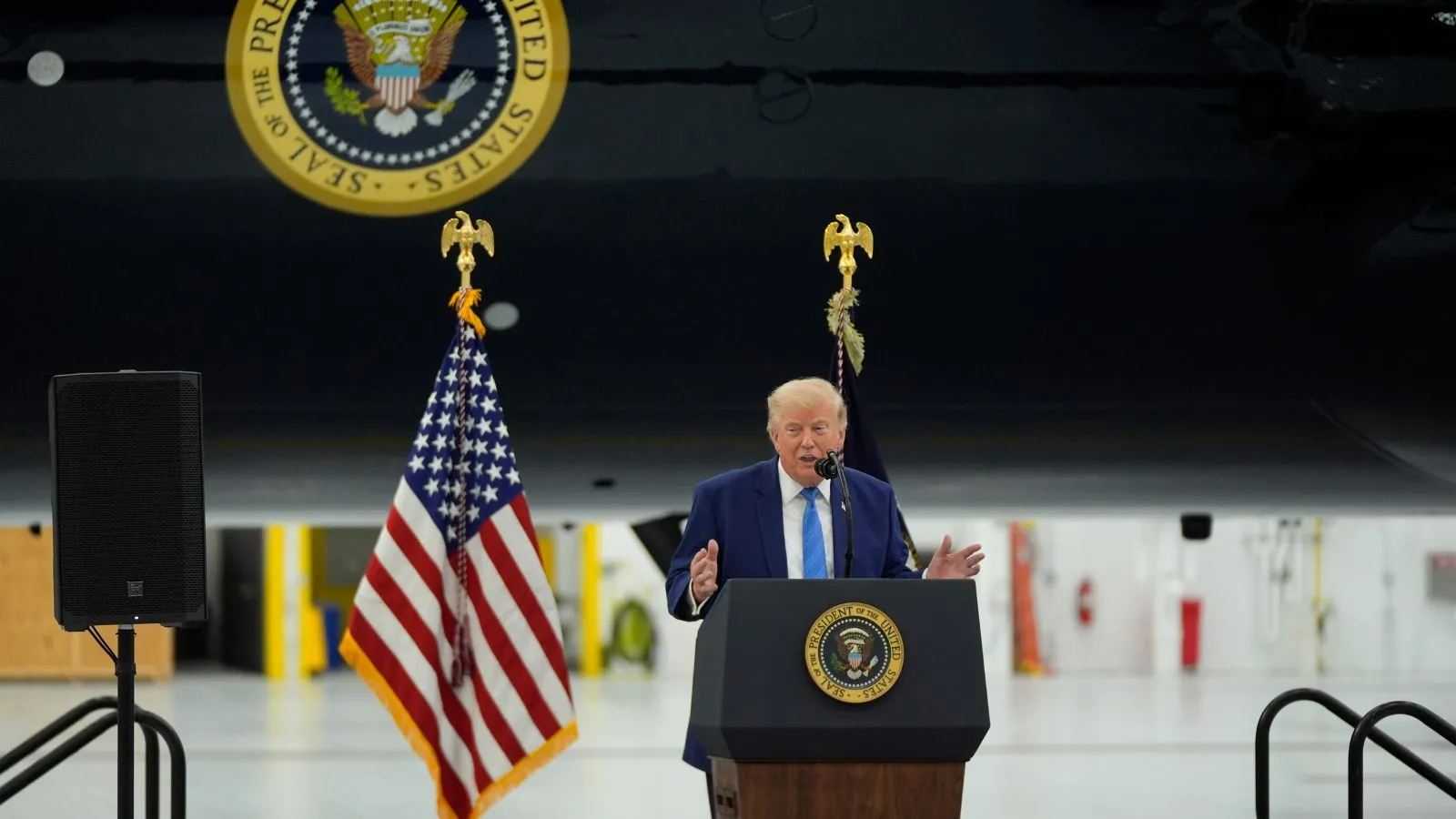
US President Donald Trump says the US has “had a lot of victories”, during a speech at a ceremony to mark the unveiling of a new Air Force One gifted by Qatar as a replacement aircraft for ferrying US presidents.
“You’re going to see oil drop so low, I hope the companies are happy about it,” he said.
Trump on attacking Iran again:
Remember, if we do that, then all of a sudden you’re not going to have the oil flowing out of the strait too quickly.
People that own billion-dollar ships don’t love missiles flying over them. pic.twitter.com/ptnKa0gI2y
— Clash Report (@clashreport) June 19, 2026
“We have the greatest military in the world. You saw that in Iran, in one week, virtually, we knocked out their entire navy, their entire air force, their radar. We wiped out everything,” he said.
Trump repeats claim in Axios interview
Trump made a near-identical claim in a separate interview with Axios published this week, when asked what he had learned about the limits of his power following the Iran war. Rejecting the idea that the conflict had exposed any limits, he said: “There are no limits.” He continued: “I haven’t learned that lesson yet. I know there are, but there are no limits.”
He told Axios’ Marc Caputo: “We defeated them totally militarily. However, beginning of conflict… in one week virtually, we knocked out their entire navy, their entire air force, their anti-missile weapons, their radar… we knocked out everything,” dismissing criticism that the strikes had not gone far enough as coverage from “the fake news”.
Trump on Iran:
I took out their biggest bridge because they showed up late at a meeting. They said that wasn’t very nice.
That bridge, that’s their George Washington Bridge. I wiped it out in three minutes.
Source: Axios pic.twitter.com/eyZ7EdRWez
— Clash Report (@clashreport) June 19, 2026
Trump went further still, suggesting the memorandum of understanding (MoU) signed with Iran this week “probably is unconditional surrender” on Tehran’s part.
Why he stopped short of further strikes
Trump defended his decision to settle for a negotiated agreement rather than continue military action, framing it as a practical choice driven by economic risk rather than any retreat. “The only way I can get tougher is if I go in there for another two or three weeks and continue to bomb the hell out of ’em. Right? But what does that get us? The Strait of Hormuz will not be open,” he said.
Story continues below this ad
“We wouldn’t have oil for months. As long as you’re dropping bombs, that thing is automatically closed,” he added, calling the scenario “the kind of thing that could cause a worldwide depression.”
A pattern of escalating claims
Trump’s remarks add to a string of sweeping statements about the war’s outcome over the past week. On Truth Social on Friday, he wrote that Iran “is FINISHED” and would receive “not ten cents” from the US during the 60-day negotiating window now under way. “The War has diminished Iran! It doesn’t, any longer, have an Air Force, a Navy, Antiaircraft Equipment, Radar, or practically anything else,” he wrote, adding: “How stupid can some people be???”
Trump on Iran:
Now we have an agreement that was signed last night, and it’s 60 days.
They have to make a deal; otherwise, we’ll do things that won’t make them happy, but I don’t think it’s gonna get to that. pic.twitter.com/l6wPcDfgsS
— Clash Report (@clashreport) June 19, 2026
These claims sit uneasily against the terms of the MoU itself, which includes immediate US sanctions waivers on Iranian oil exports, a commitment to unfreeze Iranian assets, and a pledge to establish a $300 billion reconstruction fund for Iran concessions that go well beyond what “not ten cents” would suggest.
Trump’s position has also shifted on Iran’s missile programme. He entered the war demanding Iran’s unconditional surrender and the destruction of its ballistic missile capability. At the G7 summit in France this week, he said Iran should be allowed to keep “some” missiles “because other people have some,” and that “missiles aren’t the problem” since “they don’t blow up the planet.”
With inputs from agencies