4 min readUpdated: Jun 10, 2026 02:27 PM IST
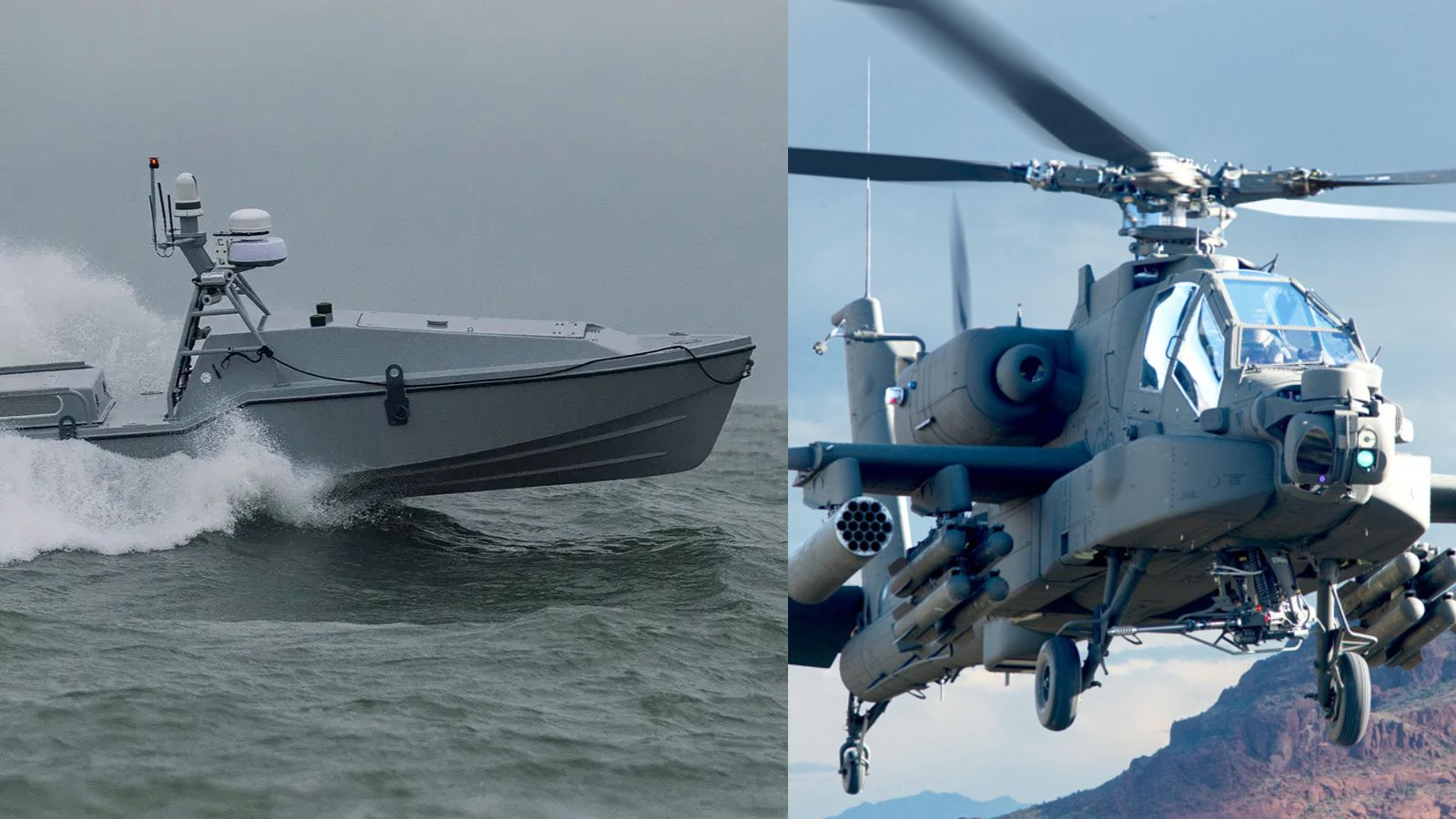
In what appears to be the US military’s first publicly known use of an autonomous surface vessel for personnel recovery, a Saronic Corsair sea drone rescued two US Army Apache helicopter crew members from the waters near the Strait of Hormuz on Monday, June 8, 2026, after their AH-64 went down off the coast of Oman during a patrol of regional waters.
The Corsair, a 24-foot autonomous boat built by Texas-based defence-tech firm Saronic Technologies and operated by the US Navy’s Bahrain-based Task Force 59, located the two crew members using its 360-degree passive sensing payload approximately two hours after the helicopter crashed around 7:30 PM ET. The drone retrieved them from the water and transported them to another location, where they were picked up by a manned helicopter for final transport. Both crew members are in stable condition, US Central Command said.
What is Corsair, and why does it matter?
The rescue is a milestone moment for the Pentagon’s broader push to deploy autonomous systems alongside traditional military assets, the Replicator initiative announced by Deputy Defence Secretary Kathleen Hicks in 2023 to counter China’s military expansion. Task Force 59 began fielding the Corsairs in the Middle East in late March, US Navy Captain Tim Hawkins told the Associated Press.
First “drone boat” rescue in #Iran!
An #Apache helicopter was shot down & the first-time rescue was by an Autonomous Surface Vessels (ASVs) – @Saronic Corsair/Echelon real-time remote command-and-control!
CONGRATULATIONS!!! pic.twitter.com/Lum5BtULGe— Steve Surfaro (@stevesurf) June 10, 2026
It is the service’s first unit dedicated entirely to unmanned systems, deploying both surface vessels and underwater drones across the US 5th Fleet’s 2.5-million-square-mile area of responsibility, which covers the Persian Gulf, Red Sea, Gulf of Oman and parts of the Indian Ocean. The Navy is working toward the mass deployment of potentially hundreds, eventually thousands, of Corsairs, with Saronic Technologies awarded a $392 million production contract in December 2025.
The Saronic Corsair carries up to 1,000 pounds (453.5 kg) over 1,000 nautical miles at a top speed of 35 knots. Ukraine’s use of similar sea drones, including the Magura V5 and Sea Baby, has demonstrated their battlefield impact since 2022, with dozens of Russian Black Sea Fleet vessels sunk or damaged.
Trump accuses Iran, orders strikes
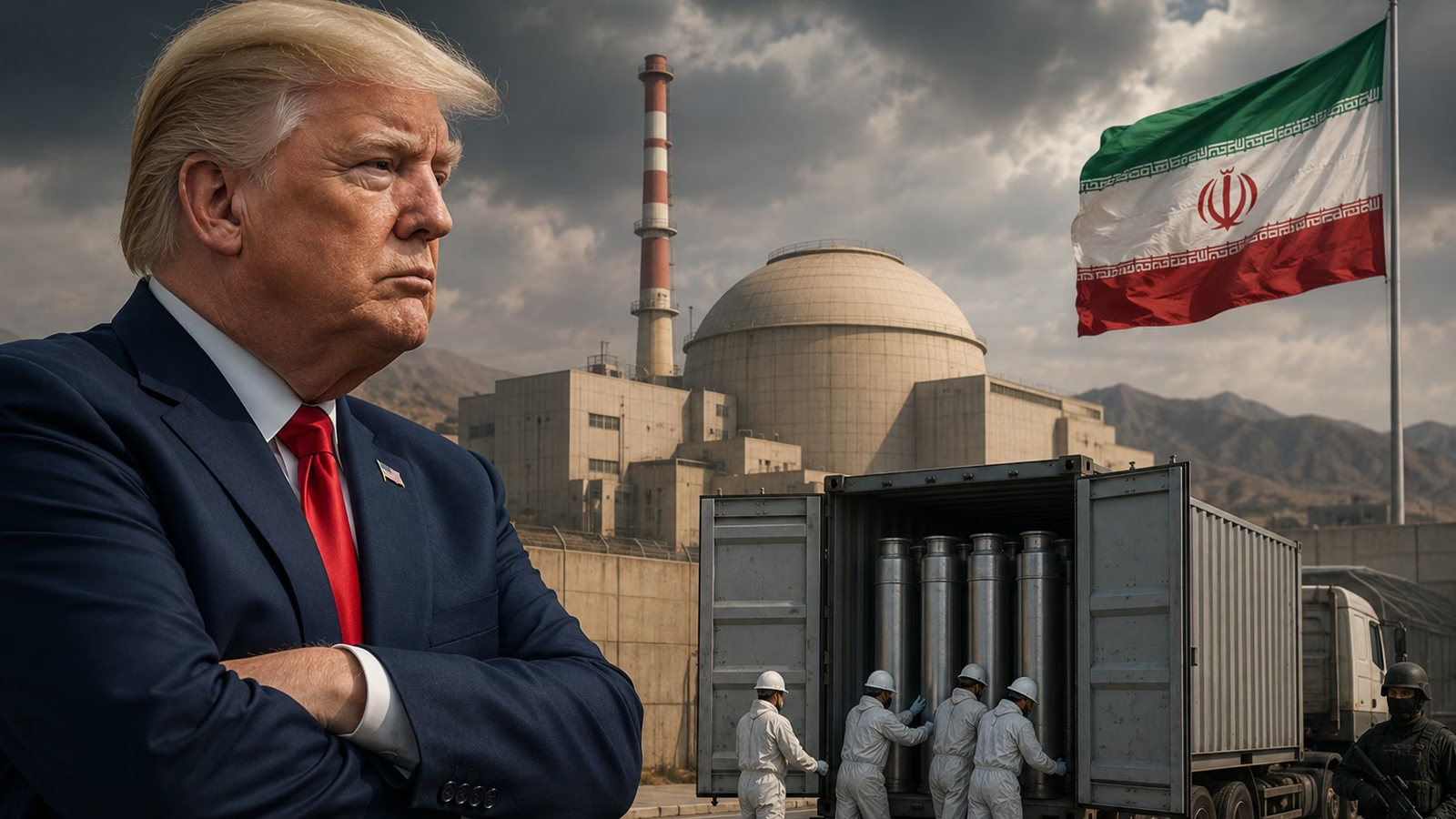
US President Donald Trump accused Iran of shooting down the aircraft while it was patrolling the Strait of Hormuz, and in response ordered retaliatory strikes on the country. The US military has since confirmed those strikes are underway.
“Rescue efforts were led by US Naval Forces Central Command and the 82nd Airborne Division, with support from US Air Force and Navy units, including US 5th Fleet’s Task Force 59,” Centcom said in its statement.
Story continues below this ad
US sea drone expansion
Sea drones are currently used for surveillance, mine detection, and tracking enemy activity, with some models being adapted for combat roles. The Navy is working towards the mass deployment of potentially hundreds – and eventually thousands – of Corsairs as a cost-effective way to extend reach and speed up response times.
The battlefield potential of sea drones has already been demonstrated, albeit outside US operations. Ukraine’s extensive use of sea drones against Russian naval assets has shown their growing impact in modern warfare.
(Inputs from BBC & REUTERS)
Stay updated with the latest – Click here to follow us on Instagram