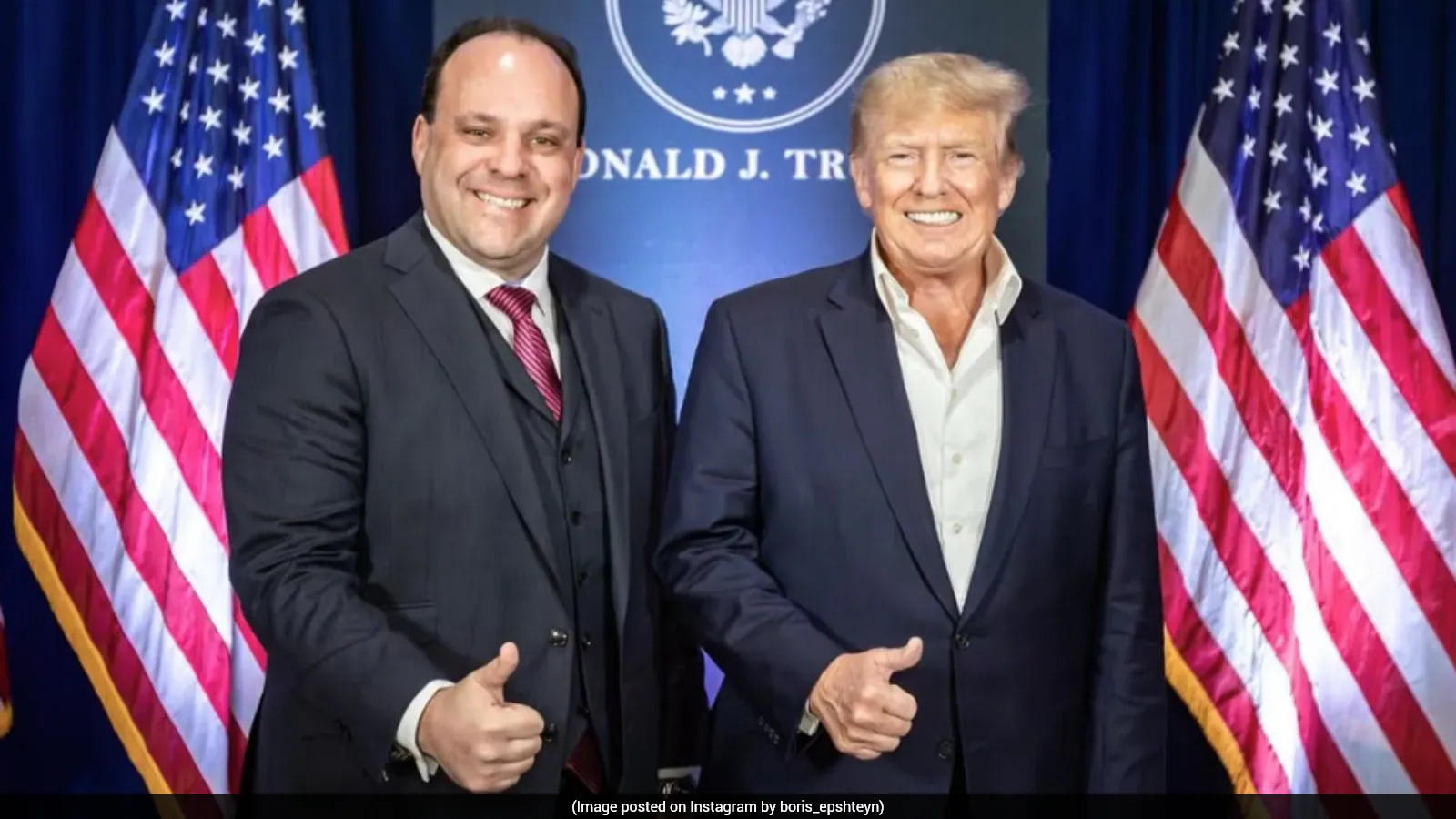
Boris Epshteyn, who serves as US President Donald Trump’s senior personal counsel, is said to be one of the most regularly involved figures in the White House.
Epshteyn is often present in Oval Office meetings, sometimes even without other attendees realising it, according to Axios. In some cases, Trump is reportedly said to put him on speakerphone during discussions without informing others in the room.
“He’s the president’s fixer,” said a frequent White House visitor. Trump has also joked about their relationship, reportedly saying, “He’s like my psychiatrist.”
Who is Boris Epshteyn?
Boris Epshteyn was born in 1982 in Moscow when it was part of the Soviet Union. He comes from a Russian Jewish family. In 1993, he moved to the United States with his family as a refugee. They settled in Plainsboro Township, New Jersey. He finished high school in New Jersey in 2000. He earned a bachelor’s degree in 2004. Later, he studied law at Georgetown University Law Center and completed his law degree in 2007.
After Senator Frank R Lautenberg died in 2013, Epshteyn publicly thanked him for supporting a law that helped religious minorities, including Russian Jews like his own family, move to the US. Earlier in his career, in 2008, he briefly worked as a communications aide for John McCain’s presidential campaign. In the 2012 elections, he sometimes appeared on TV as a Republican political commentator.
He got in touch with Trump mainly due to his friendship with his son, Eric Trump. They both studied at Georgetown University. After Trump left office in 2021, Epshteyn helped plan and guide Trump’s legal strategy when Trump faced multiple criminal and civil cases, especially after the January 6 Capitol attack and the investigations related to the 2020 election. Epshteyn was charged in Arizona in connection with allegations that allies of Trump tried to overturn the 2020 US presidential election results. He has denied the allegations and has pleaded not guilty.
Some reports allege that Epshteyn asked some people connected to Trump for money in exchange for supporting them for government jobs. One example mentioned is Scott Bessent, who was Trump’s nominee for Treasury Secretary, according to PBS News. Bessent reportedly tried for months to get the job, but Epshteyn allegedly opposed him because he did not agree to pay Epshteyn a large fee or “retainer”.
The report also claimed he helped lead a legal campaign against several big media and tech companies. These lawsuits resulted in settlements from companies like ABC, CBS, Meta, Google, and X, totaling around $90 million. Other cases against organisations such as BBC, CNN, The New York Times, The Wall Street Journal, and the Pulitzer Committee are still ongoing.