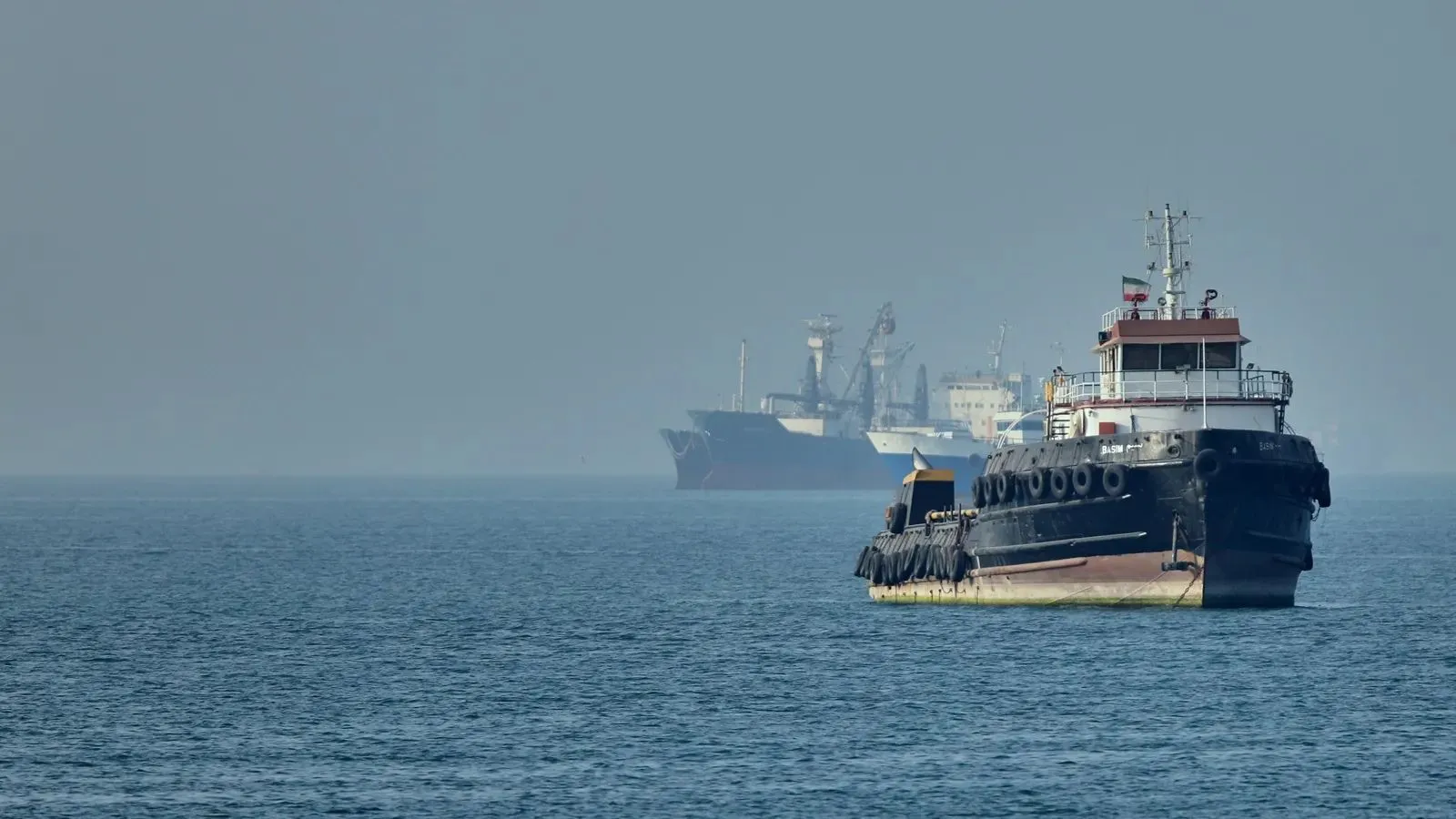
The United States and Iran may have agreed to end months of fighting and reopen the Strait of Hormuz, but the world’s most important energy corridor remains far from secure. Despite a ceasefire and a memorandum of understanding (MoU) committing both sides to restore commercial navigation, shipping companies, insurers and maritime authorities say the gap between diplomacy and reality at sea is widening rather than narrowing.
The days following the agreement have witnessed fresh attacks on merchant shipping, US retaliatory strikes, and alleged Iranian drone attacks in Bahrain on Saturday, spilling tensions beyond diplomacy in the region again.
The uncertainty was underscored this week when Iran’s Islamic Revolutionary Guard Corps (IRGC) warned ships that any vessel transiting the Strait without Tehran’s permission or outside routes approved by Iran would be “responsible for any consequences.”
Within hours of that warning, the Singapore-flagged cargo ship ‘Ever Lovely’ was struck by what US officials described as an Iranian drone, marking the first attack on commercial shipping since the US-Iran agreement was signed, according to CNN.
US President Donald Trump condemned the strike as a “foolish violation of our Ceasefire Agreement”, while the US military later carried out retaliatory strikes on Iranian missile, drone storage and coastal radar sites around the Strait of Hormuz, as per the report.
US Central Command said the operation targeted infrastructure used in attacks on commercial shipping, adding that Iran’s actions had “clearly violated the ceasefire”. However, US officials stressed the strikes did not signal a return to large-scale combat operations, CNN reported.
The incident was followed by another maritime security alert on Saturday, when the United Kingdom Maritime Trade Operations (UKMTO) reported that a tanker in the Strait had been hit by an “unidentified projectile”. The crew was reported safe, but the episode reinforced concerns that commercial shipping remains vulnerable despite the ceasefire.
Story continues below this ad
Fresh attacks test fragile ceasefire
Iran said it responded by targeting US military positions in the region after the American strikes. While the Islamic Revolutionary Guard Corps (IRGC) did not identify the specific sites, Iranian state media said the operation was carried out under Article 51 of the UN Charter, which recognises a state’s right to self-defence. Tehran also accused Washington of violating the ceasefire memorandum by striking Iranian coastal surveillance facilities and warned that any further breaches would draw a “swift and decisive” response.
آمریکا با حمایت از اقدامات نیروی نیابتی خود در منطقه، بند اول تفاهمنامه و با ادامه تنشآفرینی در تنگه هرمز، بند پنجم را نقض کرده است. پاسخ نقض هر بند از تفاهمنامه، سریع و کوبنده خواهد بود.
— محسن رضایی (@ir_rezaee) June 27, 2026
Hours later, Bahrain said a number of Iranian drones had targeted its territory, describing the incident as “a flagrant threat” to its sovereignty and the safety of its citizens. Qatar, Kuwait, UAE and Gulf Cooperation Council (GCC) also condemned the alleged attack and expressed solidarity with Bahrain, while Iran’s IRGC maintained it had targeted locations belonging to what it called the “US terrorist army in the region”, without specifying whether Bahrain had been the intended target.
More ambiguities on the MoU application have arisen as an Israeli drone has been reported to have struck the Nabatieh al-Fawqa area in southern Lebanon on Wednesday, a point of stressed importance in the talks held earlier in Switzerland, and especially a day after Israel and Lebanon signed a US-brokered security arrangement aimed at easing tensions along the border.
🔴 BREAKING: More ships are seeking permits from Iran to transit the Strait of Hormuz after non-authorized vessels faced warning shots, Iranian state television reports. pic.twitter.com/h1G6PCo06U
— Al Arabiya English (@AlArabiya_Eng) June 27, 2026
Iran and US disagree over what ‘reopening’ means
At the heart of the dispute lies a fundamental disagreement over what reopening the Strait actually means.
Under the memorandum of understanding, Iran agreed to make “arrangements using its best efforts” to ensure safe passage for commercial vessels through the Strait, which carries roughly one-fifth of the world’s oil and liquefied natural gas supplies, the report said.
But Tehran argues that reopening the waterway does not mean surrendering control over it.
Story continues below this ad
The agreement also states that Iran and Oman will work together to define the future administration of the Strait — language Iran reportedly interprets as recognising a formal role in managing maritime traffic.
Iran has since established a new Persian Gulf Strait Authority (PGSA) and issued guidance requiring ships to seek authorisation and obtain a “safe passage guarantee” before transiting. CNN reported that attempts to contact the authority were unsuccessful, with emails bouncing back.
Iran has also insisted that only routes approved by its naval authorities are considered safe, describing alternative passages as “unacceptable”, “completely dangerous” and “prohibited”, the report stated.
According to a report by Al Jazeera, Tehran sees control of the Strait as its strongest bargaining chip in negotiations with Washington, arguing that relinquishing that leverage would weaken its negotiating position.
Story continues below this ad
Meanwhile, Iranian state television Saturday said that more ships were seeking permission to transit the Strait of Hormuz after unauthorised vessels were met with ‘warning shots’, Reuters noted.
That competing interpretation lies at the heart of the current standoff: Washington argues the agreement guarantees free navigation, while Tehran insists it retains sovereign authority over how traffic moves through the Strait.
Three routes, one waterway
The competing interpretations have produced an unprecedented situation in the narrow 21-mile-wide Strait.
Instead of a single internationally recognised shipping lane, three separate corridors are now being used — one through Omani waters, another along the traditional central channel and a third through waters supervised by Iran.
Story continues below this ad
That has left ship operators unsure which route offers the greatest safety.
“All this is very confusing for safely navigating those waters,” Dimitris Maniatis, chief executive of maritime risk consultancy Marisks, told CNN, adding that “the current environment is extremely dangerous.”
The confusion has also created a political dilemma. Ships avoiding Iranian-controlled routes risk interception by Iranian patrols or drones. Those complying with Tehran’s procedures reportedly fear they could later face Western sanctions if negotiations collapse.
“Global shipping wants to avoid dealing with the Iranians because there is a fear that they may run a risk of US sanctions in the future,” the report cited Maniatis as saying.
Story continues below this ad
Iran has dropped its earlier demand for immediate transit tolls but says it intends to levy fees for maritime services and environmental charges in the future: a proposal rejected by Washington and viewed cautiously by its oil-exporting allies, the Gulf states, the report noted.
Shipping companies still don’t trust the Strait
The latest violence has reinforced concerns across the shipping industry.
Following the attack on the Ever Lovely, the International Maritime Organization suspended a coordinated humanitarian evacuation operation that had been guiding more than 500 merchant ships carrying over 11,000 seafarers out of the Gulf “until further clarity is obtained”, according to CNN. Maritime experts said several vessels turned back instead of continuing through the Strait.
Separately, the UKMTO reported on Saturday that another tanker had been struck by an unidentified projectile, although no injuries were reported.
Story continues below this ad
The Joint Maritime Information Center, overseen by the US Navy, has since raised the threat level in the Strait to “substantial” following repeated attacks on merchant vessels, while expanding a shipping lane near Oman to improve traffic flow.
War-risk insurance premiums also remain elevated despite the ceasefire. During the conflict, insurers charged more than $1 million to cover a single Very Large Crude Carrier crossing the Strait. Vessels must now declare which route they intend to use before obtaining insurance cover, according to Matthew Wright, principal freight analyst at Kpler.
“This is not back to square one,” Wright told CNN, “but it makes it very clear that we are still in the 60-day ceasefire rather than an absolute guarantee that the Strait of Hormuz is on a certain path of reopening.” He warned that unless disagreements are resolved by mid-August, “we might end up seeing the three routes being used in a more chaotic manner and in a less safe way.”
A fragile agreement under pressure
Analysts say the recent exchange of strikes illustrates how fragile the US-Iran understanding remains.
Story continues below this ad
Vice President JD Vance warned that “violence will be met with violence”, while insisting disagreements over implementation should be resolved through dialogue rather than military action.
The competing claims over who controls the Strait, coupled with continuing Israeli military operations in Lebanon, have placed the memorandum of understanding under significant strain.
“The MoU is extremely delicate and has the possibility of collapsing at any moment,” Andrea Dessì of the American University of Rome told Al Jazeera.
Iran has also accused Washington of breaching the memorandum by carrying out strikes on Iranian coastal facilities, while advisers to the Supreme Leader have warned that any further violations of the agreement would invite a “swift and decisive” response.
For now, ships are moving again through Hormuz. But maritime experts say the world’s most critical energy corridor remains caught between diplomacy and deterrence, leaving commercial operators to navigate not only one of the busiest waterways on Earth but also one of its most uncertain geopolitical fault lines.