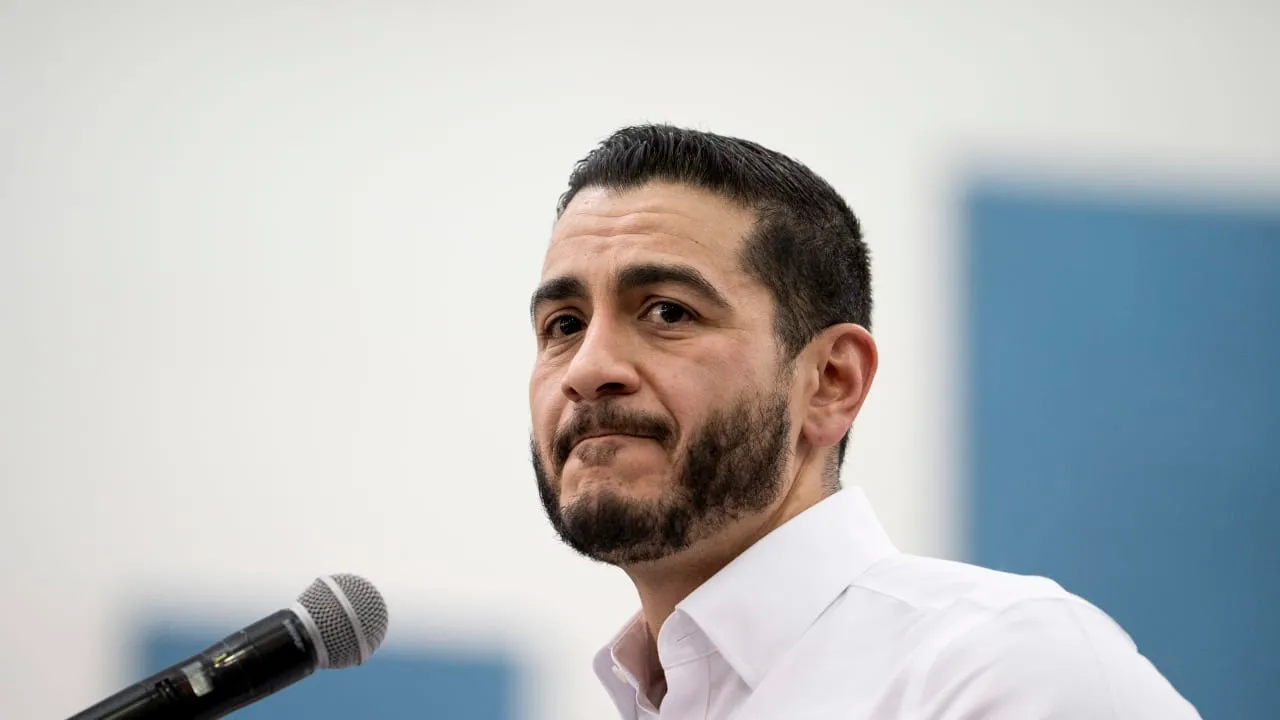
A super PAC formed to counter the influence of pro-Israel political action committees confirmed that it will boost Abdul El-Sayed in Michigan’s Democratic US Senate primary, despite the candidate’s pledge to refuse all super PAC funding.
A spokesperson for American Priorities PAC, the anti-AIPAC PAC, told the Jewish Telegraphic Agency on Tuesday that its vow two days earlier to “do whatever it takes” to help El-Sayed “means spending.”
The move would put El-Sayed, who has mounted an popular insurgent campaign for a seat viewed as a must-win for Democrats, in the company of other progressives this election cycle who specifically railed against pro-Israel super PACs when swearing off corporate funding, while also benefiting from spending by the newly created pro-Palestinian super PAC.
Super PACs have no limits on fundraising but by law are prohibited from directly coordinating with a campaign — so American Priorities could theoretically raise money to run ads and other get-out-the-vote operations to boost El-Sayed without his consent.
El-Sayed has yet to comment publicly on American Priorities’ plans.
‘Money out of politics’
A physician and former county health director, El-Sayed is scheduled to debate his opponent, U.S. Rep. Haley Stevens, on Tuesday night in Grand Rapids.
A third candidate, state Sen. Mallory McMorrow, dropped out of the race over the weekend, which American Priorities said motivated its pledge to help El-Sayed. The primary is set for Aug. 4.
El-Sayed has made refusing PAC money a key element of his platform. “Money out of politics” forms part of the slogan that brands many of his yard signs. A new ad released by his campaign on June 30 claimed he was “the only candidate for Senate” who has taken “No Corporate PAC Money.”
The American Priorities spokesperson did not immediately respond to a follow-up to clarify what El-Sayed’s anti-PAC pledge would mean for the group’s spending plans. Requests for comment to the El-Sayed and Stevens campaigns also were not immediately returned.
Stevens, a pro-Israel moderate who has welcomed PAC support, has so far had at least $10 million in AIPAC-affiliated funding directed to boost her campaign, according to Federal Election Commission data. AIPAC-affiliated ads for her have trumpeted policies, including proposed restrictions on immigration enforcement, that AIPAC-funded ads in different races this year have lambasted.
Avoiding PAC money and treating AIPAC as a ‘bogeyman’
American Priorities has complicated the narrative for the progressive wave of the 2026 primary cycle, which has made pro-Palestinian causes and opposition to corporate funding twin priorities while treating AIPAC as a particular bogeyman.
American Priorities also spent to help democratic socialists Claire Valdez and Darializa Avila Chevalier in their successful primary runs for New York congressional seats last month, even as Valdez pledged to “end Citizens United,” the 2010 Supreme Court decision that allowed unlimited political spending by corporations and unions, and Avila Chevalier called to “abolish Super PACs.”
The spending allowed the candidates’ opponents to accuse them of hypocrisy but failed to derail their success at the ballot box. American Priorities also spent heavily in favor of Adam Hamawy, a doctor who served in Gaza who won his crowded New Jersey congressional primary in June.