Chiemelie Ezeobi
The trial of alleged drug baron Innocent Orji, three Mexican nationals and six others over the alleged operation of a ₦480 billion clandestine methamphetamine laboratory took a turn on Tuesday as the Federal High Court left Abuja to inspect the suspected drug manufacturing facility in Mowe, Ogun State.
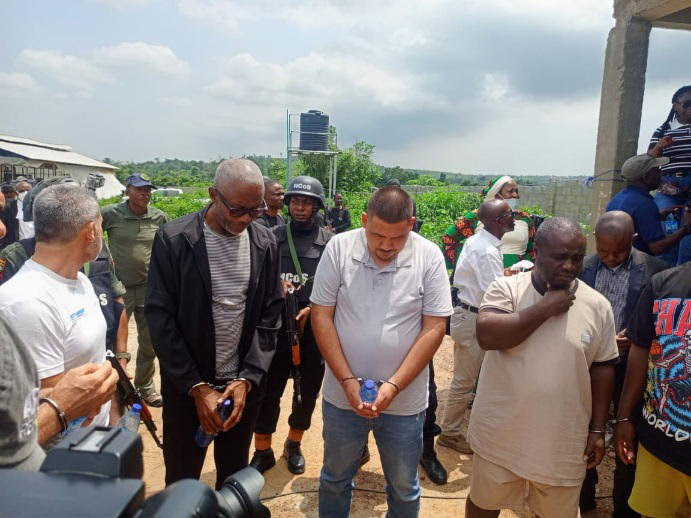
Justice Musa Kakaki led the court on a locus in quo, an inspection of the alleged crime scene, accompanied by the 10 defendants, lawyers representing both sides and officials of the National Drug Law Enforcement Agency (NDLEA), who walked the court through the sprawling complex prosecutors claim housed an illicit methamphetamine production operation.
During the inspection, the prosecution’s first witness, Ajilema Anebi, identified chemicals, processing equipment and installations the agency said were recovered from the premises and allegedly used in manufacturing methamphetamine.
The witness also pointed out materials the prosecution intends to rely on during the trial.
The visit, however, was marked by legal disagreement after prosecutors attempted to tender some of the recovered substances as exhibits at the scene, prompting objections from the defence.
Addressing journalists afterwards, defence counsel Benson Ndaraka said the inspection was intended to enable the court examine the alleged crime scene and materials recovered there.
“What brought us here today is what we call a locus in quo, a visit to the scene of the alleged incident. We came to inspect the chemicals and the alleged end product,” he said.
Ndaraka said the defence challenged the prosecution’s move to tender some of the chemicals during the inspection, adding that Justice Kakaki ruled that arguments on their admissibility would instead be taken in court.
“The prosecution sought to tender some of the chemicals in evidence and we objected. The court directed that formal arguments on their admissibility be taken in the courtroom,” he said.
The defence also questioned the prosecution’s evidence, arguing that while investigators demonstrated the alleged production process, they failed to produce the methamphetamine the defendants were accused of possessing.
“What we have been shown here today is largely the process of producing methamphetamine. We did not see methamphetamine itself… The defendants are charged with being in possession of methamphetamine, but what has been shown to us is the production process, not the product itself,” Ndaraka argued.
On its part, the NDLEA maintained that the discovery underscored the growing threat posed by international drug syndicates seeking to establish manufacturing bases in Nigeria.
NDLEA Director of Media and Advocacy, Femi Babafemi, described the laboratory as a major discovery with implications beyond Nigeria’s borders.
“This is another landmark achievement for the Agency in our drug control efforts. Imagine the volume of what was recovered here. It is enough to create serious public health and security challenges, not only in Nigeria but across the sub-region and even beyond,” he said.
Babafemi warned that drug cartels were increasingly relocating clandestine laboratories to remote forest locations, particularly in the South-West, in a bid to evade security agencies.
“We have identified sustained attempts by international drug cartels to establish clandestine methamphetamine laboratories in Nigeria… The NDLEA remains committed to dismantling them before the drugs find their way into Nigerian communities and the international market,” he added.
Justice Kakaki subsequently adjourned proceedings until July 24, when the court will hear arguments on the admissibility of the disputed exhibits before continuing with the trial.