By Chinedu Okafor
In Nigeria’s banking industry, where boardroom seats have historically been dominated by men and where many women who eventually became bank chairpersons built careers outside mainstream banking operations, Amaka Onwughalu’s journey stands apart.
Her story is not simply one of corporate rise; it is a story of persistence, professional identity and a determination to chart her own course despite enormous family influence and expectations.
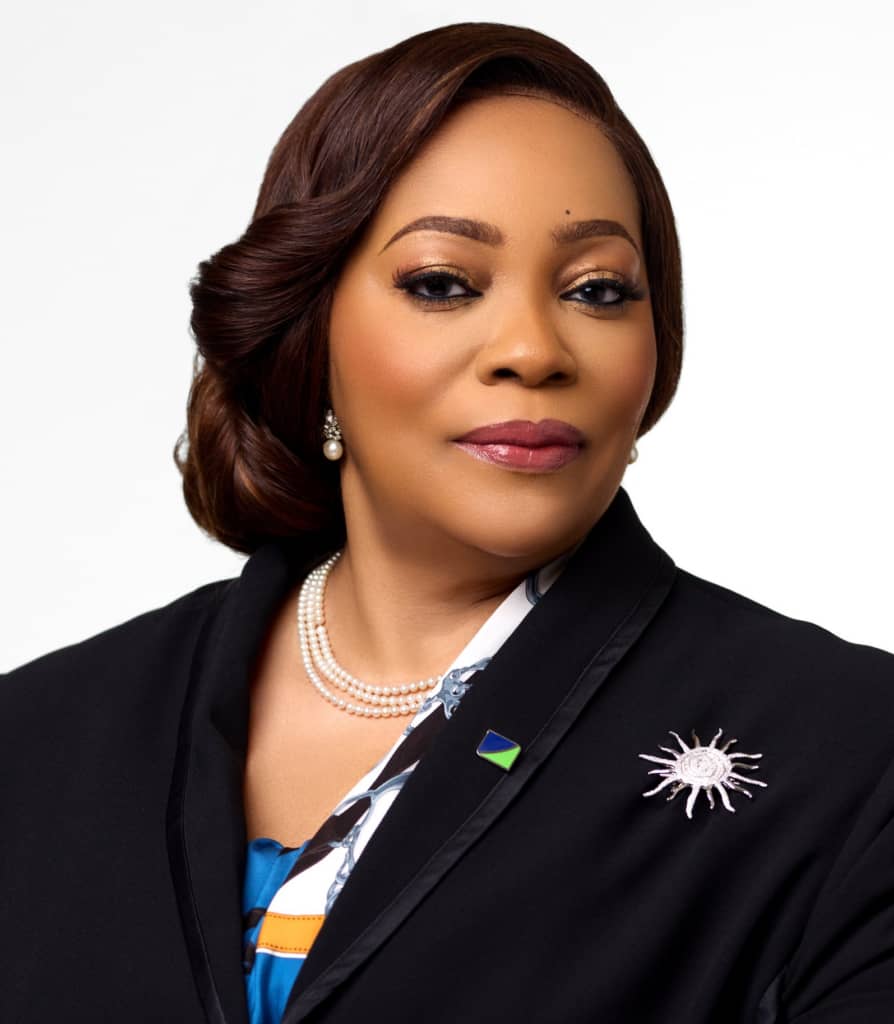
Today, as chairman of Fidelity Bank, Amaka represents a generation of banking professionals who climbed through the ranks from operational desks, treasury units, corporate banking divisions and executive offices before arriving at the top of corporate leadership. Yet her story did not begin in the boardroom.
Born into privilege and business influence, Amaka was raised in a family where entrepreneurship was not only a culture but a way of life. Her father, Chief Sir Joseph Nwankwu,( Onwa Abagana)was known as one of the most influential businessmen of his era with interests spread across manufacturing, beverages, construction, transportation and energy. The family business empire included Olympic Packers, Diamond Breweries, Petrogas and several industrial interests that made the family name prominent across eastern Nigeria.
For many in such circumstances, the expected route would have been straightforward step into the family empire and continue the legacy. But Amaka wanted something different.
After studying in the United Kingdom, where she earned a degree in Economics from the University of Buckingham before later pursuing postgraduate studies including an MBA and a Master’s degree in Corporate Governance, she developed a strong attraction to banking and finance.
Her decision created an early conflict between personal ambition and family expectations.
Her father reportedly preferred that she joined the family businesses or venture into the petroleum and industrial sectors where the family already had established influence. Banking was not the preferred destination. Even attempts to work within institutions where the family had influence reportedly faced resistance.
Eventually, Amaka secured opportunities outside family structures and began what would become one of the most extensive banking careers of her generation.
Her early years in banking were not glamorous executive appointments. Like many successful professionals, she started from foundational roles — banking operations, credit analysis and treasury functions. Those early experiences exposed her to the technical aspects of finance, liquidity management, customer operations and institutional relationships.
She joined what was then Orient Bank, later African Express Bank, where she steadily moved from operations officer to credit analyst, treasury dealer, treasury manager and eventually senior management positions. Those years built the foundation that would define her career strong treasury expertise, disciplined risk management and relationship building.
By the late 1990s and early 2000s, she had become one of the few women occupying strategic treasury and institutional finance positions in Nigerian banking.
Her rise coincided with one of the most turbulent periods in Nigeria’s financial system-bank consolidations, recapitalisation exercises and changing regulatory demands.
At Reliance Bank, Amaka emerged as a major executive force. She served in treasury leadership roles before becoming Executive Director and later Acting Managing Director/Chief Executive Officer in 2005. It was a period that demanded crisis management, strategic positioning and constant engagement with regulators and stakeholders.
Colleagues often describe her leadership style as methodical, meticulous and deeply analytical qualities that proved useful in banking environments where mistakes can be costly. Her next major chapter unfolded at Skye Bank.
Over nearly a decade, she moved through multiple leadership positions including General Manager, Executive Director and eventually Deputy Managing Director. Her responsibilities covered treasury operations, international funding, corporate banking, project finance and institutional relationships. She also played major roles in business expansion efforts across regions and sectors.
These years transformed her from a banking specialist into a broad corporate leader.
Perhaps the defining moment of her executive career came with Mainstreet Bank.
As Group Managing Director between 2014 and 2015, she led one of the most difficult transitions in Nigeria’s banking history managing institutional restructuring and integration processes linked to industry-wide reforms and acquisitions. The assignment required navigating operational uncertainty, managing stakeholders and preserving institutional stability during a period of change.
For many executives, retirement from banking signals a gradual exit from corporate life. For Amaka, it became the beginning of another chapter.
She transitioned into board leadership, becoming a Non-Executive Director at Fidelity Bank where she chaired critical committees and contributed to governance, risk management and succession planning. Her boardroom influence expanded steadily before her eventual elevation to chairman. Her appointment carried symbolic weight.
At a time when conversations around gender inclusion increasingly shape corporate governance discussions, her emergence reflected more than representation. It reflected experience.
Unlike some bank chairpersons whose routes emerged from law, consulting, public service or other sectors, Amaka’s pathway was rooted almost entirely within banking operations and leadership structures. That distinction matters.
Nigeria has produced several accomplished female banking leaders and chairpersons, including pioneers who opened doors for women in finance. But Amaka’s journey particularly stands out because it represents the complete arc of banking progression — from operations desks and treasury rooms to executive offices and ultimately the boardroom.
Beyond titles and appointments, her career offers lessons about professional identity. She could have chosen inherited comfort. She chose career uncertainty. She could have entered established family businesses. She chose banking halls. And decades later, that choice transformed into a boardroom legacy.
From treasury desks to corporate strategy rooms, from operational banking to board leadership, Amaka Onwughalu’s career reflects a truth often repeated but rarely demonstrated at this scale: ambition may open doors, but consistency keeps them open.
Her story is ultimately not just about becoming chairman of a bank. It is about building credibility, one role at a time.
*Chinedu Okafor, co-founder of AMTY, writes fromnOnitsha