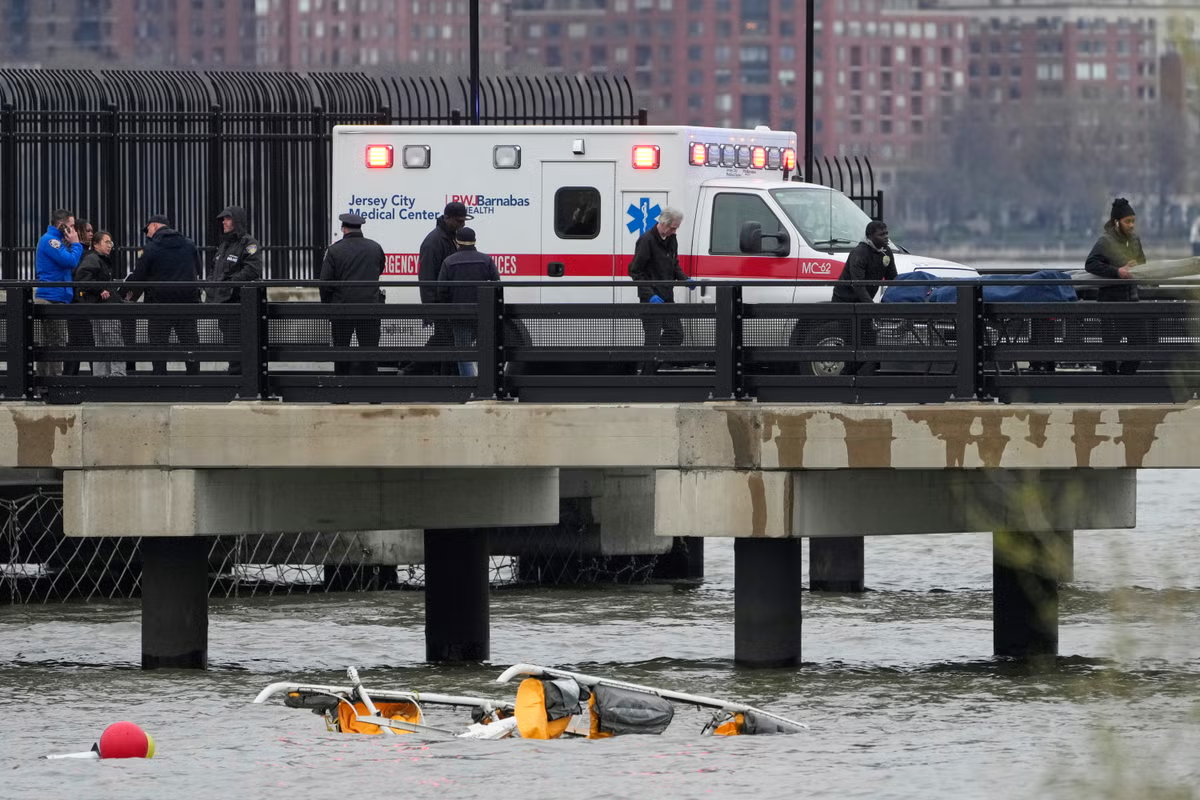
A bird strike has emerged as a possible cause of a helicopter crash that killed six people in New York City’s Hudson River.
The remains of several geese were found on the wreckage of the sightseeing helicopter that crashed last year, investigators said Thursday.
Evidence and witness interviews suggest the helicopter struck several birds before it plummeted into the river on April 10, 2025, according to newly-released National Transportation Safety Board reports.
The Federal Aviation Administration has said that helicopters are especially vulnerable to bird strikes because they fly at low altitudes. Helicopter bird strikes are unusual, but they can be devastating.
The victims of last year’s accident included a Siemens business executive from Spain, his family and the pilot. Passengers Agustin Escobar, 49; his wife, Mercè Camprubí Montal, 39; and their three children, Victor, 4; Mercedes, 8; and Agustin, 10, all died.
The pilot was Seankese Johnson, 36, a U.S. Navy veteran who received his commercial pilot’s license in 2023. The crash renewed safety concerns about the popular sightseeing flights and prompted New Jersey’s governor to ask for additional restrictions on nonessential helicopter flights.
The NTSB has investigated 24 helicopter bird strike crashes in the past 25 years, including three fatal ones. Helicopter pilots are encouraged to try to avoid areas where birds are known to be present and fly slower to minimize the potential damage from an impact.
The “ miracle on the Hudson” highlighted the danger of bird strikes when a US Airways jet hit a flock of birds and lost power in both engines shortly after takeoff in 2009. Pilot Chesley “Sully” Sullenberger was hailed as a hero after he landed the powerless plane in the Hudson River and all 155 people on board were rescued.
In last year’s crash, witnesses described seeing the helicopter’s tail and main rotor breaking away and smoke pouring from the spinning chopper before it slammed into the water.
The helicopter took off from a downtown heliport that afternoon and flew north along the Manhattan skyline before heading south toward the Statue of Liberty. Less than 18 minutes into the flight, parts of the aircraft were seen tumbling into the water.
Rescue boats circled the submerged aircraft within minutes of impact and recovered the bodies from the water. Later recovery crews hoisted the mangled Bell 206L-4 helicopter out of the river for investigators to examine.
New York Helicopter Tours shut down after the crash, and the FAA issued an emergency order to ground all the company’s flights after learning it had fired its operations director minutes after he had agreed to suspend flights during the investigation.
The FAA said at the time that it suspected the firing was retaliation for a safety decision.
The company’s director of operations, Jason Costello, agreed to voluntarily halt flights while the crash was being investigated. But 16 minutes after Costello sent an email to the FAA, the company’s chief executive officer sent a separate email to the agency saying he did not authorize the halt and that Costello was no longer an employee.